After Hurricane Ian: Lessons for Every Florida Homeowner
What Hurricane Ian taught Florida policyholders about claim timelines, coverage gaps, and dealing with adjusters.
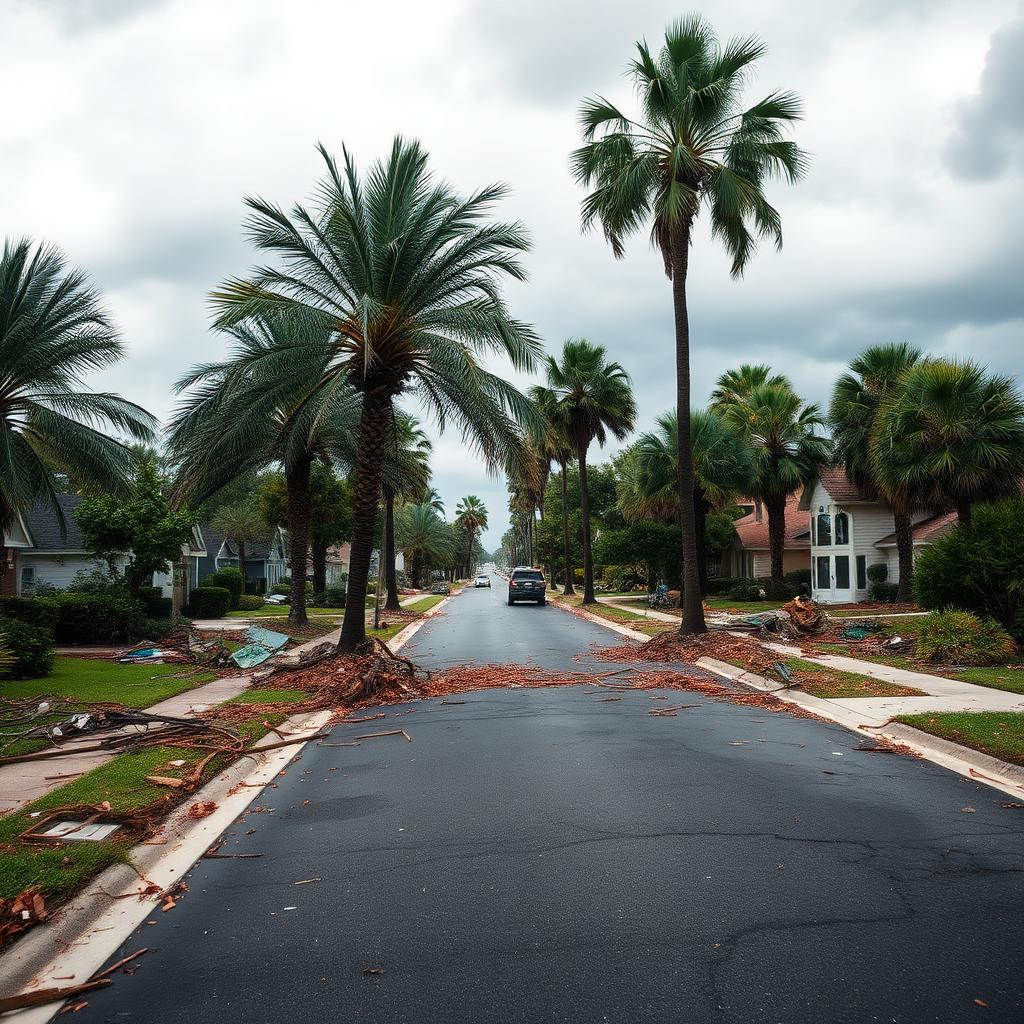
When Hurricane Ian made landfall on Florida's southwestern coast on September 28, 2022, it became one of the costliest natural disasters in United States history, generating an estimated hundreds of billions of dollars in insured and uninsured losses across Lee, Charlotte, Sarasota, and surrounding counties. For homeowners statewide — including those in Miami-Dade, Broward, and Coral Gables who experienced wind, water, and flood damage from Ian's outer bands — the storm exposed critical gaps in insurance coverage, claims handling, and financial preparedness. Three years later, the lessons Hurricane Ian taught every Florida homeowner remain painfully relevant as we enter an active 2026 hurricane season.
Lesson 1: Flood Insurance Is Not Optional in Florida
Among the most devastating revelations after Hurricane Ian was the number of homeowners who suffered catastrophic flood losses but carried no flood insurance. Standard Florida homeowner's insurance policies do not cover flooding — defined as water that rises from outside the home due to storm surge, overflow of bodies of water, or inadequate drainage systems. Flood coverage requires a separate policy through the National Flood Insurance Program (NFIP) or a private flood insurer. After Ian, many Lee County homeowners whose homes were destroyed or rendered uninhabitable by storm surge received little or no insurance payment because their policies excluded the precise cause of their loss. Every Florida homeowner — not just those in designated FEMA Special Flood Hazard Areas — should evaluate their flood risk and carry adequate flood coverage.
Lesson 2: Wind vs. Water: The Costliest Claims Battle
In the wake of any major Florida hurricane, one of the most vigorously contested insurance disputes is whether damage was caused by covered windstorm (typically covered under a standard homeowner's policy with a hurricane deductible) or by uncovered flood or storm surge. Insurers have strong financial incentives to attribute as much damage as possible to flood rather than wind, and adjusters may cite a lack of physical evidence of wind damage where the home was subsequently inundated. Florida courts have addressed this issue repeatedly, and the guiding principle is that if wind damage preceded and was a contributing cause to the loss — even if flooding followed — the policyholder may be entitled to wind coverage. Experienced forensic engineers and insurance dispute attorneys play a critical role in establishing the correct causation narrative.
Lesson 3: Know Your Hurricane Deductible — It May Be Larger Than You Think
Florida homeowner's insurance policies carry a separate hurricane deductible that is typically expressed as a percentage of the home's insured value — commonly 2%, 5%, or even 10% — rather than a flat dollar amount. On a home insured for $400,000, a 5% hurricane deductible means the homeowner absorbs the first $20,000 of hurricane loss before insurance applies. After Ian, many South Florida homeowners were shocked to discover that their hurricane deductible was large enough to eliminate their claim entirely for moderate wind damage. Review your policy declarations page now — before the next storm — to understand your hurricane deductible, and ensure that your coverage limits are adequate to cover not just the deductible but also the gap between policy limits and actual reconstruction costs.
Lesson 4: Document, Document, Document — Before and After
Ian underscored the irreplaceable value of pre-storm documentation. Homeowners who had recent photographs, video walkthroughs, and home inventory records of their property's pre-storm condition were far better positioned to document their losses and rebut insurer arguments that damage was pre-existing. After a storm, begin documenting damage immediately — photograph every damaged room, every broken window, every damaged roofing component, and every item of personal property before any cleanup. Save damaged materials for inspection by the adjuster. Keep all receipts for emergency repairs, temporary housing, and replacement purchases. This documentation becomes the evidence record that your insurer — and, if necessary, a judge or jury — will evaluate.
Lesson 5: Florida's Claim-Filing Deadlines Apply During Chaos
In the immediate aftermath of a major hurricane, homeowners are focused on safety, debris clearance, and temporary repairs. But Florida's insurance statute deadlines do not pause for post-hurricane chaos. Under Fla. Stat. § 627.70132, as revised by SB 2A (2022), the initial notice of a hurricane or windstorm claim must be filed within 1 year of the date of loss. Supplemental claims — for damage discovered after the initial adjustment, such as latent moisture intrusion or structural issues revealed during repair — must be filed within 18 months of the date of loss. These are hard cutoffs. After Ian, many policyholders discovered additional covered damage more than a year after the storm but faced insurer arguments that supplemental claims were time-barred. File your initial claim immediately, and file supplemental notices promptly as additional damage is identified.
Lesson 6: The Pre-Suit Notice Requirement Under § 627.70152
Florida's pre-suit Civil Remedy Notice (CRN) process under Fla. Stat. § 627.70152 requires policyholders to serve a written notice on the insurer before filing a lawsuit for claim denial, underpayment, or bad faith. The notice must specify the alleged policy breach or insurance violation and give the insurer an opportunity to cure. After Ian, the volume of disputed claims that required CRNs overwhelmed both the legal system and some insurers' claims departments. If your Hurricane Ian claim — or any subsequent storm claim — has been denied or underpaid and you are considering legal action, the CRN must be filed correctly and within applicable deadlines before you can proceed to court. A Florida insurance attorney can file the CRN and manage the pre-suit process on your behalf.
Lesson 7: Your Insurer's Financial Stability Matters
Hurricane Ian accelerated the insolvency of several Florida-domiciled property insurers, leaving thousands of policyholders to navigate claims through the Florida Insurance Guaranty Association (FIGA), which is funded by assessments on the industry and provides limited coverage up to applicable FIGA caps. Policyholders whose insurers became insolvent post-Ian discovered that FIGA's claims process is slower and may not provide the same recovery as a solvent insurer. Before your next renewal, check your insurer's Demotech rating or AM Best rating. Consider whether your carrier has the financial reserves and reinsurance program to survive a catastrophic storm season. In South Florida's volatile market, insurer financial strength is as important as policy terms.
Lesson 8: Consider Building Code Upgrade Coverage
After a major hurricane, rebuilt structures in Florida must comply with current Florida Building Code requirements — which may be significantly more stringent than the codes in effect when the original home was built. This means that even if a home was 60% destroyed, rebuilding it to current code can cost significantly more than replacing the destroyed portion alone. Florida homeowner's policies may include an Ordinance or Law coverage endorsement that covers the additional cost of bringing damaged structures into compliance with current codes. After Ian, many homeowners without this endorsement faced large out-of-pocket obligations for code-compliant reconstruction. If your policy does not include Ordinance or Law coverage, ask your agent to add it at your next renewal.
Lesson 9: The SB 2A Reforms Changed the Claims Landscape After Ian
Senate Bill 2A, passed in December 2022 — just months after Hurricane Ian — significantly restructured Florida's property insurance claims framework for all post-SB 2A losses. The elimination of one-way attorney's fees for policyholders, the restriction of AOB agreements, and the mandatory pre-suit notice requirement all became effective for claims going forward. For Ian claims filed or litigated after SB 2A's effective date, the new rules applied in ways that complicated recovery for some policyholders. Understanding which version of Florida insurance law governs your specific claim — based on the date of loss and when the claim was filed — requires careful legal analysis that an experienced Florida insurance attorney can provide.
Frequently Asked Questions
My Hurricane Ian claim was denied. Can I still challenge it in 2026? Depending on when the denial occurred and the specific deadlines applicable to your policy and claim, you may still have options. If the denial occurred within the past year and you have not yet filed a pre-suit CRN under § 627.70152, there may be time to do so. If CRN deadlines have passed but the insurer's conduct constituted bad faith, a § 624.155 civil remedy action may still be viable. Consult a Florida insurance attorney immediately to assess your options before any remaining deadlines expire.
What is the difference between a hurricane deductible and a regular homeowner's deductible? A hurricane deductible is a separate, typically larger deductible that applies specifically to hurricane-caused losses. It is usually expressed as a percentage of the home's insured value (e.g., 2%–10%), whereas a standard deductible is a flat dollar amount (e.g., $1,000–$5,000) that applies to all other covered losses. Both deductibles are stated on the policy declarations page.
Does FEMA assistance cover what insurance does not? FEMA's Individual Assistance program provides grants (not loans) to help disaster survivors with basic needs not covered by insurance — such as temporary housing, essential repairs, and certain personal property replacement. FEMA grants are not a substitute for insurance, however; they are capped at amounts that are often far below the cost of fully repairing or replacing a damaged home. FEMA Small Business Administration (SBA) disaster loans provide additional recovery funds for homeowners who qualify.
Should I hire a public adjuster or an attorney for my hurricane claim? In many cases, both. A licensed public adjuster handles the technical scope and estimate of your loss, while a Florida insurance attorney handles coverage disputes, pre-suit notices, bad-faith claims, and litigation if necessary. For large, complex hurricane claims — such as total or near-total losses, wind/water causation disputes, or claims against financially stressed insurers — retaining both professionals from the outset provides comprehensive protection.
Key Takeaways
- Flood coverage requires a separate NFIP or private flood policy; standard homeowner's insurance does not cover storm surge.
- Hurricane deductibles are percentage-based and can be far larger than flat-dollar deductibles — know yours before a storm strikes.
- The 1-year initial notice and 18-month supplemental claim deadlines under § 627.70132 are strict; file promptly even during recovery chaos.
- Pre-storm documentation (photos, video, inventory) is indispensable to a successful post-storm claim.
- Ordinance or Law coverage is essential in Florida's strict building code environment.
- SB 2A restructured the claims and litigation landscape for post-2022 hurricane claims — understand which rules govern your claim.
The Farber Law Firm represents Florida homeowners in hurricane insurance disputes across Miami-Dade, Broward, and the rest of South Florida. If your hurricane claim has been denied, delayed, or underpaid — whether from Ian, a more recent storm, or the upcoming season — contact us for a free consultation. We are committed to fighting for every dollar our clients are owed.
This article is for general informational purposes only and does not constitute legal advice. Laws change; consult a licensed Florida attorney about your specific situation.
Frequently Asked Questions
What did Hurricane Ian teach Florida homeowners about claims?
Document everything before repairs, know the difference between wind and flood coverage, and pursue supplemental claims when the initial payment doesn't cover full repairs.
How long do I have to file a hurricane claim in Florida?
One year from the date of loss for an initial claim and 18 months for a reopened or supplemental claim under Fla. Stat. § 627.70132.
Do I need a public adjuster or a lawyer?
Public adjusters can help estimate damage; attorneys are appropriate when the insurer denies, underpays, or unreasonably delays.
Does flood insurance cover storm surge?
Yes. Storm surge is treated as flood and is covered only under an NFIP or private flood policy, not standard homeowners.
Have a similar situation?
Free, confidential case review with a South Florida trial attorney. Call 8888-FARBER.
Request a Free ConsultationAbout the Author
The Farber Law Firm, P.A.
The Farber Law Firm is a South Florida trial practice based in Coral Gables, representing injured people, policyholders and businesses across Miami-Dade, Broward and Palm Beach counties since 1995. The firm handles personal injury, wrongful death, insurance coverage disputes and commercial litigation, and its attorneys are members in good standing of The Florida Bar.
Articles on this site are written and reviewed by attorney David Farber and reflect Florida statutes, court rules and Florida Bar regulations current as of the publication date.
- Office
- 2199 Ponce de Leon Blvd #301
Coral Gables, FL 33134 - Phone
- 8888-FARBER
- Consultations
- Free and confidential
Florida Legal Insights, in Your Inbox
Subscribe to The Farber Law Firm’s email list for educational articles on Florida injury claims, insurance coverage, and consumer rights.
By subscribing, you request legal insights by email. This is not a consultation request and does not create an attorney-client relationship. Privacy Policy.