Can You Sue a Contractor for Abandoning a Renovation Project in Florida?
Contractor walked off your Florida renovation? Learn what counts as abandonment, how to get your deposit back, damages you can recover, the Homeowners' Construction Recovery Fund, unlicensed contractor remedies, and key 2026 deadlines.
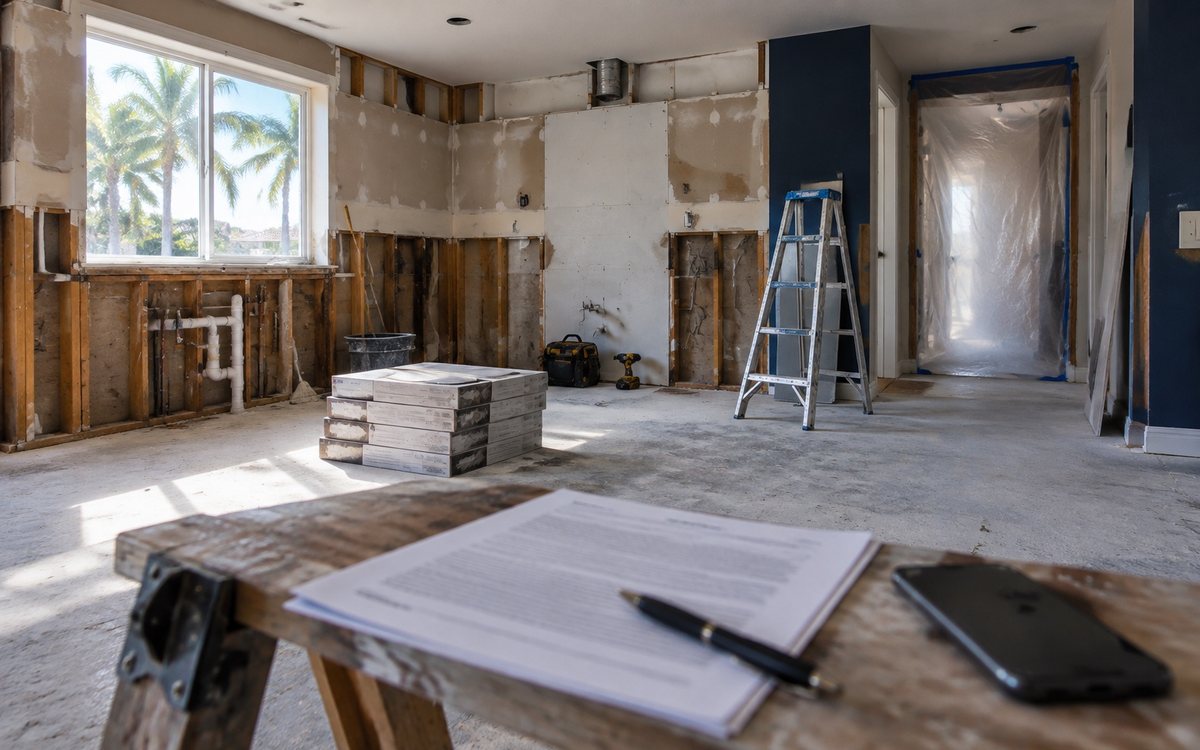
Quick Answer: Can You Sue a Contractor for Abandoning Your Renovation in Florida?
Yes, in many cases. A Florida homeowner whose contractor walks off a renovation without just cause can usually sue for breach of contract and seek the reasonable extra cost to finish the job, the cost to fix defective work, and money paid for work that was never performed. Florida law also gives owners tools outside the courtroom. Under Fla. Stat. § 489.129(1)(j), a project may be presumed abandoned when a licensed contractor stops work without just cause for 90 consecutive days, or terminates the project without just cause or without proper notice to the owner, which can support discipline and restitution through the Construction Industry Licensing Board.
Depending on the facts, you may also be able to demand a refund of an unearned deposit under Fla. Stat. § 489.126, pursue triple damages against an unlicensed contractor under Fla. Stat. § 768.0425, and, as a last resort, apply to the Florida Homeowners' Construction Recovery Fund, which can pay up to $100,000 per claim for Division I contracts and $30,000 per claim for Division II contracts entered into on or after July 1, 2024. The most important practical point is this: read and follow your contract's notice and termination terms before you fire the contractor or hire a replacement, because a homeowner who terminates improperly can end up being treated as the party in breach.
Published November 23, 2026. This guide is general educational information for homeowners in Miami, Coral Gables, Fort Lauderdale, and across Florida, based on the 2026 Florida Statutes. It is not legal advice, and reading it does not create an attorney-client relationship. Your contract, your payment history, your contractor's license status, and your dates control the answer in your situation.
What Counts as Contractor Abandonment Under Florida Law?
Florida does not have a single all-purpose definition of abandonment. Two statutes in Chapter 489, which regulates contractors, do most of the work, and your contract may add its own definition.
The 90-Day Presumption for Licensed Contractors
Section 489.129(1)(j) makes abandoning a construction project a ground for discipline. It says a project may be presumed abandoned after 90 days if the contractor terminates the project without just cause or without proper notification to the owner, including the reason for termination, or fails to perform work without just cause for 90 consecutive days. The Construction Industry Licensing Board can then reprimand, fine, suspend, or revoke a license and can order financial restitution to the consumer.
A related provision, § 489.129(1)(g), treats it as financial mismanagement when a contractor abandons a job and the percentage of work completed is less than the percentage of the contract price the owner has paid, unless the contract allows the contractor to keep those funds or the contractor refunds the excess within 30 days after abandonment.
The 90-Day Rule for Overpaid Residential Work
For residential projects, § 489.126(3) says a contractor who has received more money than the value of the work performed may not fail or refuse to perform any work for a 90-day period, or for a different period the parties specified in the contract. The statute makes it prima facie evidence of a violation when the contractor performed no work during that period, the stoppage was not caused by the owner's termination or material breach, and the contractor had no just cause or quit without proper notice. Proper notice means a certified letter, return receipt requested, stating the reason for termination or for the failure to perform.
Not Every Delay Is Abandonment
Renovations stall for legitimate reasons. Permit review, failed inspections, back-ordered windows or cabinets, hurricane warnings, hidden conditions behind walls, unpaid draws, or owner-requested changes can all be argued as just cause. A contractor who sends a written explanation and a realistic schedule is in a different legal position than one who stops answering the phone. Before you label a delay as abandonment, compare the facts to your contract's schedule, delay, and termination clauses.
Warning Signs a Contractor Has Walked Away
- No workers or deliveries on site for weeks, with no written explanation.
- Calls, texts, and emails go unanswered, or the contractor repeatedly promises dates that pass.
- The contractor asks for more money before completing work you have already paid for.
- Permits were never pulled, or inspections were scheduled and missed.
- Subcontractors or suppliers contact you about unpaid bills, or you receive a Notice to Owner from a company you have never heard of.
- Tools and equipment have been removed from the job site.
Your Options at a Glance
| Option | What it can address | Key requirements and limits |
|---|---|---|
| Breach of contract lawsuit or arbitration | Reasonable cost to complete above the unpaid contract balance, repair of defective work, some delay costs | Material breach, compliance with contract notice and cure terms, filing deadlines, and the contractor's ability to pay |
| Written demand under § 489.126 | Refund of an unearned deposit or overpayment on residential work | Certified mail, return receipt requested, to the address required by the statute |
| Licensing complaint (DBPR or local board) | Discipline and possible restitution order against a licensed contractor | An administrative process, not a substitute for a lawsuit, and it does not pause filing deadlines |
| Homeowners' Construction Recovery Fund | Unpaid portion of a qualifying judgment, arbitration award, or restitution order | Licensed contractor, owner-occupied residence, specified violations, collection efforts, one-year claim deadline, payment caps |
| Unlicensed contractor remedies | Contract and lien unenforceable by the contractor; triple actual damages for negligence, malfeasance, or misfeasance | Contractor must be neither state-certified nor locally licensed for the work |
| Bond or insurance claim | Losses covered by a payment or performance bond or applicable insurance | Only if a bond or policy exists and its notice terms are met |
| Criminal referral | Prosecution and possible restitution for diverted deposits or misapplied funds | Prosecutors decide whether to file charges; intent must be proven |
The table summarizes the Florida statutes discussed in this guide. Which options fit your project depends on the contract, the contractor's license, how much you paid, and when the work stopped.
Step-by-Step: What to Do When Your Contractor Walks Off the Job
1. Read the Contract Before You Act
Pull out the signed contract and every change order. Look for the scope of work, the schedule, the payment draw schedule, a notice and opportunity to cure provision, termination for cause and for convenience terms, a dispute resolution or arbitration clause, a prevailing party attorney fee clause, any waiver of consequential or delay damages, and the warranty. Many Florida contracts require written notice and a cure period, often 7 to 14 days, before the owner may terminate for default. Skipping that step is one of the most common ways homeowners weaken a strong claim.
2. Document the Site and the Money
Take dated photos and video of every room, including incomplete and defective work, materials left on site, and the permit card. Gather the contract, change orders, invoices, receipts, canceled checks, card statements, bank transfers, texts, emails, and any messages from subcontractors. Build a simple timeline showing the date of each payment, the last day anyone worked, and every promise the contractor made.
3. Check the License and the Permit
Look up the contractor and the qualifying agent through the Florida Department of Business and Professional Regulation. In Miami-Dade County, the Department of Regulatory and Economic Resources regulates local contractor licensing and can confirm complaints, licensing, and insurance, as explained on the Miami-Dade contractor and owner-builder responsibilities page. Check your local building department's permit and inspection history to see what was permitted, inspected, and failed. License status affects which remedies are available, including the recovery fund and the unlicensed contractor statutes.
4. Send a Written Demand by Certified Mail
For residential work covered by § 489.126, the statute calls for a written demand letter sent by certified mail, return receipt requested, to the contractor's address in the contract, or, if there is none, to the address on file with the licensing authority. The letter should demand that the contractor apply for the permits, start or resume the work, or refund the money. If the contractor fails to act or refund within 30 days after receiving the demand, the statute allows an inference that the contractor lacked just cause. Follow any additional notice method your contract requires, keep copies, and save the green card or electronic tracking record.
5. Protect Yourself From Construction Liens
Under Florida's Construction Lien Law, Chapter 713, subcontractors and suppliers who are not paid can record liens against your property even if you already paid your contractor. Check whether a Notice of Commencement was recorded and whether you received any Notices to Owner. Before paying anyone further, ask for lien releases from the contractor and every subcontractor and supplier who served a notice. A Notice of Commencement generally expires one year after recording unless it states a different date, and a replacement contractor may need a new or amended notice. Speak with a lawyer before recording a notice of termination or a new notice, because the timing affects your lien protections.
6. Terminate Carefully, Then Mitigate
If the contractor does not cure, send a written termination that cites the contract provisions you relied on. Before a replacement contractor covers anything up, have the existing work documented, and in larger projects consider an independent inspection or engineer's report. Then get written bids to finish the job. Florida law generally expects an injured party to take reasonable steps to limit its losses, and competitive bids help show that the cost to complete was reasonable.
7. File Regulatory and Criminal Complaints Where Appropriate
You can file a complaint against a licensed contractor with DBPR and, where applicable, with the local licensing authority. If a contractor took a deposit and never pulled permits or started work, or diverted your payments, you can report it to local law enforcement. These complaints can create leverage and, in some cases, restitution, but they are not a lawsuit and they do not stop the clock on your civil claim.
Can You Get Your Deposit Back?
Often, yes. Section 489.126(2) applies when a contractor receives an initial payment of more than 10 percent of the contract price for residential work. The contractor must apply for the necessary permits within 30 days after the payment and start work within 90 days after the permits are issued, unless the contractor has just cause or you agreed in writing to a longer period. The section applies to any person who contracts to perform the work, whether or not that person is licensed.
If the contractor misses those deadlines, the written demand described above starts a 30-day window. A contractor who still fails to act or refund may face criminal exposure graded by the amount involved, from a first-degree misdemeanor when the total is under $1,000 to felony charges at $1,000 or more. Criminal charges are decided by prosecutors, not homeowners, and they do not replace a civil claim for your money.
Some homeowners also consider a civil theft claim under Fla. Stat. § 772.11, which allows threefold actual damages and attorney's fees but requires clear and convincing evidence of theft and a pre-suit written demand. It also carries risk: a defendant can recover its own attorney's fees if the court finds the claim was without substantial fact or legal support. An ordinary contract dispute is not automatically theft, so this claim should be evaluated carefully by a lawyer.
What Damages Can You Recover?
In a breach of contract case, the goal is generally to put you in the position you would have been in if the contractor had finished the job as agreed. Depending on the contract and the evidence, recoverable damages can include:
- The reasonable cost to complete the project that exceeds the unpaid balance you still owed under the original contract.
- The reasonable cost to repair or replace defective work the contractor installed.
- A refund of money paid for work that was never performed.
- Amounts you had to pay subcontractors or suppliers to release liens that the contractor should have paid from your funds.
- Foreseeable delay costs, such as temporary housing or storage, unless the contract validly waives them.
Here is a simplified, hypothetical example. You sign an $80,000 kitchen and bath contract and pay $50,000. The contractor leaves, and a replacement contractor charges $55,000 to finish. Because you still owed $30,000 under the original contract, the excess cost to complete is about $25,000, before adding any repair or delay costs. Real cases involve disputes over the value of work performed, change orders, and whether the replacement scope matches the original.
Attorney's fees are not automatic in Florida. They are usually recoverable only when a contract or statute provides for them. If your contract lets one party recover fees, Fla. Stat. § 57.105(7) generally makes that right reciprocal. Fees are also available in specific situations, such as claims against unlicensed contractors under § 768.0425 and actions to enforce construction liens under § 713.29.
Finally, a judgment is only as valuable as your ability to collect it. Contractors who abandon jobs sometimes have other unhappy customers, unpaid suppliers, or financial trouble. That is why bonds, insurance, and the recovery fund matter, and why acting early can make a difference.
The Florida Homeowners' Construction Recovery Fund
The Florida Homeowners' Construction Recovery Fund is a state fund, administered through the Construction Industry Licensing Board, that can compensate certain homeowners harmed by a licensed contractor's financial misconduct, abandonment, or false statements. DBPR describes it as a last resort after civil remedies have been exhausted.
Who Can Qualify
Under § 489.141 and related sections, a claimant generally must:
- Be a homeowner, which the statute defines as the owner of an owner-occupied residence under § 489.1402.
- Have contracted with a contractor who was licensed when the violation occurred. Unlicensed contractors are not covered.
- Obtain a final judgment, an arbitration award, or a Construction Industry Licensing Board restitution order based on § 489.129(1)(g), (j), or (k) or § 713.35, specifying actual damages.
- Exhaust any available bond, surety, warranty, or insurance and make required collection efforts, such as an asset search or a writ of execution.
- File the claim within one year after the civil, criminal, or administrative action or arbitration award concludes.
How Much the Fund Can Pay
Under § 489.143, for contracts entered into on or after July 1, 2024, the fund may pay up to $100,000 per Division I claim and up to $30,000 per Division II claim, limited to actual damages and to the unpaid portion of the judgment or award. Division I generally covers general, building, and residential contractors, and Division II covers specialty trades. Older contracts are subject to lower caps, and aggregate limits apply per contractor and per transaction. The fund does not pay attorney's fees, court costs, post-judgment interest, or punitive damages.
Florida law also requires most residential construction contracts over $2,500 to include a written notice about the recovery fund under § 489.1425. If your contract has that notice, it is a reminder to keep this option in mind from the start of your case.
Was Your Contractor Unlicensed? Florida Law Shifts the Leverage
Hiring an unlicensed contractor changes the analysis. Under § 489.128, a contract entered into by a contractor who lacks the license required for the work is unenforceable in law or in equity by that contractor, and § 713.02(7) provides that no construction lien exists in favor of an unlicensed contractor. The homeowner, however, can still enforce the contract.
In addition, § 768.0425 entitles a consumer to three times the actual compensatory damages, plus costs and attorney's fees, in an action against a contractor for injuries resulting from the contractor's negligence, malfeasance, or misfeasance, if the contractor is neither certified by the state nor licensed by the county or city where it does business. Unlicensed contracting can also be a crime under § 489.127. Because the recovery fund does not cover unlicensed contractors, collection from the individual or company is often the main concern in these cases.
Florida Deadlines That Can Affect Your Claim
- Construction claims: Fla. Stat. § 95.11(3)(b) sets a four-year limitations period for actions founded on the design, planning, or construction of an improvement to real property. When construction is not completed, the period runs from the date of abandonment of construction if that is the earliest triggering date, with a seven-year outer limit for latent defects.
- Written contracts: § 95.11(2)(b) generally allows five years for actions on a written contract, but construction-related claims are frequently governed by the shorter construction period. Do not assume you have five years.
- Recovery fund: claims must be made within one year after the underlying action or award concludes.
- Deposit demands: § 489.126 relies on 30-day windows after a written demand.
- Contract terms: your contract may require notice within a set number of days, mediation, or arbitration before any lawsuit.
Deadlines depend on specific dates, and calculating them is a legal question. If your project stopped months ago, speak with a lawyer promptly.
Does Chapter 558 Apply When a Contractor Abandons the Job?
Sometimes. Florida's construction defect pre-suit process in Chapter 558 applies to actions for damages caused by an alleged construction defect. A claim based only on a contractor's failure to finish may not involve a construction defect, but many abandoned renovations also include defective work, such as improper framing, failed waterproofing, or code violations. For those claims, Chapter 558 generally requires written notice at least 60 days before filing suit, or 120 days for associations representing more than 20 parcels, and gives the contractor an opportunity to inspect and respond. A lawyer can determine whether your claims trigger this process and how to sequence it with your contract claims.
Common Mistakes Homeowners Make After a Contractor Walks Away
- Firing the contractor without following the contract's notice and cure provisions.
- Letting a new contractor cover or demolish work before it is documented.
- Making more payments without lien releases from subcontractors and suppliers.
- Relying only on texts instead of the certified mail notice Florida statutes require.
- Assuming a DBPR complaint will get your money back or protect your filing deadline.
- Ignoring an arbitration or venue clause in the contract.
- Posting accusations about the contractor online, which can create separate legal risk.
- Waiting too long and losing evidence, witnesses, or the ability to collect.
How to Protect Your Next Renovation
- Verify the contractor's state or local license, and confirm the license matches the type of work.
- Use a written contract with a detailed scope, a schedule, a draw schedule tied to completed milestones, and a clear termination clause.
- Keep deposits modest and pay only for work completed and inspected.
- Require written, signed change orders with prices before extra work begins.
- Record a Notice of Commencement when required and collect lien releases with each payment.
- Ask for proof of liability and workers' compensation insurance.
- Be cautious if a contractor asks you to pull an owner-builder permit for work the contractor will perform. Owner-builders take on legal responsibilities that a licensed contractor would otherwise carry.
South Florida Considerations
In Miami-Dade and Broward counties, hurricane season, High-Velocity Hurricane Zone product approval requirements, permit backlogs, and post-storm labor shortages can all slow a renovation. Contractors often cite these conditions as just cause for delays, so your documentation should show what the contractor told you and when. Condominium owners should also review association approval requirements and insurance obligations, because an abandoned unit renovation can affect common elements, neighbors, and the association's rules. After major storms, homeowners should be especially careful with large upfront deposits and unverified contractors.
How The Farber Law Firm Can Help
The Farber Law Firm, P.A., based in Coral Gables, represents property owners in construction defect and contractor disputes. For an abandoned renovation, that can include reviewing your contract and payment history, preparing statutory demand and termination letters, evaluating claims against the contractor, any bond, and responsible parties, advising on the recovery fund and licensing complaints, and pursuing negotiation, arbitration, or litigation when warranted. Learn more about our Construction Defects practice and Business Law practice, or read our related guide on Florida breach of contract remedies and damages. You can also request a free consultation or use the form on this page.
Hiring a lawyer is an important decision that should not be based solely on advertisements. Past results do not guarantee a similar outcome, and no result is promised in any matter.
If this article describes your situation, these practice pages explain how The Farber Law Firm can help: Construction Defects Practice and Business Law Practice. You can also call 8888-FARBER for a free case review.
Share a brief description of the project, what you paid, and when work stopped. Do not send sensitive documents through this initial form; ask the firm how to provide them securely. Sending an inquiry does not protect a filing deadline or mean the firm has accepted representation.
Frequently Asked Questions
Can I sue a contractor who abandoned my renovation in Florida?
Often, yes. If the contractor stopped work without just cause, you can usually sue or arbitrate for breach of contract and seek the reasonable extra cost to finish, the cost to fix defective work, and money paid for work never performed. Licensing complaints, the Homeowners' Construction Recovery Fund, and unlicensed contractor statutes may provide additional options, depending on the facts.
How long does a contractor have to be gone before the job is considered abandoned in Florida?
Under Fla. Stat. § 489.129(1)(j), a project may be presumed abandoned if a contractor fails to perform work without just cause for 90 consecutive days, or terminates the project without just cause or without proper notice to the owner. Your contract may define abandonment or default differently, and a shorter contractual period can matter for termination.
Can I fire my contractor and hire someone else to finish?
Possibly, but follow your contract first. Many contracts require written notice and a cure period before termination for default. If you terminate without following those steps, the contractor may argue that you breached the contract. Document the work before the new contractor starts, and get competitive bids to show the cost to complete was reasonable.
How do I get my deposit back from a Florida contractor?
For residential work, Fla. Stat. § 489.126 requires a contractor who receives more than 10 percent of the contract price upfront to apply for permits within 30 days and start work within 90 days after permits issue, unless there is just cause or you agreed otherwise in writing. Send a written demand by certified mail, return receipt requested. If the contractor fails to act or refund within 30 days, that can support civil claims and possible criminal charges.
What is the Florida Homeowners' Construction Recovery Fund?
It is a state fund that can pay certain homeowners who obtain a judgment, arbitration award, or licensing board restitution order against a licensed contractor for financial misconduct, abandonment, or specified false statements and cannot collect it. For contracts entered into on or after July 1, 2024, it can pay up to $100,000 per Division I claim and $30,000 per Division II claim, subject to eligibility rules and a one-year claim deadline.
Does the recovery fund cover unlicensed contractors?
No. The fund only covers losses caused by contractors who were licensed when the violation occurred, and the claimant must be the owner of an owner-occupied residence. If your contractor was unlicensed, other remedies, including triple damages under Fla. Stat. § 768.0425 in qualifying cases, may apply.
What if my contractor was unlicensed?
A contract entered into by an unlicensed contractor is unenforceable by that contractor under Fla. Stat. § 489.128, and an unlicensed contractor has no construction lien rights under § 713.02(7). You can still enforce the contract, and § 768.0425 can entitle you to three times your actual compensatory damages, plus costs and attorney's fees, for the contractor's negligence, malfeasance, or misfeasance.
Can subcontractors put a lien on my house if I already paid the contractor?
Yes, under Florida's Construction Lien Law, unpaid subcontractors and suppliers may have lien rights even if you paid your contractor. Notices to Owner, a recorded Notice of Commencement, and lien releases with each payment help protect you. If a lien is recorded after a contractor abandons the job, talk to a lawyer about your options promptly.
How long do I have to sue a contractor in Florida?
Fla. Stat. § 95.11(3)(b) generally sets a four-year period for actions founded on the construction of an improvement to real property, which can run from the date construction was abandoned if the work was never completed. Other deadlines, contract terms, and Chapter 558 notice requirements may also apply, so get advice early.
Do I have to send a Chapter 558 notice before suing a contractor who abandoned the job?
It depends on your claims. Chapter 558 applies to actions for damages caused by construction defects. A pure failure-to-finish claim may not require it, but if you are also claiming defective work, a written notice at least 60 days before filing suit is generally required for those claims.
Can I recover attorney's fees from the contractor?
Only if a contract or statute allows it. Many construction contracts include a prevailing party fee clause, and Fla. Stat. § 57.105(7) generally makes a one-sided contractual fee provision reciprocal. Statutes such as § 768.0425 for unlicensed contractors and § 713.29 in lien enforcement actions can also provide for fees.
Should I report an abandoning contractor to DBPR or the police?
You can file a complaint with DBPR against a licensed contractor and, in Miami-Dade, with the county's contractor licensing section. If a contractor took a deposit and never pulled permits or started work, or diverted your payments, a police report may also be appropriate. These steps can help, but they do not replace a civil claim or pause your filing deadline.
Can The Farber Law Firm review my contractor dispute?
Yes. The firm offers a free initial consultation for Florida contractor and construction disputes through the form on this page or by phone at 8888-FARBER. Submitting information does not create an attorney-client relationship or protect a deadline, no result is promised, and accepted matters are handled under a written engagement agreement.
About the Author
The Farber Law Firm, P.A.
The Farber Law Firm is a South Florida trial practice based in Coral Gables, representing injured people, policyholders and businesses across Miami-Dade, Broward and Palm Beach counties. Founding attorney David Farber has more than 25 years of Florida litigation experience and has been a member of The Florida Bar since 2000. The firm handles personal injury, wrongful death, insurance coverage disputes and commercial litigation.
Articles on this site are written and reviewed by attorney David Farber and reflect Florida statutes, court rules and Florida Bar regulations current as of the publication date.
- Office
- 2199 Ponce de Leon Blvd #301
Coral Gables, FL 33134 - Phone
- 8888-FARBER
- Consultations
- Free and confidential
Florida Legal Insights, in Your Inbox
Subscribe for educational Florida legal insights from The Farber Law Firm, including contractor disputes, construction defects, and property owner rights.
By subscribing, you request legal insights by email. This is not a consultation request and does not create an attorney-client relationship. Privacy Policy.
The Farber Law Firm, P.A. · Construction & Contractor Disputes
Your contractor walked away. Your rights did not.
An unfinished renovation can leave you paying twice: once for work that was never done, and again to finish it. The Farber Law Firm helps Florida homeowners and property owners respond to abandoned projects, unearned deposits, and defective work, starting with a free review of your contract, payments, and options.
We review the contract and the money trail
Scope, schedule, draws, change orders, and notice terms are compared with what you paid and what was built.
We handle the formal notices
Statutory deposit demands, notice-to-cure, and termination letters are prepared so they meet Florida and contract requirements.
We track the Florida deadlines
Construction limitations periods, Chapter 558 notice, and recovery fund timing are reviewed against your dates.
We map a practical path to recovery
Negotiation, bond or insurance claims, licensing complaints, the recovery fund, arbitration, or litigation, chosen around your goals.
No upfront fee for the initial consultation. You decide whether to proceed after hearing your options. If the firm takes your matter, fees and costs are explained in a written engagement agreement.
Explore our Construction Defects practice
2199 Ponce de Leon Blvd #301, Coral Gables, FL 33134. Initial consultations are free; representation, fees, and costs are subject to a written engagement agreement. No result is promised. Do not send confidential documents until the firm confirms how to provide them securely. Contacting the firm does not create an attorney-client relationship or extend a deadline.