Do I Need a Lawyer for a Car Accident in Miami? A 2026 Decision Guide for Florida Drivers
A Coral Gables trial firm's honest answer to whether you need a lawyer after a Florida car accident in 2026: the crashes you can reasonably handle alone, the warning signs that you cannot, the 14-day PIP rule, and what HB 837 changed about fault and deadlines.
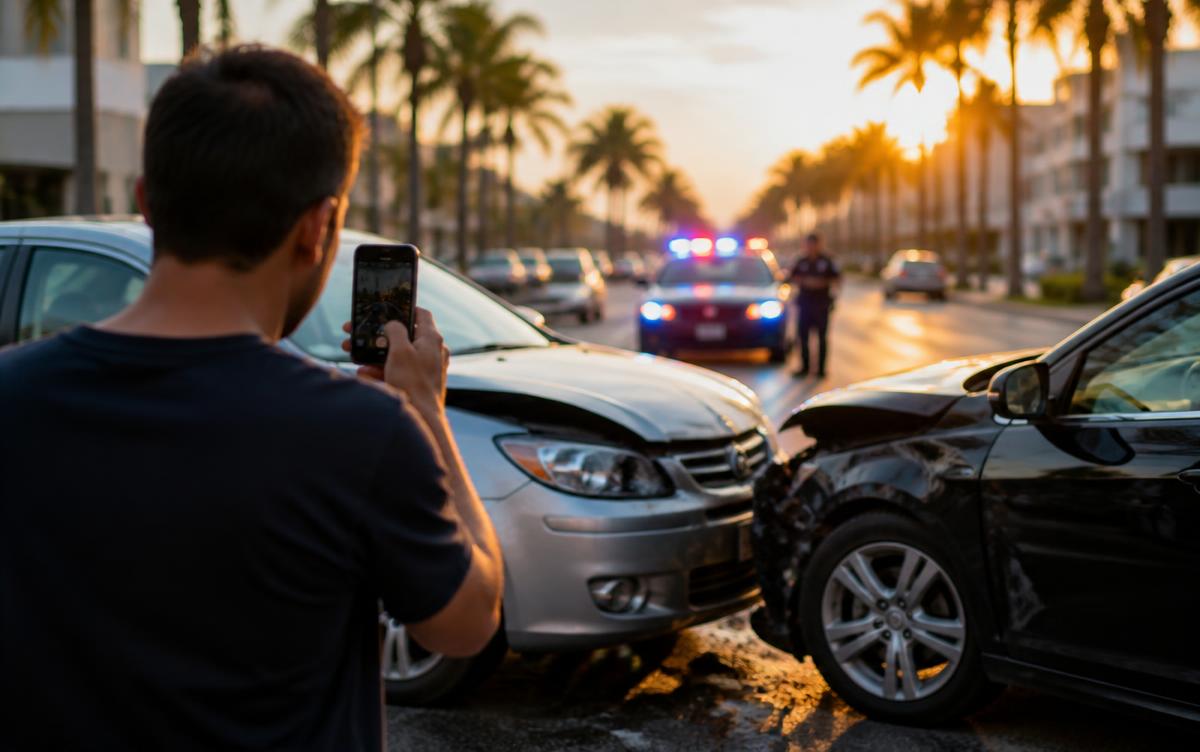
You do not need a lawyer for every car accident in Florida. If nobody was hurt, the other driver's insurer accepted fault, and the only dispute is the cost of a bumper, hiring counsel usually adds cost without adding value. You very likely do need one if you were injured, if fault is contested, if the at-fault driver was uninsured or commercial, or if an adjuster has already asked you for a recorded statement or a blanket medical authorization.
That is the short answer. The rest of this guide explains how to tell which category your crash falls into, the Florida deadlines that quietly decide the question for you, and what actually changed for Miami-Dade drivers after the 2023 tort reform law took full effect.
The two-minute test: does your crash need a lawyer?
Work through these questions honestly. A single yes is a reason to at least get a free consultation before you sign anything.
- Did anyone receive medical treatment, including an urgent care or emergency room visit, or develop symptoms in the days after the crash?
- Is the other driver, the police report, or the insurer suggesting you were partly or fully at fault?
- Was a commercial vehicle, rideshare vehicle, delivery van, government vehicle, or rental involved?
- Did the at-fault driver flee, have no insurance, or carry only minimum limits?
- Has an adjuster requested a recorded statement, offered a quick settlement, or sent you a broad medical records authorization?
- Are your medical bills approaching or exceeding ten thousand dollars, which is the standard Florida PIP limit?
- Do you have an injury that may be permanent, such as a disc herniation, fracture, concussion, or scarring?
If every answer is no, your claim is likely a straightforward property damage matter. Document the damage, get two repair estimates, and negotiate directly. Keep the file: if symptoms appear later, the underlying claim is still live within the statutory deadline even if you already settled property damage separately.
Florida's no-fault system and the 14-day rule that catches most people
Florida remains a no-fault state in 2026. Under Fla. Stat. § 627.736, your own Personal Injury Protection coverage pays 80 percent of reasonable and necessary medical expenses and 60 percent of lost wages, up to a 10,000 dollar combined limit, regardless of who caused the crash.
Two features of that statute cost unrepresented drivers more money than anything else. First, § 627.736(1)(a)(1) requires you to receive initial services and care within 14 days of the accident. Miss that window and PIP benefits are lost entirely, not merely reduced. Second, § 627.736(1)(a)(3) limits you to 2,500 dollars of the 10,000 unless a physician, osteopathic physician, dentist, or supervised physician assistant or nurse practitioner determines you have an emergency medical condition. A chiropractor cannot make that determination.
The practical consequence: if you walked away from a Miami crash feeling sore and decided to wait and see, the calendar is working against you. Get evaluated inside 14 days even if you are unsure whether you are hurt.
When you can step outside no-fault and pursue the at-fault driver
PIP is not the ceiling. Under Fla. Stat. § 627.737(2), you may bring a claim against the at-fault driver for pain, suffering, mental anguish, and inconvenience only if the injury consists in whole or in part of significant and permanent loss of an important bodily function, permanent injury within a reasonable degree of medical probability other than scarring or disfigurement, significant and permanent scarring or disfigurement, or death.
That permanency threshold is where most disputes live. It is a medical question answered by treating physicians and imaging, and it is the single reason why what happens in your first 90 days of treatment often matters more to case value than anything a lawyer argues two years later. Economic damages such as medical bills beyond PIP and lost income are not subject to the threshold.
What HB 837 changed, and why 2026 crashes are handled differently
Florida's 2023 tort reform law, House Bill 837, reshaped the economics of car accident claims. Three changes matter to a driver deciding whether to hire counsel.
The deadline is two years, not four
Fla. Stat. § 95.11(5)(a) now sets a two-year statute of limitations for negligence causes of action that accrued on or after March 24, 2023. Every Miami crash in 2026 is governed by the two-year rule. Wrongful death claims run two years under § 95.11(4)(d). Claims against a state agency or municipality carry an additional presuit notice requirement under § 768.28(6), generally three years to serve written notice, with a 180-day agency review period before suit.
Being 51 percent at fault ends the claim
Under the modified comparative negligence standard in Fla. Stat. § 768.81(6), a plaintiff found more than 50 percent responsible for their own harm recovers nothing in a negligence action. Medical negligence actions are excluded from that bar. This is why a casual recorded statement is more dangerous now than it was before 2023. An offhand admission that shifts your share of fault from 45 to 55 percent no longer reduces your recovery, it eliminates it.
Medical damages are proved differently
HB 837 added Fla. Stat. § 768.0427, which limits evidence of past medical damages largely to amounts actually paid rather than amounts billed, and constrains how future medical damages are presented. Letters of protection must be disclosed along with the referral relationship. The result is that the paperwork behind a treatment file now drives value in a way it did not previously, and disorganized records cost real money.
Situations where handling it yourself is reasonable
There is no professional rule requiring representation, and plenty of Florida claims resolve fairly without it. Self-handling is a defensible choice when all of the following are true: no one sought medical care, liability is admitted in writing by the insurer, the vehicle damage is repairable and the estimate is undisputed, and no commercial or governmental party is involved.
Even then, three habits protect you. Put every agreement in writing. Never sign a general release without reading whether it also releases bodily injury claims, because most standard releases do. And do not accept the first property damage offer without checking a diminished value claim, which Florida recognizes for the loss in resale value a repaired vehicle suffers.
Situations where representation usually changes the outcome
Contested or shared fault
Miami-Dade intersection crashes, lane-change disputes, and multi-car chain collisions frequently produce conflicting accounts. Under § 316.066(2)(a), the crash report itself is generally inadmissible as evidence in a civil trial, so the underlying proof has to be rebuilt from independent sources: scene photographs, event data recorder downloads, business surveillance video that is often overwritten within days, and witness statements. Preserving that evidence is time-sensitive and rarely happens on its own.
Uninsured and underinsured drivers
Florida does not require drivers to carry bodily injury liability coverage. It requires 10,000 dollars of PIP and 10,000 dollars of property damage liability. A serious injury caused by a minimum-coverage driver often has no meaningful liability pool at all, which pushes the claim onto your own uninsured or underinsured motorist coverage. UM claims are adversarial by nature: your own insurer is the opposing party, and consent-to-settle provisions mean accepting the at-fault driver's limits without written UM carrier approval can void your UM claim entirely.
Commercial trucks, rideshare, and delivery vehicles
Layered coverage changes everything. A rideshare driver's coverage depends on app status at the moment of impact. A delivery or commercial vehicle typically brings an employer, a policy in the hundreds of thousands or millions, and a rapid response investigator who is at the scene before you have left the hospital. Fla. Stat. § 627.4137 lets you demand written disclosure of liability coverage limits within 30 days, which is the first step in understanding what a claim is actually worth.
The adjuster is moving quickly
A fast offer is a pricing decision made while your medical picture is incomplete. A release is final. It cannot be reopened when an MRI six weeks later shows a herniation that requires injections or surgery. Speed favors the party that already knows what the claim is worth.
What a lawyer actually does that you cannot easily do yourself
- Obtains and preserves crash-scene evidence, including surveillance footage before retention windows close
- Compels coverage disclosure under § 627.4137 and identifies every applicable policy, including resident-relative and umbrella coverage
- Coordinates treatment documentation so causation and permanency are established in the medical record rather than argued afterward
- Negotiates health insurance, Medicare, Medicaid, and hospital lien reductions, which under 42 U.S.C. § 1395y and Fla. Stat. § 409.910 can consume a settlement if handled late
- Uses proposals for settlement under Fla. Stat. § 768.79 and bad faith exposure under § 624.155 as leverage where the facts support it
- Handles the case management deadlines Florida courts now enforce under the amended Fla. R. Civ. P. 1.200 and 1.201
What it costs, and why the fee is not the real question
Florida personal injury representation is contingency based. Fee percentages are governed by Rule 4-1.5(f)(4)(B) of the Rules Regulating The Florida Bar, with a standard tier of 33 and one third percent of any recovery up to one million dollars obtained before the defendant files an answer or demands appellate arbitration, and 40 percent after that point. Article I, Section 26 of the Florida Constitution gives a claimant a right to a larger share of the recovery, which a client may waive knowingly in writing. Rule 4-1.5(f)(4)(B) also gives you three business days to cancel a contingency contract after signing.
The right comparison is not zero versus 33 percent. It is your net recovery unrepresented, after liens and after whatever a permanency dispute costs you, versus your net recovery represented. In a clean property damage claim, unrepresented usually wins. In an injury claim with contested fault or layered coverage, it usually does not. No firm can promise a result, and any prediction of a specific outcome should be treated as a warning sign rather than a selling point.
What to do in the first 14 days after a Miami crash
- Call 911 and make sure a report is generated. Under Fla. Stat. § 316.066, a report is required for crashes involving injury, death, or apparent property damage of at least 500 dollars
- Photograph vehicle positions, damage, skid marks, signals, and road conditions before vehicles are moved, plus the other driver's license, registration, and insurance card
- Get a medical evaluation within 14 days, even for mild symptoms, to preserve PIP
- Notify your own insurer promptly, which is a policy condition, and give factual information only
- Decline recorded statements to the other driver's insurer until you understand your injuries
- Request your crash report, which is exempt from public disclosure for 60 days under § 316.066(2)(a) except to involved parties and their representatives
- Keep a symptom and missed-work log, because contemporaneous notes are far more persuasive than reconstruction months later
The bottom line for Miami drivers
Property damage only, admitted liability, nobody hurt: handle it yourself and keep good records. Any injury, any fault dispute, any commercial or uninsured driver, or any adjuster pressure: get a consultation before you sign, because the decisions that determine value are made in the first weeks, not in the last ones. Consultations at The Farber Law Firm are free and carry no obligation.
Frequently Asked Questions
Do I need a lawyer for a minor car accident in Florida?
Usually not, if no one was injured, liability is admitted in writing, and the dispute is limited to repair cost. Handle it directly, get two estimates, consider a diminished value claim, and read any release carefully to confirm it does not also release bodily injury claims. If symptoms appear later, consult an attorney before signing anything further.
How long do I have to sue after a car accident in Florida?
Two years from the date of the crash for negligence claims that accrued on or after March 24, 2023, under Fla. Stat. § 95.11(5)(a). Wrongful death claims are also two years under § 95.11(4)(d). Claims against a government entity require presuit written notice under § 768.28(6) and follow different timing. Deadlines are fact specific, so confirm yours with counsel.
What is the 14-day rule for Florida car accidents?
Fla. Stat. § 627.736(1)(a)(1) requires you to receive initial medical services and care within 14 days of the crash to be eligible for Personal Injury Protection benefits. Miss that window and PIP benefits are forfeited. Benefits are also capped at 2,500 dollars unless a qualifying provider determines you had an emergency medical condition.
Can I still recover if the accident was partly my fault?
Yes, up to 50 percent fault. Under Fla. Stat. § 768.81(6), damages are reduced by your percentage of responsibility, but a plaintiff found more than 50 percent at fault in a negligence action recovers nothing. Medical negligence actions are excluded from that bar. This is why recorded statements to the other driver's insurer carry more risk than they used to.
Should I give the other driver's insurance company a recorded statement?
You are generally not required to. You do owe cooperation to your own insurer under your policy. Statements given before your injuries are diagnosed can be used to argue fault allocation or to characterize an injury as minor, and under Florida's modified comparative negligence standard that has consequences. Speaking with an attorney first costs nothing.
What if the other driver had no insurance?
Florida does not require bodily injury liability coverage, so this is common. Your claim generally shifts to your own uninsured or underinsured motorist coverage, and possibly to resident-relative or umbrella policies. UM claims involve consent-to-settle provisions, and settling with the at-fault driver without written UM carrier approval can void UM coverage. Check your declarations page before taking any offer.
How much does a car accident lawyer cost in Miami?
Contingency fee, meaning no fee unless there is a recovery. Rule 4-1.5(f)(4)(B) of the Rules Regulating The Florida Bar sets standard tiers beginning at 33 and one third percent of a recovery up to one million dollars obtained before the defendant files an answer, rising to 40 percent afterward. You have three business days after signing to cancel a contingency agreement.
Have a similar situation?
Free, confidential case review with a South Florida trial attorney. Call 8888-FARBER.
Request a Free ConsultationAbout the Author
The Farber Law Firm, P.A.
The Farber Law Firm is a South Florida trial practice based in Coral Gables, representing injured people, policyholders and businesses across Miami-Dade, Broward and Palm Beach counties since 1995. The firm handles personal injury, wrongful death, insurance coverage disputes and commercial litigation, and its attorneys are members in good standing of The Florida Bar.
Articles on this site are written and reviewed by attorney David Farber and reflect Florida statutes, court rules and Florida Bar regulations current as of the publication date.
- Office
- 2199 Ponce de Leon Blvd #301
Coral Gables, FL 33134 - Phone
- 8888-FARBER
- Consultations
- Free and confidential
Florida Legal Insights, in Your Inbox
Subscribe to The Farber Law Firm’s email list for educational articles on Florida injury claims, insurance coverage, and consumer rights.
By subscribing, you request legal insights by email. This is not a consultation request and does not create an attorney-client relationship. Privacy Policy.