Miami Cruise Ship Injury Lawyer: Your 2026 Guide to Filing a Claim After a Cruise Accident
Injured on a cruise leaving PortMiami? A Miami maritime attorney explains the one-year statute of limitations, the six-month written-notice rule, forum-selection clauses forcing suit in Miami federal court, and how cruise injury cases actually work in 2026.
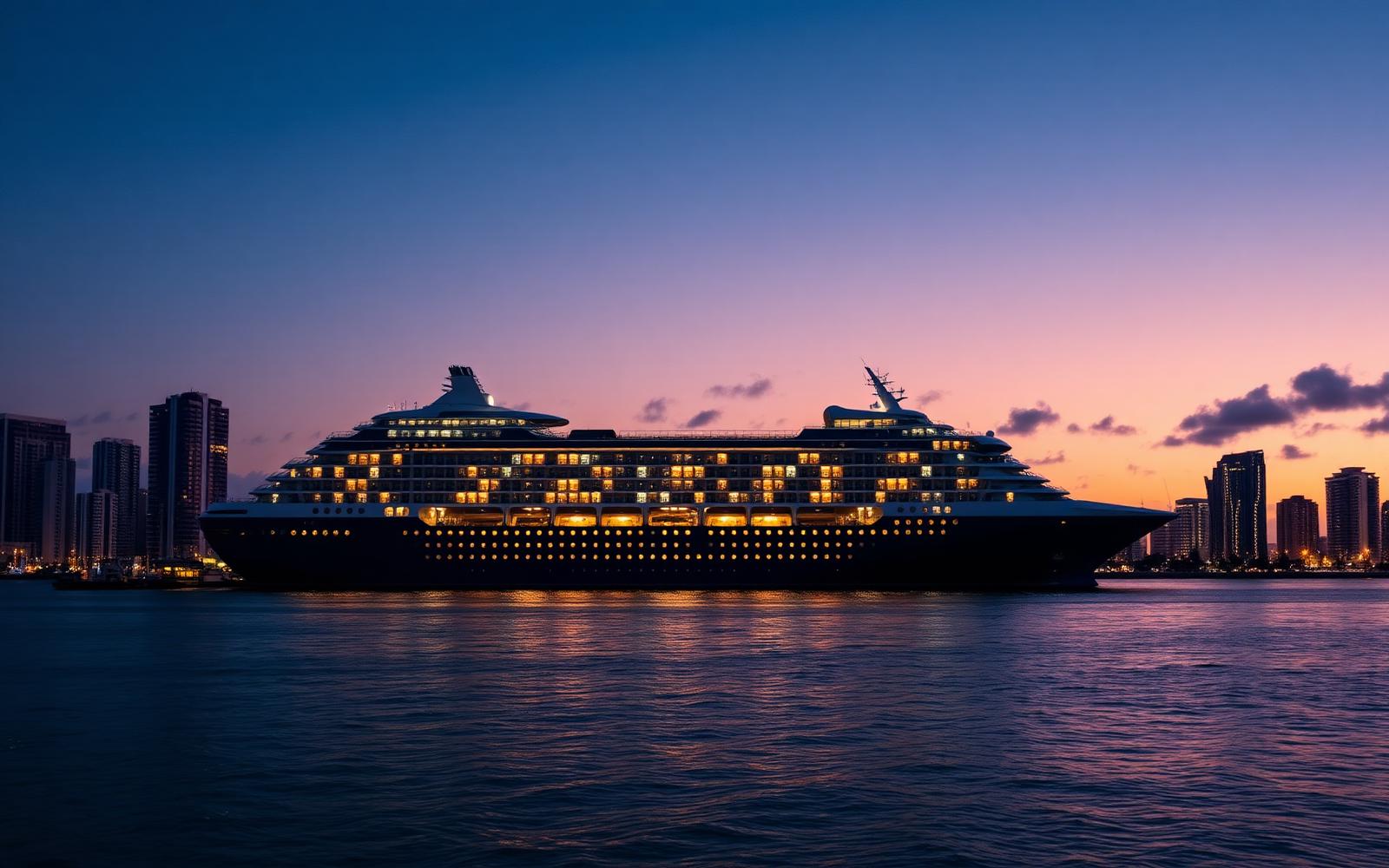
PortMiami is the busiest cruise port in the world. In 2025 it handled more than 8 million passengers, and Carnival, Royal Caribbean, Norwegian, MSC, Virgin Voyages, and Disney all sail from its terminals. When something goes wrong at sea — a slip on a wet pool deck, a shore-excursion injury in Nassau, an assault by a crew member, a food-poisoning outbreak, a tender-boat crash — the case that follows looks almost nothing like an ordinary Florida personal-injury claim. It is governed by federal maritime law, filed in federal court under a strict one-year deadline, and controlled by the fine print of a cruise ticket most passengers never read. This 2026 guide from The Farber Law Firm in Coral Gables explains how a Miami cruise ship injury claim actually works, what deadlines you cannot miss, and what to do in the days after an incident on board. Nothing here is legal advice about your specific case, and prior results never guarantee a similar outcome.
Quick Answer: The Rules Every Cruise Passenger Should Know
- Almost every major cruise line's passenger ticket contract requires a written notice of claim within six months of a personal injury and a lawsuit filed within one year. These limits are allowed by federal statute at 46 U.S.C. § 30527 (the recodification of former § 30508).
- Nearly every cruise line that sails from PortMiami — Carnival, Royal Caribbean, Norwegian, MSC USA — requires suit to be filed in the U.S. District Court for the Southern District of Florida in Miami. This forum-selection clause was upheld by the U.S. Supreme Court in Carnival Cruise Lines, Inc. v. Shute, 499 U.S. 585 (1991).
- Cruise passenger injury claims are governed by general maritime law, not the Florida four-year negligence rule and not Florida's two-year HB 837 deadline. Contributory fault reduces damages under a pure comparative-negligence rule — the federal admiralty rule from United States v. Reliable Transfer Co., 421 U.S. 397 (1975), not Florida's modified 50% bar.
- The cruise line's duty to passengers is reasonable care under the circumstances, established by the U.S. Supreme Court in Kermarec v. Compagnie Generale Transatlantique, 358 U.S. 625 (1959).
- Crew members injured on the job are covered by the Jones Act, 46 U.S.C. § 30104, and by the general maritime doctrines of unseaworthiness and maintenance and cure — a completely different framework from passenger claims.
- Deaths that occur more than three nautical miles from U.S. shore are handled under the Death on the High Seas Act, 46 U.S.C. §§ 30301–30308, which sharply limits recoverable damages compared to Florida's Wrongful Death Act.
Why Miami Is Ground Zero for Cruise Ship Injury Litigation
Cruise lines are free to choose the court their passengers must sue in, and the major lines have almost all chosen Miami. Carnival Corporation is headquartered in Doral. Royal Caribbean Group and Norwegian Cruise Line Holdings are headquartered in Miami. Their ticket contracts require any passenger dispute to be filed in the U.S. District Court for the Southern District of Florida, with a Miami division venue. That means an injury that happens in Cozumel, at sea near the Bahamas, or in an Alaskan port frequently ends up litigated at the Wilkie D. Ferguson, Jr. United States Courthouse in downtown Miami. Local knowledge of the S.D. Fla. judges, the cruise-line defense firms, and the recurring motion practice matters more in a Miami cruise case than in most personal-injury litigation.
The Six-Month Notice and One-Year Suit Deadlines
Federal law at 46 U.S.C. § 30527 permits an ocean carrier to shorten the ordinary limitations period as long as the shorter period is stated in the ticket. Every major cruise line has taken advantage of this. The typical Carnival, Royal Caribbean, Norwegian, MSC, and Virgin Voyages passenger contract requires two separate steps: first, a written notice of the injury and claim delivered to the cruise line within six months of the incident; second, a lawsuit filed in the contract-designated court within one year of the incident. Miss either deadline and the case is almost always over, regardless of how serious the injury or how clear the cruise line's fault. There are narrow exceptions for minors under some contracts and for wrongful-death claims under DOHSA, but the exceptions are far narrower than what state law would allow, and courts in the Southern District of Florida enforce these deadlines strictly. The date to calendar is not the date the ship returned to PortMiami — it is the date the injury occurred.
Forum-Selection Clauses: Why You Have to Sue in Miami
In Carnival Cruise Lines, Inc. v. Shute, the Supreme Court held that a forum-selection clause printed on the back of a cruise ticket was enforceable against a Washington-state passenger who was injured off Mexico. The Court reasoned that concentrating cruise-passenger litigation in one forum saves the industry substantial costs — savings that (in theory) benefit passengers through lower fares. Since Shute, the major cruise lines have used near-identical Miami forum clauses. A Miami-based cruise ship injury lawyer is not a preference in these cases; it is what the contract itself forces on the passenger. Attempting to sue in state court or in the passenger's home-state federal court almost always results in dismissal or transfer, with the one-year clock still running.
The Standard of Care: Reasonable Care Under the Circumstances
Under Kermarec and the Eleventh Circuit line of cases interpreting it, a cruise line owes its passengers a duty of reasonable care under the circumstances. That is a lower duty than the common-carrier standard applied to airlines, and courts routinely require the passenger to prove the cruise line had actual or constructive notice of the hazardous condition that caused the injury. See Keefe v. Bahama Cruise Line, Inc., 867 F.2d 1318 (11th Cir. 1989); Guevara v. NCL (Bahamas) Ltd., 920 F.3d 710 (11th Cir. 2019). This notice requirement is why preserving evidence quickly — incident reports, deck-camera footage, prior incident logs, maintenance records — is critical. Without evidence that the cruise line knew or should have known about a leaking ice machine, a slippery step, a broken railing, or a repeatedly assaultive crew member, the case fails even when the injury is severe.
Common Cruise Ship Injury Claims We See at PortMiami
- Slip and fall injuries on wet pool decks, marble atriums, buffet lines, and outside decks after rain. Wet-floor cases turn on whether the cruise line had notice and whether crew reasonably inspected and warned.
- Trip and fall injuries on raised thresholds, uneven decking, unmarked steps, and torn carpeting in cabins and public areas.
- Shore-excursion injuries during zip-lines, snorkeling, catamaran trips, and jet-ski rentals booked through the ship. Liability turns on whether the excursion was operated by an apparent agent of the cruise line and how the excursion contract characterizes the operator.
- Tender-boat and gangway accidents boarding or leaving the ship.
- Assaults by crew members — cruise lines can be liable under maritime law for sexual assaults and physical assaults committed by crew, and the reporting duties are governed in part by the Cruise Vessel Security and Safety Act of 2010 (Pub. L. 111-207, codified at 46 U.S.C. §§ 3507–3508).
- Assaults by other passengers where the cruise line knew of a risk and failed to intervene.
- Food poisoning and norovirus outbreaks — recovery is possible when the cruise line's food-handling breached the standard of care.
- Medical malpractice by shipboard doctors — historically difficult to sue under Barbetta v. S/S Bermuda Star, but the Eleventh Circuit rejected the Barbetta rule in Franza v. Royal Caribbean Cruises, Ltd., 772 F.3d 1225 (11th Cir. 2014). Miami is now one of the few venues where a passenger can pursue an actual apparent-agency claim against the ship's medical center.
- Missed diagnosis, delay in evacuation, and failure to divert for serious medical emergencies.
Comparative Fault Under Maritime Law
Florida's HB 837 modified 50% bar (Fla. Stat. § 768.81(6)) does not apply to cruise ship injury claims. Maritime law follows the pure comparative-fault rule from Reliable Transfer: even a passenger who is 80% at fault can recover the remaining 20% of damages. That is one of the few ways in which maritime law is more favorable to injured plaintiffs than post-HB 837 Florida law. Cruise-line defense counsel still argue aggressively for large comparative-fault percentages — for example, in wet-deck slip cases, alcohol-consumption cases, and cases where the passenger ignored posted warnings.
Deaths on the High Seas: DOHSA and Its Limits
When a passenger dies more than three nautical miles from any U.S. shore, the Death on the High Seas Act at 46 U.S.C. §§ 30301–30308 controls the case. DOHSA is significantly more restrictive than Florida's Wrongful Death Act. Recoverable damages are generally limited to pecuniary loss — the financial support the decedent would have provided — plus funeral expenses. Non-pecuniary damages such as loss of companionship, loss of parental guidance, and mental pain and suffering are not recoverable under DOHSA except in the narrow commercial-aviation exception at § 30307. A cruise passenger death that occurs in territorial waters (within three nautical miles of shore) is not governed by DOHSA and may allow broader remedies under state law or the general maritime law, but the analysis is fact-intensive and requires immediate investigation of the ship's position at the time of death.
Crew Injuries: A Different Legal Framework Entirely
Ships' crew members — waiters, cabin stewards, deck officers, engine-room workers, entertainers — are not passengers. Their injuries are governed by three separate maritime doctrines. First, the Jones Act, 46 U.S.C. § 30104, gives a seaman injured in the course of employment the right to sue the employer for negligence, with a low burden of proof. Second, the doctrine of unseaworthiness imposes strict liability on the shipowner when the vessel or its equipment is not reasonably fit for its intended purpose. Third, maintenance and cure requires the shipowner to pay for daily living expenses and medical care until the seaman reaches maximum medical improvement, regardless of fault. Crew claims are commonly filed in the S.D. Fla. and are subject to a three-year statute of limitations under 46 U.S.C. § 30106.
What to Do in the First 30 Days After a Cruise Injury
- Report the incident to Guest Services immediately and ask for a written incident report. Get the report number. If the ship's doctor treats you, get every record.
- Photograph the scene — the spill, the missing sign, the broken railing, the crew member's name badge, the deck number, the surrounding conditions.
- Get contact information for witnesses before the ship debarks. Once passengers scatter, they are almost impossible to find.
- Keep your boarding pass, room key, ticket booking confirmation, and shore-excursion receipt. These prove passenger status, itinerary, and the date and time of the incident.
- Do not sign a release or accept a shipboard credit that requires releasing claims.
- Do not post the incident on social media in a way that could be used against you (photos of you smiling in the pool the next day become defense exhibits).
- Consult a Miami maritime lawyer well before six months pass. The written notice-of-claim requirement is not something a passenger should try to draft alone, and cruise-line legal departments have standard responses ready.
How The Farber Law Firm Handles Miami Cruise Ship Injury Cases
The Farber Law Firm is a Coral Gables-based trial firm that has represented injury victims across Florida since 1995. We take Miami cruise ship injury cases on a contingency-fee basis under a signed written retainer agreement — you owe no attorney's fees unless we recover compensation. We open every cruise file by calendaring the six-month notice deadline and the one-year suit deadline from the incident date, sending a preservation-of-evidence letter to the cruise line's legal department, and beginning the process of subpoenaing incident reports, deck-camera footage, and prior-incident records. Because David Farber has decades of experience defending insurance and corporate defendants earlier in his career, our firm brings inside knowledge of how cruise-line defense firms in Miami actually value, litigate, and try these cases. Every case is different and must be evaluated on its own facts; nothing in this article is a promise or prediction of any outcome.
Sources and Further Reading
- 46 U.S.C. § 30527 (limitations on notice and suit for passenger claims; recodification of former § 30508).
- 46 U.S.C. §§ 30301–30308 (Death on the High Seas Act).
- 46 U.S.C. § 30104 (Jones Act).
- 46 U.S.C. § 30106 (three-year maritime tort limitations period).
- Cruise Vessel Security and Safety Act of 2010, Pub. L. 111-207.
- Carnival Cruise Lines, Inc. v. Shute, 499 U.S. 585 (1991) — enforcement of forum-selection clauses.
- Kermarec v. Compagnie Generale Transatlantique, 358 U.S. 625 (1959) — reasonable-care standard.
- United States v. Reliable Transfer Co., 421 U.S. 397 (1975) — pure comparative fault in admiralty.
- Keefe v. Bahama Cruise Line, Inc., 867 F.2d 1318 (11th Cir. 1989); Guevara v. NCL (Bahamas) Ltd., 920 F.3d 710 (11th Cir. 2019) — notice requirement for hazardous conditions.
- Franza v. Royal Caribbean Cruises, Ltd., 772 F.3d 1225 (11th Cir. 2014) — apparent agency of shipboard medical staff.
Frequently Asked Questions
How long do I have to sue a cruise line after an injury on a Miami cruise?
Almost every major cruise line's passenger ticket contract, authorized by 46 U.S.C. § 30527, requires written notice of the claim within six months of the incident and a lawsuit filed within one year. These deadlines are strictly enforced by the U.S. District Court for the Southern District of Florida. Missing them almost always ends the case.
Do I have to sue Carnival, Royal Caribbean, or Norwegian in Miami?
Yes, in almost every case. Carnival, Royal Caribbean, Norwegian, MSC USA, and most other major cruise lines require passenger lawsuits to be filed in the U.S. District Court for the Southern District of Florida in Miami. The U.S. Supreme Court upheld this type of forum-selection clause in Carnival Cruise Lines, Inc. v. Shute, 499 U.S. 585 (1991).
Does Florida's HB 837 two-year deadline apply to cruise ship injuries?
No. Cruise passenger injuries are governed by federal maritime law and the ticket contract's one-year suit limit, not Florida's HB 837 two-year negligence statute of limitations. HB 837 also does not change the pure comparative-fault rule that applies in maritime cases under United States v. Reliable Transfer Co.
What is the cruise line's duty of care to passengers?
Under Kermarec v. Compagnie Generale Transatlantique, 358 U.S. 625 (1959), a cruise line owes passengers reasonable care under the circumstances. In the Eleventh Circuit, the passenger must generally prove the cruise line had actual or constructive notice of the hazardous condition that caused the injury (Keefe v. Bahama Cruise Line and Guevara v. NCL).
Can I sue the ship's doctor for medical malpractice?
Sometimes. The Eleventh Circuit's 2014 decision in Franza v. Royal Caribbean Cruises, Ltd. rejected the older Barbetta rule and allowed passengers to pursue apparent-agency claims against cruise lines for negligence of shipboard medical staff. These cases are fact-intensive and require careful investigation of how the medical center was presented to passengers.
What if my family member died on a cruise more than three miles from shore?
The Death on the High Seas Act (46 U.S.C. §§ 30301–30308) controls and generally limits damages to pecuniary loss and funeral expenses. It is significantly more restrictive than Florida's Wrongful Death Act. A death in territorial waters (within three nautical miles of shore) may be governed by different law and allow broader remedies, so the ship's position at the time of death matters.
How much does it cost to hire a Miami cruise ship injury lawyer?
The Farber Law Firm handles Miami cruise ship injury cases on a contingency-fee basis under a signed written retainer. That means no attorney's fees unless we recover compensation for you. Consultations are free and confidential. Fee structures may vary by matter and are set out in the retainer agreement.
Have a similar situation?
Free, confidential case review with a South Florida trial attorney. Call 8888-FARBER.
Request a Free ConsultationAbout the Author
The Farber Law Firm, P.A.
The Farber Law Firm is a South Florida trial practice based in Coral Gables, representing injured people, policyholders and businesses across Miami-Dade, Broward and Palm Beach counties since 1995. The firm handles personal injury, wrongful death, insurance coverage disputes and commercial litigation, and its attorneys are members in good standing of The Florida Bar.
Articles on this site are written and reviewed by attorney David Farber and reflect Florida statutes, court rules and Florida Bar regulations current as of the publication date.
- Office
- 2199 Ponce de Leon Blvd #301
Coral Gables, FL 33134 - Phone
- 8888-FARBER
- Consultations
- Free and confidential
Florida Legal Insights, in Your Inbox
Subscribe to The Farber Law Firm’s email list for educational articles on Florida injury claims, insurance coverage, and consumer rights.
By subscribing, you request legal insights by email. This is not a consultation request and does not create an attorney-client relationship. Privacy Policy.