TCPA Lawyer in Miami: What One Does, What It Costs, and When You Actually Need One (2026)
A 2026 Florida guide to hiring a TCPA lawyer: what a robocall and spam-text attorney actually does, how contingency fees and statutory fee-shifting work, individual claims versus class actions, and how to tell whether your call log supports a case under 47 U.S.C. § 227 and Fla. Stat. § 501.059.
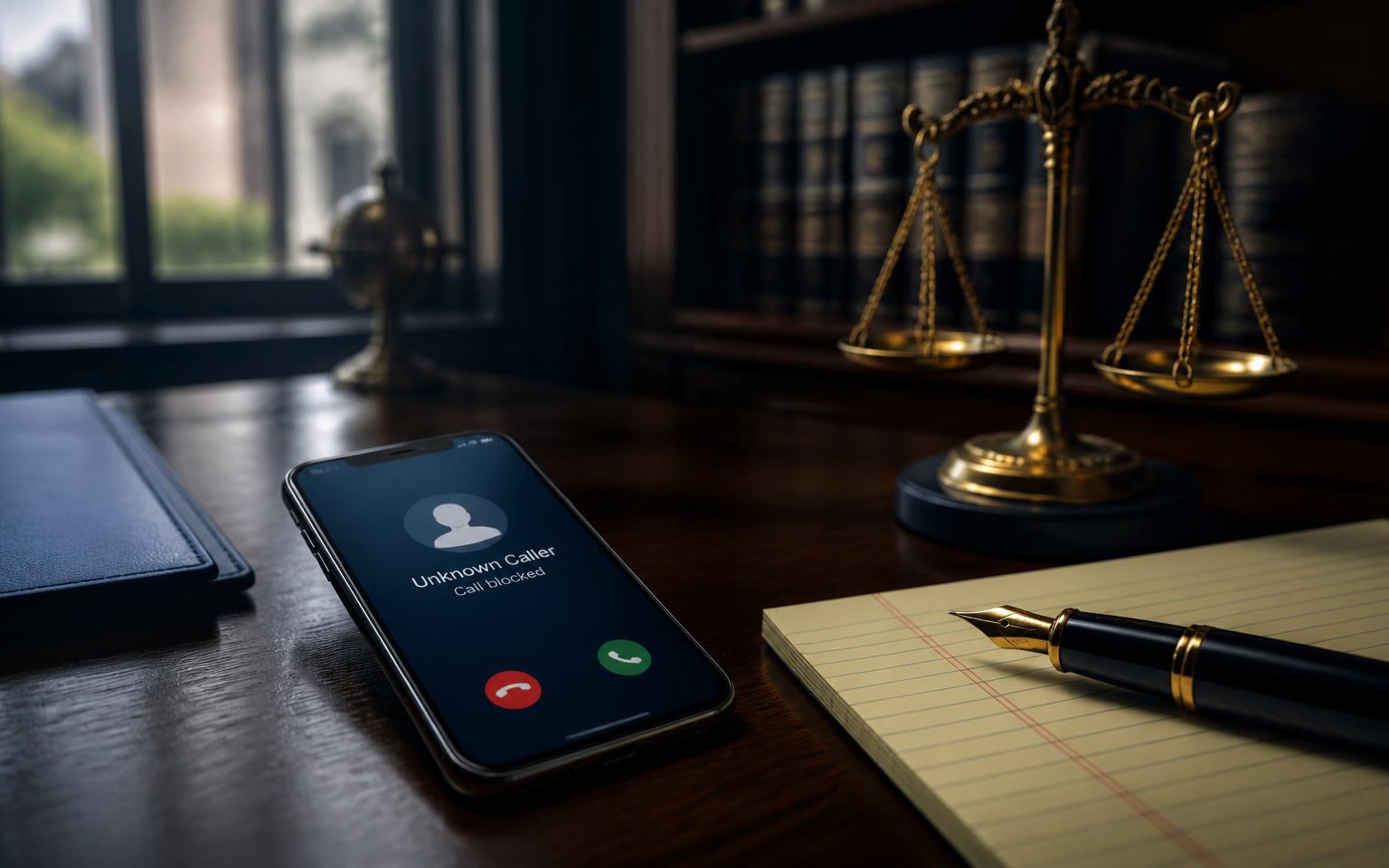
Most people searching for a TCPA lawyer are not looking for a history of the Telephone Consumer Protection Act. They are looking at a phone that rings six times a day from numbers they do not recognize, or a text thread from a company they never contacted, and they want to know one thing: is this worth a lawyer's time, and what would that lawyer actually do? This 2026 guide answers that from the perspective of a Florida consumer protection practice. It explains the work a TCPA attorney performs, how fees are structured, when an individual case makes more sense than a class action, and what makes a call log strong or weak under current law. Nothing here is legal advice, and no outcome is promised or predicted. Every case turns on its own facts.
What a TCPA Lawyer Actually Does
The Telephone Consumer Protection Act, 47 U.S.C. § 227, and its implementing rules at 47 C.F.R. § 64.1200 give consumers a private right of action for certain unwanted calls, prerecorded messages, and texts. Florida adds a parallel state claim through the Florida Telephone Solicitation Act, Fla. Stat. § 501.059. A lawyer handling these claims typically performs six distinct tasks, and understanding them is the fastest way to judge whether you need one.
1. Screening the call log against current law
The threshold question is not whether the calls annoyed you. It is whether they fall inside a statutory prohibition. Since Facebook v. Duguid, 592 U.S. 395 (2021), narrowed the definition of an automatic telephone dialing system, many federal claims now rest on the artificial or prerecorded voice provision, on internal and national do-not-call violations under § 227(c), or on the state FTSA standard rather than on autodialer allegations. A lawyer reads your log with those distinctions in mind before anything is filed.
2. Identifying the real defendant
The number on your screen is usually spoofed or belongs to a dialing vendor. Finding the seller who benefited from the campaign is investigative work: recording a call where the agent identifies the company, following a transfer through to a closing pitch, pulling lead-generation trails, and using pre-suit correspondence to force disclosure. Vicarious liability principles from the FCC's 2013 Dish Network ruling allow claims against the seller for calls made by an agent, which is why identifying the beneficiary matters more than identifying the dialer.
3. Building the consent record
Consent is an affirmative defense, and the caller bears the burden of proving it. A lawyer's job is to test whatever consent record the defendant produces: whether the disclosure was clear and conspicuous, whether it named the specific seller, whether the number was actually provided by you, and whether a revocation request was honored. The FCC's revocation rules, effective in 2025, require callers to honor a stop request made through any reasonable means and to process it within a defined window.
4. Preserving evidence before it disappears
Carrier call-detail records are not kept forever, and screenshots without metadata are weak. Early work includes preserving voicemail audio files, exporting text threads with timestamps and originating numbers, requesting carrier records, and sending litigation-hold letters so the defendant cannot purge dialer logs.
5. Choosing individual, mass, or class treatment
This is the decision with the largest effect on outcome and timeline, and it is covered in its own section below.
6. Litigating or resolving the claim
That means drafting a complaint that survives a motion to dismiss on standing and consent, taking dialer-system discovery, deposing the compliance witness, and evaluating any resolution offered. Following the Supreme Court's decision in McLaughlin Chiropractic Associates v. McKesson Corp. (2025), district courts are no longer bound by FCC interpretations under the Hobbs Act in private suits, which has made the legal landscape more variable across courts and made experienced handling more consequential.
What It Costs to Hire a TCPA Lawyer
Consumer TCPA cases are almost always handled on contingency, meaning the client pays no hourly fee and the attorney is compensated from any recovery. Two features of the statute make this possible.
- Statutory damages are fixed, not proven. The TCPA provides $500 per violating call or text, and up to $1,500 per violation where the conduct was willful or knowing, under § 227(b)(3). The FTSA provides $500 per violation, trebled up to $1,500 for willful or knowing violations, under Fla. Stat. § 501.059(10).
- No out-of-pocket loss is required. You do not have to show you lost money, missed work, or paid for the minutes. That is what makes small-dollar, high-volume claims economically viable.
In Florida, a contingency fee agreement in a non-personal-injury matter is still governed by Rule 4-1.5 of the Rules Regulating The Florida Bar. The agreement must be in writing, signed by the client, and must state the method by which the fee is determined, including the percentage that accrues to the lawyer and the expenses to be deducted. Ask any lawyer you speak with to show you the fee agreement before you sign, to explain whether costs come off the top or after the fee, and to explain what happens if there is no recovery.
Class-action resolutions follow a different path: fees are set by the court under Federal Rule of Civil Procedure 23(h), not by the retainer, and individual class members generally receive a pro rata share rather than the full statutory amount per call.
Individual Claim, Mass Action, or Class Action?
The same call log can support very different strategies. The right one depends on volume, provability, and what you want out of the case.
Individual claim
Best when you personally received a substantial number of documented calls or texts after clearly revoking consent, or where the caller is a smaller regional business. Damages are calculated per message received by you, which means a well-documented run of thirty prerecorded calls can matter more than a class position. These cases move faster and you keep control of resolution.
Mass individual filings
Groups of consumers with parallel facts filed as separate actions, often in the same district. This preserves per-plaintiff damages while sharing discovery costs, and it avoids the certification fight.
Class action
Appropriate where the campaign was uniform, the class is ascertainable from dialer records, and the volume is enormous. The upside is systemic change and pressure on national defendants. The tradeoff is time and dilution: certification under Rule 23 is contested, appeals are common, and per-person distributions in reported robocall and text settlements have frequently landed in the tens of dollars rather than the statutory maximum.
A lawyer worth hiring will tell you plainly which category your facts fall into, and will explain the tradeoff rather than steering you toward whichever structure suits the firm.
How to Tell If Your Call Log Supports a Case
Before you call anyone, run through the following. The more items you can answer yes to, the more likely your facts support a claim.
- The calls or texts were marketing or solicitation, not purely transactional, informational, or emergency messages.
- They came to a cell phone, or to a number you registered on the National Do-Not-Call Registry.
- You never gave the specific seller written permission, or you revoked permission and the messages continued.
- There was a prerecorded or artificial voice, a pause before a live agent, or an obvious automated messaging platform.
- You have dates and times for the messages, not just a general impression of frequency.
- The volume is meaningful. A single call is rarely worth litigating; a documented pattern usually is.
- The conduct occurred within the last four years, which is the federal catch-all limitations period under 28 U.S.C. § 1658 applied to TCPA claims, and within the Florida limitations period applicable to FTSA claims.
What to Do Right Now, Before You Hire Anyone
- Stop deleting. Every voicemail, text thread, and missed-call entry is evidence. Back up your phone.
- Log each contact with the date, time, incoming number, and what was said or sent.
- Say the words. On a live call, ask for the company name, the caller's name, a callback number, and a mailing address, then state clearly that you revoke any consent and want to be placed on the internal do-not-call list. Note the date you said it. Under the FCC's revocation framework, that request must be honored.
- Do not press buttons to be removed from an automated menu. That confirms a live number and often increases volume.
- Do not sign any release, settlement, or arbitration-adding terms of service with the caller before getting advice.
- Consider filing complaints with the Federal Communications Commission and the Federal Trade Commission. Those complaints do not compensate you, but they create a contemporaneous record.
- Register the number on the National Do-Not-Call Registry if it is not already listed, since § 227(c)(5) provides a separate claim for calls to registered numbers.
Florida-Specific Considerations for Miami-Dade Consumers
Florida consumers frequently have two claims for the same message. The FTSA, Fla. Stat. § 501.059, reaches telephonic sales calls made using an automated system for the selection or dialing of numbers or the playing of a recorded message, and the 2023 amendments added requirements specific to text-message solicitation, including a defined process for consumers who reply STOP. Because the FTSA does not depend on the narrowed federal autodialer definition, some messages that no longer support a strong TCPA autodialer theory still support a state claim.
Venue matters as a practical matter. Claims by Miami-Dade residents are typically brought in the United States District Court for the Southern District of Florida or in Miami-Dade County Circuit Court, depending on the claims pleaded and the amount at issue. Federal filing is common because the TCPA supports federal question jurisdiction and dialer discovery is often more efficient there.
Debt-collection calls add a third layer. When the calls concern an alleged debt, the Fair Debt Collection Practices Act, 15 U.S.C. § 1692 and following, and the Florida Consumer Collection Practices Act, Fla. Stat. § 559.72, may independently prohibit the conduct, including calls to a consumer known to be represented by counsel and calls made at prohibited hours.
Questions to Ask Before You Retain a TCPA Lawyer
- How many TCPA and FTSA matters has the firm handled, and in which courts?
- Based on my log, is this an individual claim, a mass filing, or a class case, and why?
- Is the fee agreement contingency, and what percentage applies at each stage?
- Are costs deducted before or after the fee, and what happens to costs if there is no recovery?
- Who will actually handle the file day to day?
- What is realistic on timing for a case like this?
- What could weaken my case, and what should I do differently starting today?
A lawyer who answers the fifth and seventh questions candidly is usually a better sign than one who leads with numbers.
Official Sources and Where to Verify Any of This
Everything above can be checked against primary sources. These are the government, court, and regulatory materials a Florida consumer protection lawyer works from, and they are worth reading before you retain anyone.
- Statute: 47 U.S.C. § 227, the Telephone Consumer Protection Act (Cornell Legal Information Institute)
- Regulations: 47 C.F.R. § 64.1200, the FCC's implementing rules (eCFR)
- Florida statute: Fla. Stat. § 501.059, the Florida Telephone Solicitation Act (Florida Legislature)
- Supreme Court: Facebook, Inc. v. Duguid, 592 U.S. 395 (2021), narrowing the autodialer definition
- Supreme Court: McLaughlin Chiropractic Assocs. v. McKesson Corp. (2025), on the weight of FCC interpretations in private suits
- FCC consumer guidance: Stop Unwanted Robocalls and Texts
- File a complaint: FCC Consumer Complaint Center and FTC ReportFraud
- Register your number: National Do Not Call Registry
- Fee rules: Rules Regulating The Florida Bar, Chapter 4, including Rule 4-1.5 on fees and Rule 4-7 on advertising
- Court records: PACER and the U.S. District Court for the Southern District of Florida for filings in Miami-Dade cases
The Bottom Line
You do not need a lawyer to stop most robocalls. You need one when the calls continued after you revoked consent, when the volume is documented, and when there is an identifiable company behind the campaign with the means to pay. If that describes your situation, the value of counsel is in identifying the right defendant, proving the absence of valid consent, and choosing the case structure that fits your facts rather than the one that is easiest to file.
The Farber Law Firm handles consumer protection matters, including TCPA and FTSA claims, for clients throughout Miami-Dade, Broward, and Palm Beach counties from its office at 2199 Ponce de Leon Blvd #301, Coral Gables, FL 33134. If you want your call log reviewed, the fastest route is the firm's TCPA claim questionnaire. Consultations are free and confidential. This article is general information about Florida and federal law and is not legal advice; reading it does not create an attorney-client relationship.
Frequently Asked Questions
Do I need a lawyer to sue over robocalls in Florida?
Not always. Small-claims filings are possible for a limited number of calls. Counsel becomes valuable when the volume is significant, the caller's identity is hidden behind a dialing vendor, or the defendant disputes consent, because proving who benefited from the campaign and rebutting a consent record generally requires discovery.
How much does a TCPA lawyer cost?
Consumer TCPA claims are typically handled on contingency, so there is no hourly charge and the fee comes from any recovery. In Florida, the agreement must be in writing and signed, and must state how the fee is calculated and which expenses are deducted, under Rule 4-1.5 of the Rules Regulating The Florida Bar. In class cases, fees are set by the court under Rule 23(h).
How much is a robocall worth under the TCPA?
The statute provides $500 per violating call or text, and up to $1,500 per violation where the violation was willful or knowing, under 47 U.S.C. § 227(b)(3). Florida's FTSA provides $500 per violation, trebled up to $1,500 for willful or knowing conduct, under Fla. Stat. § 501.059(10). These are statutory figures, not a prediction of what any particular case will recover.
How long do I have to file a TCPA claim?
TCPA claims are generally subject to the four-year federal catch-all limitations period in 28 U.S.C. § 1658, measured from each violating call or text. Florida FTSA claims are subject to the applicable Florida limitations period. Because each message can start its own clock, older calls may fall outside the period while recent ones remain actionable.
What if I once gave the company my number?
Consent can be revoked. Under the FCC's revocation rules, a request to stop made through any reasonable means must be honored, and calls placed after a valid revocation can be actionable even if the original contact was consented to. Document the date and method of your revocation request.
Should I join a class action or file my own case?
It depends on volume and provability. Class membership requires no effort but typically yields a small pro rata share. An individual claim preserves per-message damages and gives you control over resolution, and it is often the better fit where you personally received a large, well-documented series of messages.
Start Your TCPA Claim Questionnaire
If you are getting robocalls, prerecorded messages, or spam texts you never consented to, our confidential TCPA intake questionnaire is the fastest way to have your call log reviewed. It takes a few minutes, there is no cost, and an attorney at The Farber Law Firm follows up directly.
- 1. Share your logDates, times, and numbers for the calls or texts you received.
- 2. We screen itWe check consent, revocation, and who benefited from the campaign.
- 3. You get answersA straight assessment of whether the facts support a claim.
Submitting the questionnaire does not create an attorney-client relationship, and no outcome is promised. Consumer TCPA matters are handled on a contingency basis when accepted, under a written fee agreement required by Rule 4-1.5 of the Rules Regulating The Florida Bar.
Have a similar situation?
Free, confidential case review with a South Florida trial attorney. Call 8888-FARBER.
Request a Free ConsultationAbout the Author
The Farber Law Firm, P.A.
The Farber Law Firm is a South Florida trial practice based in Coral Gables, representing injured people, policyholders and businesses across Miami-Dade, Broward and Palm Beach counties since 1995. The firm handles personal injury, wrongful death, insurance coverage disputes and commercial litigation, and its attorneys are members in good standing of The Florida Bar.
Articles on this site are written and reviewed by attorney David Farber and reflect Florida statutes, court rules and Florida Bar regulations current as of the publication date.
- Office
- 2199 Ponce de Leon Blvd #301
Coral Gables, FL 33134 - Phone
- 8888-FARBER
- Consultations
- Free and confidential