The Adjuster Suggested Trenchless Sewer Repairs. Should I Consider It?
Trenchless repair sounds cheaper and faster — but it doesn't always work, and accepting it can shortchange your claim.
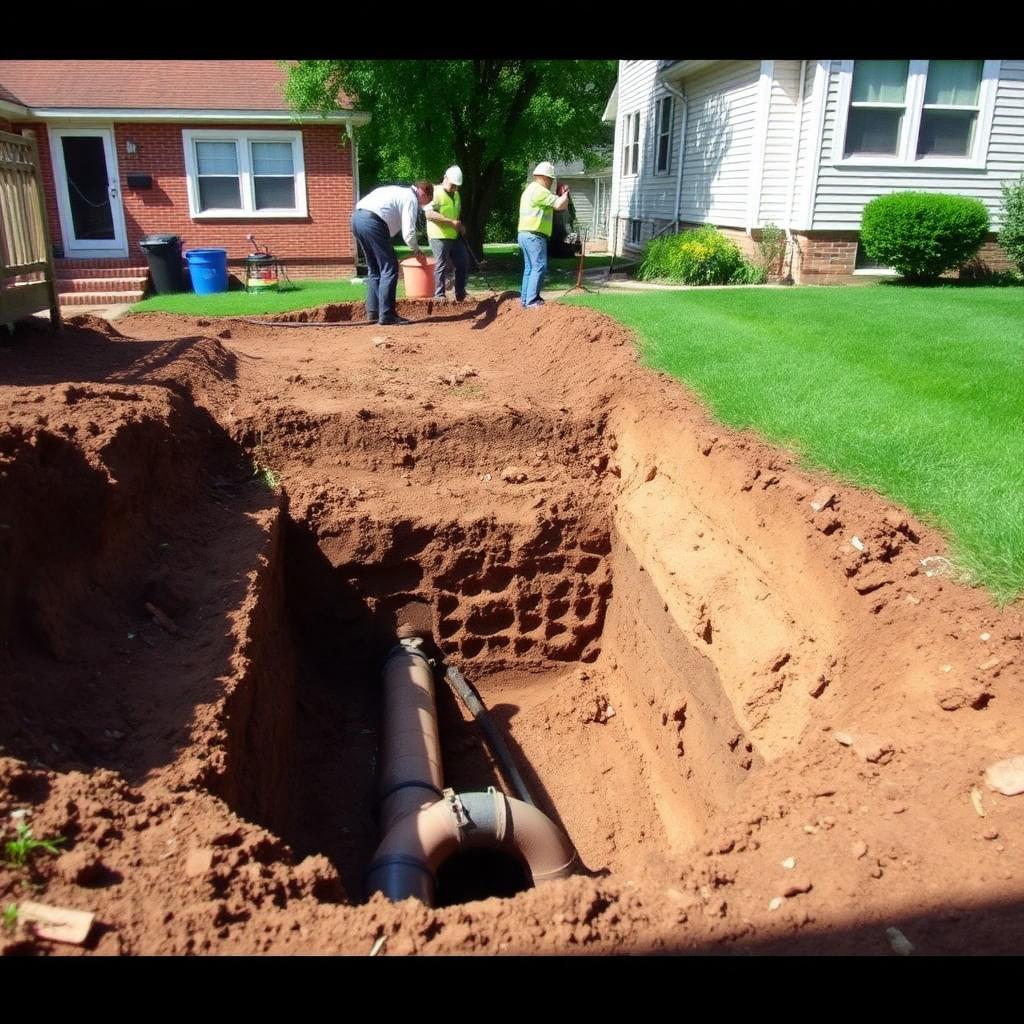
When a Florida homeowner experiences a sewer line failure and files an insurance claim, it is not uncommon for the insurer's adjuster to propose trenchless sewer repair as the recommended or preferred method of fixing the problem. On the surface, this can seem like a straightforward suggestion — and in some cases it genuinely is the best solution. But in many situations, understanding why the adjuster is recommending trenchless technology, whether it is the right method for your specific loss, and whether your policy obligates the insurer to pay for the full scope of necessary repairs is crucial before agreeing to any approach. This guide explores the trenchless sewer repair question from both a practical and a Florida insurance law perspective.
What Is Trenchless Sewer Repair?
Traditional sewer line repair requires excavating a trench along the path of the underground pipe — often through landscaping, driveways, patios, or even interior flooring — to expose the damaged section. Trenchless methods instead access the pipe through small entry points and use one of two primary technologies: pipe lining (also called cured-in-place pipe or CIPP), in which a flexible resin-saturated liner is inserted into the existing pipe and cured to form a new pipe within the old one; or pipe bursting, in which a bursting head is pulled through the damaged pipe, fracturing it outward while simultaneously pulling new pipe behind it. Trenchless methods are generally faster and cause less surface disruption than traditional excavation when the underlying conditions are right.
Why Do Insurance Adjusters Recommend Trenchless Methods?
Insurance adjusters — particularly those representing the insurer's interests — may recommend trenchless repair for several reasons, not all of which benefit the policyholder equally. First, trenchless repair can be less expensive than traditional excavation in certain scenarios, which reduces the insurer's payout. Second, trenchless methods avoid the need to replace landscaping, concrete, tile, or other surface materials damaged by digging, further limiting the claim amount. Third, some adjusters recommend trenchless repair to avoid paying for access and restoration costs — the costs of opening up and then repairing the surfaces above the pipe — that would otherwise be part of a complete traditional repair claim. Understanding whether cost containment is driving the recommendation is important.
When Trenchless Repair Is Genuinely Appropriate
Trenchless methods are genuinely well-suited to certain sewer line problems. They work best when the pipe has a single failure point or limited damage, when the pipe's structural integrity is largely intact (so a liner can adhere properly), when the pipe has sufficient diameter and is not severely offset or collapsed, and when the soil conditions and pipe access points allow the equipment to be used effectively. A certified plumber or civil engineer — not the insurer's adjuster alone — should assess whether your specific pipe and failure meet the technical criteria for successful trenchless repair. The fact that trenchless repair is possible does not automatically mean it is the correct or most complete solution for your loss.
When Trenchless Repair May Not Be Sufficient
There are important scenarios where trenchless repair may be inadequate. If the pipe is severely collapsed, offset at joints, has root infiltration causing significant structural compromise, or is made of material that does not accept lining well (such as heavily deteriorated cast iron or certain clay pipes), trenchless methods may fail or produce inferior results. A CIPP liner applied inside a collapsing pipe may hold temporarily but fail prematurely. Additionally, trenchless repair does not address damage to surrounding soil, backfill, or any access point restoration. If your sewer failure caused damage to flooring, cabinetry, or structural components — as is common when a line beneath a slab leaks — those damages are separate from the pipe repair itself and must be independently addressed in your claim.
What Your Florida Homeowner's Policy Should Cover
Standard Florida homeowner policies generally cover sudden and accidental damage from specific perils. Sewer line collapse or sudden failure may be covered if the cause is a covered peril — such as a pipe that suddenly breaks due to a specific event — but many policies exclude gradual deterioration, wear and tear, and damage from tree roots that develops over time. If your sewer loss is covered, your policy's obligation is typically to pay for repairs that restore the property to its pre-loss condition using like kind and quality materials and methods. If the insurer proposes trenchless repair but the appropriate — and professionally supported — repair method is traditional excavation, you may have grounds to dispute the repair method and associated scope. Your policy should pay for the right repair, not just the cheapest one.
Access and Restoration Coverage
One frequently overlooked component of sewer claims is access and restoration coverage — sometimes called 'tear-out' coverage. If restoring your sewer line requires opening up a concrete slab, removing floor tile, cutting through drywall, or excavating your driveway, the cost of that access work and the subsequent restoration of the opened surfaces is part of the covered loss. Some homeowner policies include this coverage explicitly; others require an endorsement. An adjuster who pushes trenchless repair to avoid paying access and restoration costs may be improperly limiting your claim. Review your policy carefully and consult with a licensed Florida plumber and an insurance attorney if you believe restoration costs are being improperly excluded.
Getting an Independent Professional Opinion
Before accepting the adjuster's trenchless recommendation, obtain an independent assessment from a licensed Florida plumbing contractor or civil engineer. Provide them with the same camera inspection footage (sewer scope video) that the adjuster's team used, and ask for a written opinion on the appropriate repair method given the specific location, pipe material, age, failure type, and access conditions. This independent professional opinion becomes part of your claim file and can be used to dispute the insurer's preferred approach if it is inadequate. Costs for the independent assessment may themselves be reimbursable as a reasonable expense incurred to assess the loss.
Questions to Ask the Adjuster and Contractor
Before agreeing to any repair method, ask the following questions: What is the warranty on the trenchless repair, and who backs it? Has the contractor performed a camera inspection confirming the pipe's structural suitability for lining or bursting? What is the pipe's material, diameter, and age? Are there any offsets, collapsed sections, or severe root infiltration? What happens if the trenchless repair fails within one or two years — who bears that cost? Will the insurer cover replacement if the trenchless repair proves inadequate? Getting written answers to these questions protects you if the repair later fails and creates a dispute about who is responsible.
Warranty, Durability, and Long-Term Considerations
CIPP liners installed by reputable contractors can last 50 years or more and carry significant warranties when the underlying conditions are appropriate. Pipe bursting with HDPE replacement pipe is similarly durable. However, the quality of installation is critical — a poorly cured liner, improper sealing at connections, or a liner installed in an incompatible pipe can fail in a fraction of that time. If your sewer failure is covered under your insurance policy, you are entitled to a repair that genuinely restores your property. Do not accept a method that trades a lower immediate cost for a higher risk of future failure — especially if you plan to remain in your South Florida home for years to come.
Filing a Dispute If Your Claim Is Being Underpaid
If you believe your insurer is pushing trenchless repair to improperly limit your claim, you have several options under Florida law. First, gather your independent professional opinion supporting the appropriate repair method and present it to the adjuster in writing. If the dispute is about the dollar amount of the covered loss, you may invoke the appraisal clause in your policy. If the insurer is disputing coverage or acting unreasonably, you may need to serve a pre-suit notice under Fla. Stat. § 627.70152 before filing suit. Unreasonable claim handling — including refusing to pay for repairs that a licensed professional has determined are necessary — can give rise to bad faith claims under Fla. Stat. § 624.155. An experienced Florida property insurance attorney can assess which remedy is appropriate.
Frequently Asked Questions
Q: If my adjuster recommends trenchless repair, am I obligated to accept it? A: No. Your obligation is to cooperate with your insurer's investigation, but you are not required to accept a repair method that is inadequate for your specific loss. Obtain an independent professional assessment and present it to your insurer if you believe the proposed method is insufficient to fully restore your property.
Q: My sewer line failure was caused by tree roots over time. Is that covered? A: Gradual damage from tree root intrusion is frequently excluded under standard Florida homeowner policies as a form of wear and tear or deterioration. However, if root intrusion caused a sudden failure — a pipe that abruptly collapsed or broke — the resulting sudden damage may be covered even if roots were the underlying cause. Coverage depends on specific policy language and the facts of your loss; review your policy and consult an attorney.
Q: What is access and restoration coverage, and does my Florida policy include it? A: Access and restoration coverage pays for the cost of opening up structures to reach a damaged system (e.g., cutting concrete, removing tile) and then restoring those surfaces after the repair. Some Florida policies include this as part of the standard form; others require a specific endorsement. Review your policy declarations and endorsements carefully, or ask an attorney to do so.
Q: The trenchless repair my insurer paid for failed after one year. What are my options? A: You may have a claim against the contractor who performed the repair (breach of warranty or workmanship), a new insurance claim if the failure constitutes a new covered loss, and possibly a bad faith claim against your insurer if the repair method was inadequate and the insurer insisted on it over your objection. Consult a Florida attorney to assess your specific situation.
Q: How do I find a trustworthy plumbing contractor for an independent assessment? A: Verify any contractor's license through the Florida Department of Business and Professional Regulation (DBPR) at myfloridalicense.com. Look for contractors with specific experience in sewer line work and trenchless technology assessments. Avoid contractors who approach you unsolicited after a storm or claim event.
Key Takeaways
- Trenchless sewer repair (CIPP lining or pipe bursting) is appropriate in certain scenarios but not universally superior to traditional excavation.
- Insurance adjusters may recommend trenchless methods partly to limit the claim scope — your policy entitles you to the repair method that genuinely restores your property.
- Always obtain an independent professional assessment before agreeing to any repair method.
- Access and restoration costs (opening and repairing surfaces to reach the pipe) are often part of a covered sewer claim.
- Gradual tree root damage is typically excluded; sudden catastrophic pipe failure may be covered.
- If the insurer's preferred repair method is inadequate, appraisal, pre-suit notice, and bad faith remedies are available under Florida law.
At The Farber Law Firm, we assist Florida homeowners in evaluating and disputing property insurance claims, including complex sewer and plumbing loss scenarios throughout Miami-Dade, Broward, and Coral Gables. Contact us for a free consultation if you believe your insurer is not fairly compensating you for your sewer line loss.
This article is for general informational purposes only and does not constitute legal advice. Laws change; consult a licensed Florida attorney about your specific situation.
Frequently Asked Questions
What is trenchless sewer repair?
A method of repairing sewer lines by lining or bursting the existing pipe without digging a full trench, often less disruptive than traditional excavation.
Should I accept the adjuster's trenchless proposal?
Only after independent evaluation. It's cheaper for the insurer, but may not be appropriate for your pipe condition or code requirements.
Will trenchless repair restore my landscaping?
Usually partially. Some excavation is still needed at access points, and matching finishes is your responsibility if not addressed in the estimate.
What if the adjuster's scope leaves out required code upgrades?
Florida law and many policies require the insurer to pay for ordinance-or-law compliance costs when triggered by a covered loss.
Have a similar situation?
Free, confidential case review with a South Florida trial attorney. Call 8888-FARBER.
Request a Free ConsultationAbout the Author
The Farber Law Firm, P.A.
The Farber Law Firm is a South Florida trial practice based in Coral Gables, representing injured people, policyholders and businesses across Miami-Dade, Broward and Palm Beach counties since 1995. The firm handles personal injury, wrongful death, insurance coverage disputes and commercial litigation, and its attorneys are members in good standing of The Florida Bar.
Articles on this site are written and reviewed by attorney David Farber and reflect Florida statutes, court rules and Florida Bar regulations current as of the publication date.
- Office
- 2199 Ponce de Leon Blvd #301
Coral Gables, FL 33134 - Phone
- 8888-FARBER
- Consultations
- Free and confidential
Florida Legal Insights, in Your Inbox
Subscribe to The Farber Law Firm’s email list for educational articles on Florida injury claims, insurance coverage, and consumer rights.
By subscribing, you request legal insights by email. This is not a consultation request and does not create an attorney-client relationship. Privacy Policy.