Water Damage Insurance Claims: A Complete Florida Homeowner's Guide
Sudden and accidental water loss is covered. Long-term seepage usually isn't. Here's how Florida policies actually work — and how to win disputed claims.
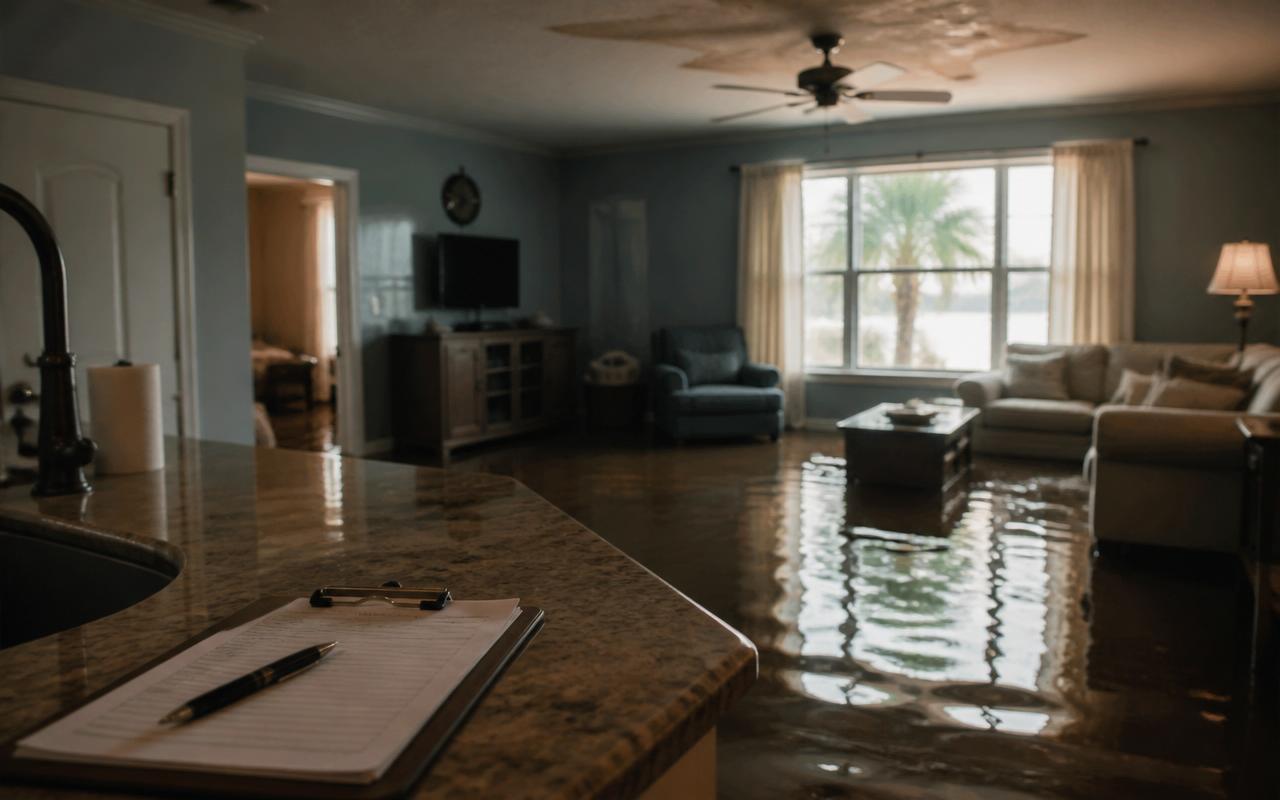
Water damage is the single most common reason Florida homeowners file insurance claims, yet it is also the claim type most frequently underpaid, delayed, or outright denied by insurance carriers. Whether you are dealing with a burst pipe, appliance leak, roof intrusion, or sudden plumbing failure, understanding how Florida's property insurance system works in 2026 is essential to recovering the full value of your loss. This comprehensive guide walks Miami-Dade, Broward, and South Florida homeowners through every stage of a water damage insurance claim — from the moment water strikes your floors to the point where a check arrives, or where litigation becomes necessary.
Understanding What Florida Homeowners Policies Cover for Water Damage
Not all water damage is treated equally under a standard Florida homeowners insurance policy. Carriers generally distinguish between 'sudden and accidental' water damage — which is typically covered — and damage caused by gradual leaks, poor maintenance, or flooding, which is usually excluded. A pipe that bursts overnight is generally covered; a slow leak under the sink that rotted the cabinet over six months is frequently denied on maintenance-exclusion grounds. Flood damage from storm surge or rising water requires a separate National Flood Insurance Program (NFIP) or private flood policy entirely. Reading your Declarations page and the policy's 'Water Damage' and 'Exclusions' sections carefully is the critical first step.
Florida's Post-Reform Insurance Landscape in 2026
The Florida Legislature has fundamentally restructured property insurance law through Senate Bill 2A (2022) and House Bill 837 (2023). For water damage claimants, the most impactful changes are: (1) the elimination of one-way attorney's fees for policyholders in most property insurance disputes, shifting litigation economics; (2) a strict 1-year deadline to provide initial notice of a claim under Fla. Stat. § 627.70132; (3) an 18-month deadline for supplemental claims after the date of loss; and (4) a mandatory pre-suit notice requirement under Fla. Stat. § 627.70152 that must be filed with the Department of Financial Services before any lawsuit against an insurer can proceed. These reforms make it more important than ever to act quickly and work with experienced legal counsel.
Step One: Document the Damage Immediately
Before cleanup crews touch anything, document every square inch of water damage with photographs and video. Capture water lines on walls, saturated flooring, damaged belongings, and any visible source of the water intrusion. Preserve damaged materials — do not discard soaked drywall, flooring samples, or damaged appliances until an adjuster has inspected them. Create a written inventory of every damaged item with approximate age, brand, and replacement cost. This documentation becomes the evidentiary foundation of your claim and is invaluable if disputes arise later.
Step Two: Mitigate Further Damage
Florida law and virtually every homeowners policy require the policyholder to take reasonable steps to mitigate further damage after a loss. This means extracting standing water promptly, using fans or dehumidifiers to begin drying, placing tarps over roof openings, and engaging a licensed water remediation contractor. Keep all receipts for emergency mitigation costs — they are generally reimbursable under your policy's 'Reasonable Repairs' or 'Additional Living Expenses' provisions. Failure to mitigate can give the insurer grounds to reduce your claim payout.
Step Three: File Timely Notice of Claim
Under Fla. Stat. § 627.70132, you must provide written notice of a property insurance claim to your carrier within 1 year of the date the loss occurred. For supplemental or reopened claims, the deadline is 18 months from the date of loss. Missing these deadlines can bar your recovery entirely. Notify your insurer in writing — email with delivery confirmation is acceptable — and keep copies of all correspondence. Note your claim number and the name of every carrier representative you speak with.
What Happens After You File: The Adjuster Process
After you notify your insurer, they are required by Florida law to acknowledge your claim within 14 days and begin their investigation promptly. The carrier will assign an adjuster — either a staff adjuster employed by the company or an independent adjuster hired on contract — to inspect your property. It is your right to have your own public adjuster or an attorney present during any inspection. Do not assume the carrier's adjuster is working in your interest; their job is to quantify the loss in a way that limits the insurer's exposure. Consider hiring a licensed Florida public adjuster or retaining legal counsel before the initial inspection.
Common Reasons Water Damage Claims Are Denied
Understanding the most frequent denial grounds helps you anticipate and counter them: - Gradual or hidden decay: Insurer argues damage accumulated over time and was not 'sudden and accidental' - Maintenance exclusion: Claim attributed to failure to maintain plumbing, roof, or appliances - Earth movement exclusion: Applied in slab-leak scenarios - Mold exclusion: Carrier separates mold remediation and limits or denies that portion - Wear and tear: Items deemed to have exceeded their useful life - Late notice: Claim filed or supplemented outside statutory deadlines - Flood damage invoked: Carrier attributes storm-related intrusion to flood rather than wind-driven rain
Assignment of Benefits (AOB) Reform and What It Means for You
Prior to 2023, contractors often asked homeowners to sign an Assignment of Benefits agreement, transferring the right to sue the insurer directly to the contractor. Florida abolished one-way attorney's fees in AOB litigation through SB 2A and further restricted AOB practices under Fla. Stat. §§ 627.7152 and 627.7153. As of 2026, AOB agreements for residential property insurance claims are effectively eliminated for most practical purposes. Homeowners should be cautious of any contractor who still presents an AOB form and should consult an attorney before signing any document that transfers insurance rights.
Invoking Appraisal, Mediation, and the Pre-Suit Notice Process
If you and your insurer disagree on the value of a covered loss, most Florida policies contain an appraisal clause allowing either party to invoke a binding appraisal process. Each side selects a competent appraiser, and the two appraisers choose an umpire; a majority decision is binding. Separately, Florida's Division of Consumer Services offers a free mediation program for residential property insurance disputes. Before filing a lawsuit, however, you must comply with Fla. Stat. § 627.70152's pre-suit notice requirement — a written notice filed with the Department of Financial Services specifying your disputed amount and giving the insurer a mandatory response period. Failure to comply is a complete bar to suit.
Bad Faith Claims Against Florida Insurers
If your insurer has acted in bad faith — unreasonably denying or delaying a valid claim — you may have a claim under Fla. Stat. § 624.155. To pursue a bad faith action, you must first serve a Civil Remedy Notice (CRN) on the insurer and the Department of Financial Services, giving the insurer 60 days to cure the violation. HB 837 (2023) narrowed the scope of extra-contractual bad faith damages in some contexts, but the bad faith framework remains available and can be a powerful tool when an insurer stonewalls a legitimate water damage claim. An experienced insurance attorney can evaluate whether bad faith standards have been met in your case.
Working with a Public Adjuster vs. an Attorney
Public adjusters are licensed professionals who negotiate with insurers on your behalf for a percentage fee (capped at 20% on non-catastrophe claims and 10% on catastrophe claims under Florida law). They are skilled at quantifying physical damage and preparing detailed estimates. Insurance attorneys, by contrast, can pursue legal remedies — filing suit, asserting bad faith, and litigating coverage disputes — that public adjusters cannot. For complex denials, coverage disputes, or claims involving significant underpayment, an attorney is often the better choice. Many Florida insurance law firms, including those in the Coral Gables and Miami-Dade area, offer free initial consultations and can advise on which path makes sense for your situation.
Mold and Secondary Damage Claims
Florida's humid subtropical climate means water damage that goes unaddressed for even 24 to 48 hours can spawn significant mold growth. Most homeowners policies contain a mold sublimit — commonly ranging from $10,000 to $50,000 — that is far lower than actual remediation costs in South Florida. If mold results directly from a covered water loss, argue that the mold is consequential damage that should not be limited by the sublimit. Document the timeline of events carefully: show that the water intrusion was sudden, that you mitigated promptly, and that mold was an inevitable consequence of the covered event. Insurers routinely try to separate mold from the underlying water claim; a knowledgeable attorney can push back on this tactic.
Frequently Asked Questions
Q: How long do I have to file a water damage insurance claim in Florida? Under Fla. Stat. § 627.70132, you must provide your insurer with written notice of a new claim within 1 year of the date of loss. Supplemental or reopened claims must be submitted within 18 months of the date of loss. These are hard deadlines — missing them typically bars your right to recover.
Q: My claim was denied for 'gradual damage.' Can I still recover? Possibly. Gradual damage exclusions are frequently overapplied by carriers. If even a portion of the damage resulted from a sudden and accidental event — such as a pipe that suddenly failed — that portion may still be covered. An attorney can review the denial letter, your policy language, and the adjuster's report to identify grounds for appeal or litigation.
Q: What is the pre-suit notice requirement under § 627.70152? Before you can sue your insurer over a property insurance dispute in Florida, you must file a written pre-suit notice with the Department of Financial Services and serve it on the insurer. The notice must specify the disputed amount and legal basis for the claim. The insurer then has a set period to respond, inspect, and make a settlement offer. Skipping this step means your lawsuit will be dismissed.
Q: Can my insurer cancel my policy after I file a water damage claim? Florida law prohibits mid-term policy cancellations except for specific grounds such as non-payment of premium or material misrepresentation. However, insurers may choose not to renew a policy at renewal time after a claim. This is a real concern in South Florida's tight insurance market, and homeowners should factor it into their decision-making when filing smaller claims.
Q: What should I do if my insurer's settlement offer is too low? First, do not accept a low offer and cash the settlement check without consulting an attorney — in Florida, cashing a 'full and final settlement' check can waive your right to further recovery. Request the insurer's complete claim file and adjuster's estimate. You may invoke the policy's appraisal clause, request mediation, or retain an attorney to negotiate or litigate. The Farber Law Firm offers free consultations to homeowners who believe their water damage claim has been underpaid.
Key Takeaways
- Florida law gives you 1 year to file initial notice of a water damage claim and 18 months for supplemental claims (Fla. Stat. § 627.70132)
- SB 2A (2022) and HB 837 (2023) eliminated one-way attorney's fees and significantly changed the litigation landscape
- You must file a pre-suit notice under § 627.70152 before suing your insurer
- AOB agreements for residential property insurance are effectively abolished under §§ 627.7152 and 627.7153
- Document everything, mitigate promptly, and do not accept a lowball offer without legal review
- Mold sublimits can significantly reduce your recovery; argue for consequential damage treatment
- Bad faith remedies remain available under § 624.155 with proper Civil Remedy Notice
If your water damage claim has been denied, underpaid, or delayed by your insurance company, you do not have to navigate the process alone. The Farber Law Firm, based in Coral Gables and serving homeowners throughout Miami-Dade, Broward, and South Florida, offers free consultations to help you understand your rights and options. Contact us today to speak with an experienced Florida insurance attorney.
This article is for general informational purposes only and does not constitute legal advice. Laws change; consult a licensed Florida attorney about your specific situation.
Frequently Asked Questions
What water damage does Florida homeowners insurance cover?
Sudden and accidental discharge (burst pipes, appliance leaks, sudden roof leaks). It generally excludes long-term seepage, gradual leaks, and flood.
Do I need flood insurance separately?
Yes. Flood is covered only under an NFIP or private flood policy.
Should I mitigate before the adjuster arrives?
Yes. Your policy requires reasonable mitigation. Document thoroughly before drying, cutting drywall, or replacing damaged materials.
How long do I have to file?
One year from the date of loss for the initial claim and 18 months for supplemental claims under Fla. Stat. § 627.70132 for hurricane-related events; other losses depend on the policy.
Have a similar situation?
Free, confidential case review with a South Florida trial attorney. Call 8888-FARBER.
Request a Free ConsultationAbout the Author
The Farber Law Firm, P.A.
The Farber Law Firm is a South Florida trial practice based in Coral Gables, representing injured people, policyholders and businesses across Miami-Dade, Broward and Palm Beach counties since 1995. The firm handles personal injury, wrongful death, insurance coverage disputes and commercial litigation, and its attorneys are members in good standing of The Florida Bar.
Articles on this site are written and reviewed by attorney David Farber and reflect Florida statutes, court rules and Florida Bar regulations current as of the publication date.
- Office
- 2199 Ponce de Leon Blvd #301
Coral Gables, FL 33134 - Phone
- 8888-FARBER
- Consultations
- Free and confidential