Bicycling Accidents and Pedestrian Safety in South Florida
South Florida ranks among the most dangerous regions in the country for cyclists and pedestrians. Here's what to do after a crash.
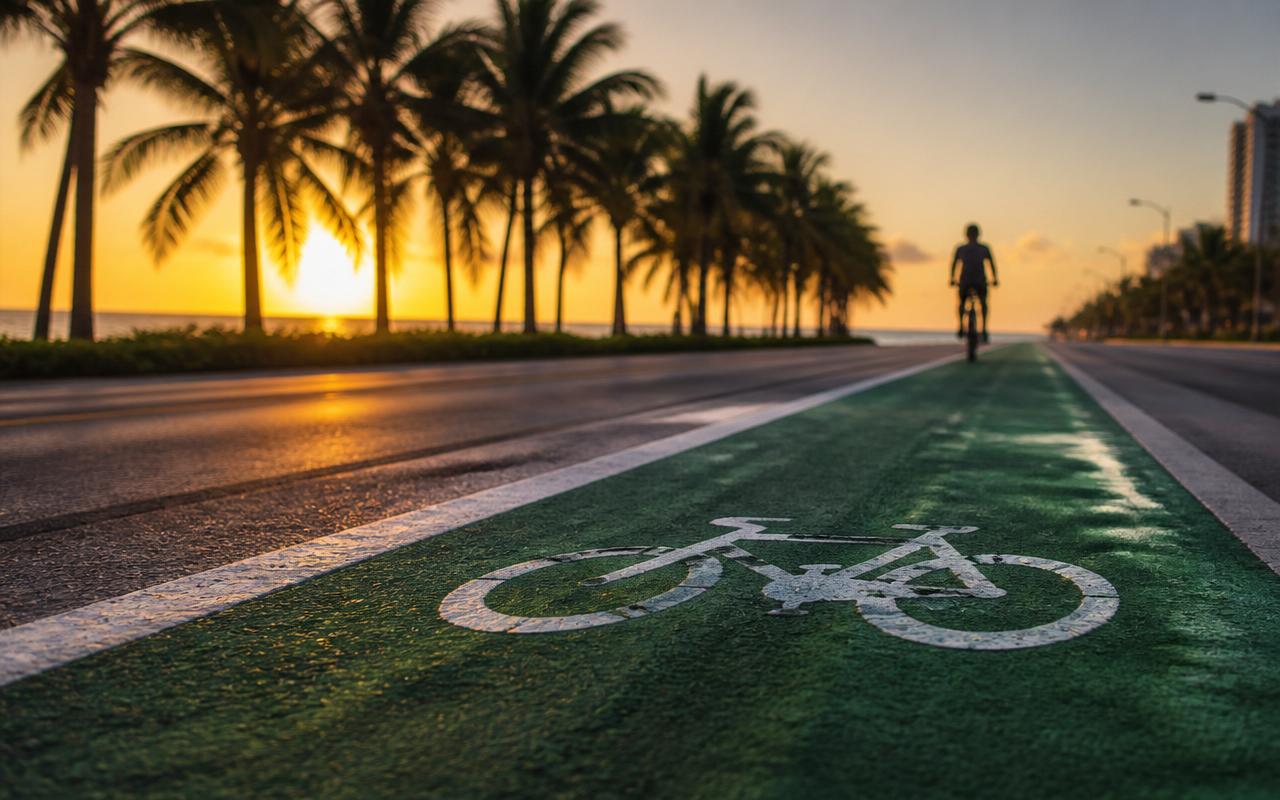
Bicycling accidents and pedestrian injuries are an urgent public safety crisis in South Florida, consistently ranking among the most dangerous regions in the United States for non-motorized road users. Miami-Dade and Broward counties regularly appear at or near the top of national pedestrian danger indices, a grim distinction driven by high traffic volumes, sprawling roadway infrastructure, distracted drivers, and year-round outdoor activity by residents and tourists alike. If you or a loved one has been injured in a bicycle accident or struck as a pedestrian in the Miami area, understanding Florida's traffic laws, insurance rules, and your legal rights as an injury victim is the critical first step toward recovery.
Why South Florida Is So Dangerous for Cyclists and Pedestrians
South Florida's roadway design creates inherent dangers for cyclists and pedestrians. Wide, high-speed arterials like US-1, Biscayne Boulevard, Flagler Street, and Dixie Highway were engineered for vehicle throughput, not pedestrian or cyclist safety. Many intersections lack adequate lighting, crosswalk markings, or dedicated bicycle infrastructure. Add to this the region's dense population of aging residents who may be slower to cross streets, a large tourist population unfamiliar with local traffic patterns, and a driver culture notorious for aggressive and distracted driving, and the result is a persistently elevated injury and fatality rate for vulnerable road users.
Florida Traffic Laws Protecting Cyclists and Pedestrians
Florida law provides important protections for cyclists and pedestrians, though enforcement is inconsistent. Under Fla. Stat. § 316.130, drivers must yield to pedestrians in marked and unmarked crosswalks. Fla. Stat. § 316.2065 governs bicycle operation and grants cyclists all the rights and responsibilities of vehicle operators when riding on public roadways. Fla. Stat. § 316.083 requires that drivers maintain a minimum three-foot clearance when passing a cyclist. Cyclists riding at night must use a white front light visible from 500 feet and a red rear reflector. Violations of these statutes by a motor vehicle driver constitute negligence per se under Florida law — a powerful legal tool for injured cyclists and pedestrians.
Common Causes of Bicycle and Pedestrian Accidents in Miami-Dade
The overwhelming majority of bicycle and pedestrian accidents in South Florida are caused by driver negligence, including: - Distracted driving — texting, phone use, and in-car entertainment systems - Failure to yield at intersections and crosswalks - Speeding, especially on residential streets and arterial roads through pedestrian zones - Dooring accidents — drivers opening car doors into the path of cyclists in urban areas like Coral Gables and Brickell - Turning vehicles that fail to check for cyclists in the bike lane - Impaired driving, particularly at night and on weekends - Red-light running at major intersections - Failure to maintain the required 3-foot passing clearance under Fla. Stat. § 316.083
The 2-Year Statute of Limitations for Florida Injury Claims
Under HB 837 (2023), Florida reduced the statute of limitations for negligence claims, including bicycle and pedestrian accident cases, from four years to two years. This deadline is codified at Fla. Stat. § 95.11(3)(a) and runs from the date of the accident. There are limited tolling provisions — for example, if the injured party is a minor, the clock may not start until they reach age 18. However, the general rule is strict: if you do not file a lawsuit within two years, your claim is permanently barred. Evidence also degrades quickly — surveillance footage is overwritten, witnesses forget details, and skid marks fade — making early attorney consultation critical in any bicycle or pedestrian injury case.
Modified Comparative Fault and Cyclist/Pedestrian Claims
Florida's adoption of modified comparative negligence under HB 837 (amending Fla. Stat. § 768.81) affects bicycle and pedestrian accident cases significantly. Under this system, if an injured cyclist or pedestrian is found to be 50% or less at fault, they may still recover damages — but those damages are reduced proportionally by their percentage of fault. If they are found to be more than 50% at fault, they are barred from any recovery. Defense attorneys and insurers routinely argue contributory fault against cyclists (helmet use, lighting, lane positioning) and pedestrians (jaywalking, distraction). An experienced Miami personal injury attorney will counter these arguments with traffic engineering analysis, witness testimony, and accident reconstruction evidence.
Types of Injuries in Bicycle and Pedestrian Accidents
Because cyclists and pedestrians have no protective shell surrounding them, collisions with motor vehicles cause severe injuries at even relatively low speeds. Commonly documented injuries include traumatic brain injury (TBI) even with helmet use, spinal cord damage and paralysis, pelvic and lower extremity fractures, road rash and degloving injuries, internal organ damage, and post-traumatic stress disorder (PTSD). Fatalities are tragically common. In South Florida's medical community, bicycle and pedestrian trauma cases routinely require extended hospitalization, surgical intervention, physical rehabilitation, and long-term or permanent care — all expenses that factor into the calculation of damages in your personal injury claim.
Florida PIP Insurance and Bicycle/Pedestrian Accidents
Florida's Personal Injury Protection (PIP) statute, Fla. Stat. § 627.736, covers injury victims in motor vehicle crashes regardless of fault, up to $10,000 in medical and lost wage benefits. Importantly, PIP coverage can extend to pedestrians and cyclists injured by a motor vehicle — typically through the at-fault driver's PIP policy. If you do not own a vehicle and have no PIP policy of your own, you may access coverage through a resident relative's policy or, in some cases, as a pedestrian through the at-fault driver's coverage. Given that PIP covers only a fraction of serious injury costs, pursuing the at-fault driver's bodily injury liability coverage through a personal injury claim is almost always necessary.
Hit-and-Run Accidents Involving Cyclists and Pedestrians
Hit-and-run accidents are disproportionately common in bicycle and pedestrian crashes in Miami-Dade and Broward, where drivers who are uninsured or intoxicated may flee the scene. Florida law, Fla. Stat. § 316.027, makes leaving the scene of an accident involving injury or death a serious felony. If the at-fault driver flees and is never identified, your own uninsured motorist (UM) coverage becomes your primary recourse. Florida law allows UM claims for hit-and-run accidents where there was actual physical contact between the hit-and-run vehicle and the victim. Witness identification of the vehicle, even partial, and surveillance camera evidence can be critical in these cases.
Wrongful Death Claims for Fatal Bicycle and Pedestrian Accidents
When a cyclist or pedestrian is killed by a negligent driver in Florida, the victim's surviving family members may bring a wrongful death action under Fla. Stat. § 768.19 et seq. Florida's Wrongful Death Act allows recovery of the decedent's medical and funeral expenses, lost net accumulations (future earnings), and survivors' loss of companionship, pain and suffering. The statute of limitations for wrongful death is also 2 years from the date of death under the post-HB 837 framework. These cases are extraordinarily complex and emotional, and require counsel experienced in both traffic liability and Florida wrongful death law.
Frequently Asked Questions
Q: Do I need to wear a bicycle helmet in Florida, and does it affect my injury case? Florida law (Fla. Stat. § 316.2065) requires cyclists under age 16 to wear a helmet, but adult cyclists are not legally required to wear one. However, if you are an adult who was not wearing a helmet and suffered a head injury, the defense will argue comparative fault — that your failure to wear a helmet contributed to the severity of your head injuries. Under Florida's modified comparative fault system, this argument can reduce your recovery. Your attorney will work to counter these arguments using biomechanical expert testimony about helmet efficacy for specific impact types.
Q: Can I bring a claim if I was injured while riding my bike on a sidewalk? Yes, though the facts matter. Florida law allows cyclists to ride on sidewalks except where local ordinances prohibit it. If you were lawfully riding on a sidewalk and struck by a vehicle pulling out of a driveway, the driver's failure to yield and the applicable traffic statutes support your claim. If you were riding in a prohibited area or against the flow of traffic, the defense may argue comparative fault. A South Florida personal injury attorney will analyze the specific roadway rules for the location of your accident.
Q: What if the driver who hit me was uninsured? First, your own uninsured motorist (UM) coverage applies if the driver is unidentified or uninsured. If you do not own a vehicle, a resident relative's UM coverage may apply. If you have no UM coverage, you may still pursue the at-fault driver personally through a civil judgment. As a practical matter, collecting on a judgment against an uninsured individual is often difficult. This is why UM coverage is so important — Florida attorneys strongly recommend carrying at least $100,000/$300,000 in UM/UIM coverage.
Key Takeaways
- South Florida consistently ranks among the most dangerous areas in the US for cyclists and pedestrians — driver negligence is the leading cause
- Florida law grants cyclists and pedestrians important protections, including the 3-foot passing rule (Fla. Stat. § 316.083) and crosswalk right-of-way (§ 316.130)
- HB 837 reduced the negligence statute of limitations to 2 years — evidence must be preserved and legal action initiated quickly
- Modified comparative fault (§ 768.81) can reduce or eliminate recovery if the victim is found more than 50% at fault
- PIP insurance provides initial coverage; bodily injury liability and UM coverage are critical for full compensation
- Hit-and-run accidents require immediate attention to UM coverage and evidence preservation
- Wrongful death claims under Fla. Stat. § 768.19 provide recovery for families of fatally injured cyclists and pedestrians
If you or a family member has been injured in a bicycle or pedestrian accident in Miami-Dade, Broward, or the surrounding South Florida area, The Farber Law Firm is prepared to provide the aggressive legal representation you need. We handle these cases on a contingency fee basis — no fees unless we win. Contact us today for a free consultation.
This article is for general informational purposes only and does not constitute legal advice. Laws change; consult a licensed Florida attorney about your specific situation.
Frequently Asked Questions
Are Florida drivers required to give cyclists 3 feet when passing?
Yes. Fla. Stat. § 316.083 requires drivers to leave at least 3 feet of clearance when passing a bicycle.
Do pedestrians always have the right of way?
In marked crosswalks and at unmarked intersection crosswalks, drivers must yield to pedestrians — but pedestrians must not suddenly leave a curb into traffic.
What is South Florida's biggest bicycle safety risk?
Right-hook and left-cross crashes at intersections and driveways account for a large share of serious cyclist injuries.
Who pays my medical bills if I'm hit walking or biking?
PIP from your own or a household auto policy usually pays first, with the at-fault driver's liability coverage for damages above PIP.
Have a similar situation?
Free, confidential case review with a South Florida trial attorney. Call 8888-FARBER.
Request a Free ConsultationAbout the Author
The Farber Law Firm, P.A.
The Farber Law Firm is a South Florida trial practice based in Coral Gables, representing injured people, policyholders and businesses across Miami-Dade, Broward and Palm Beach counties since 1995. The firm handles personal injury, wrongful death, insurance coverage disputes and commercial litigation, and its attorneys are members in good standing of The Florida Bar.
Articles on this site are written and reviewed by attorney David Farber and reflect Florida statutes, court rules and Florida Bar regulations current as of the publication date.
- Office
- 2199 Ponce de Leon Blvd #301
Coral Gables, FL 33134 - Phone
- 8888-FARBER
- Consultations
- Free and confidential
Florida Legal Insights, in Your Inbox
Subscribe to The Farber Law Firm’s email list for educational articles on Florida injury claims, insurance coverage, and consumer rights.
By subscribing, you request legal insights by email. This is not a consultation request and does not create an attorney-client relationship. Privacy Policy.