10 Best Law Tips for People in Florida in 2026: Car Insurance Requirements, Deadlines, and Rights Every Resident Should Know
A Coral Gables trial attorney's practical 2026 guide for Florida residents — the state's minimum car insurance requirements under Fla. Stat. § 324.022 and § 627.736, why the legal minimum is not enough coverage, the 14-day PIP rule, the two-year filing deadline, uninsured motorist coverage, and seven more legal tips that protect Florida families.
Most legal problems Florida residents face are not exotic. They are ordinary situations — a crash on the Palmetto, a denied roof claim after a summer storm, a signature on a contract nobody read — that become expensive because of a rule the person did not know existed. Florida law contains a number of these trapdoors, and nearly all of them are avoidable with information you can absorb in fifteen minutes.
This guide collects the ten legal points that, in the experience of a South Florida trial practice, do the most damage when people learn them too late. It begins with the one that affects nearly every adult in the state: Florida car insurance requirements, and why the legal minimum leaves most families badly exposed.
Tip 1: Know Florida's Minimum Car Insurance Requirements, and Know Why They Are Not Enough
To register a vehicle with at least four wheels in Florida, an owner must carry two coverages under Fla. Stat. § 324.022 and § 627.736:
- Personal Injury Protection (PIP) of 10,000 dollars, which pays your own medical bills and a portion of lost wages regardless of who caused the crash
- Property Damage Liability (PDL) of 10,000 dollars, which pays for damage you cause to someone else's vehicle or property
That is the entire mandatory package. Florida remains one of the few states that does not require ordinary drivers to carry Bodily Injury Liability (BIL) coverage — the coverage that pays for injuries you cause to another person. A driver can be fully legal in Florida and carry zero dollars of coverage for the family they put in a hospital.
The consequences run in both directions. If you cause a serious injury with no BIL coverage, your personal assets and future wages are exposed to a judgment. If someone else injures you and carries no BIL coverage, there may be no insurance to compensate you at all, and your 10,000 dollars of PIP will typically be exhausted by an emergency room visit and a few weeks of therapy.
Note the exceptions. Fla. Stat. § 324.021 requires 10,000 dollars of BIL per person and 20,000 dollars per occurrence for drivers who have caused a crash or been convicted of certain offenses, and § 324.023 requires 100,000 dollars per person and 300,000 dollars per occurrence for those convicted of DUI. For-hire vehicles and larger commercial vehicles carry their own higher requirements. Motorcycles are not subject to the PIP requirement, which is precisely why motorcyclists in Florida are so frequently left without medical coverage after a crash.
What to actually carry
The single most valuable insurance decision a Florida resident can make is to buy meaningful Bodily Injury Liability and, above all, Uninsured and Underinsured Motorist coverage. Uninsured Motorist (UM) coverage steps into the shoes of the at-fault driver who has no coverage or not enough of it. Under Fla. Stat. § 627.727, an insurer must offer UM coverage in an amount equal to your bodily injury limits, and you can only receive less by signing a written rejection or selection of lower limits on an approved form.
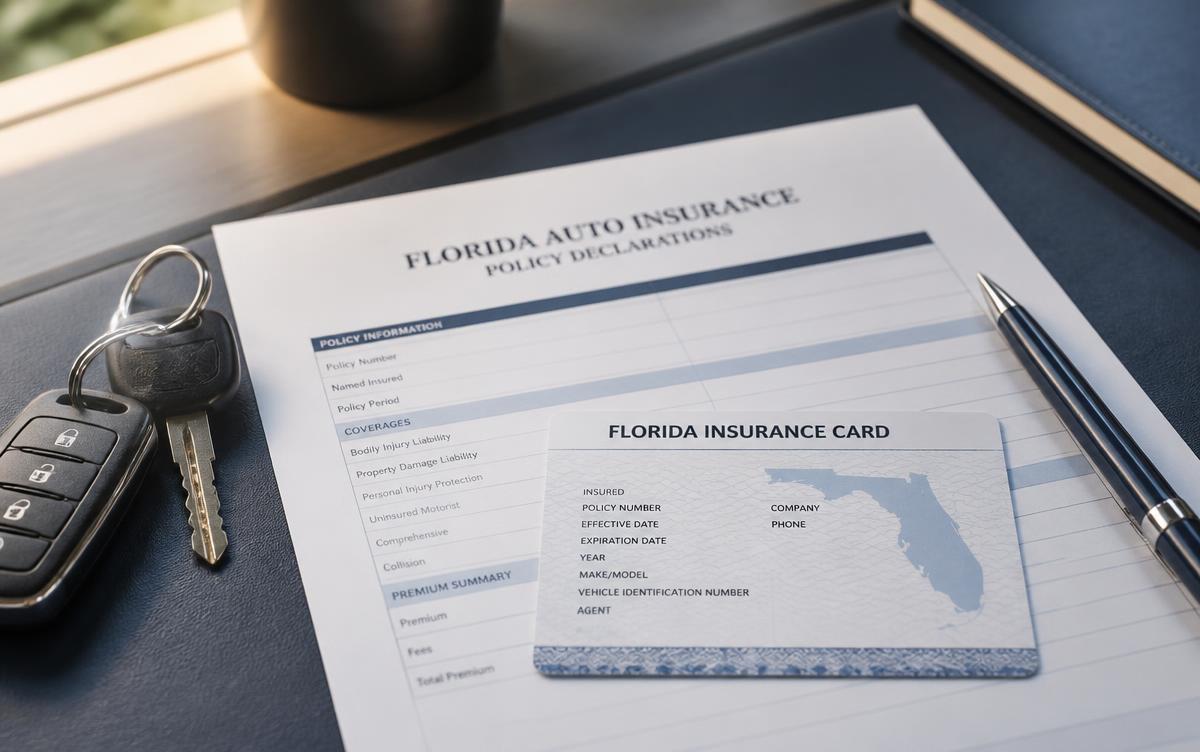
If you have ever signed that form, you may have waived the most important coverage in your policy. Pull your declarations page today and look for the UM line. It costs relatively little compared to the protection it provides, and in a state where a large share of drivers carry no injury coverage, it is often the only source of recovery available after a catastrophic crash.
Also consider stacking. In Florida, stacked UM coverage on a multi-vehicle policy allows limits to be combined across insured vehicles, which materially increases available protection. Non-stacked coverage is cheaper and is what many people unknowingly select.
Tip 2: Get Medical Care Within 14 Days of a Crash or Lose Your PIP Benefits
Fla. Stat. § 627.736(1)(a) requires an injured person to receive initial services and care within 14 days of a motor vehicle crash in order to be eligible for PIP medical benefits. Miss the window and the 10,000 dollars is simply gone, no matter how legitimate the injury.
There is a second layer. PIP pays up to 10,000 dollars only when a physician, osteopathic physician, dentist, or supervised physician assistant or advanced practice registered nurse determines that the injured person had an emergency medical condition. Without that determination, PIP medical benefits are capped at 2,500 dollars. Massage therapy and acupuncture are excluded from PIP reimbursement entirely under the statute.
The practical tip is simple: after any crash, get evaluated promptly even if you feel functional. Adrenaline masks soft-tissue and closed-head injuries for days, and a gap in treatment is the first argument every adjuster makes.
Tip 3: The Deadline to Sue Is Now Two Years, Not Four
Florida's HB 837, effective March 24, 2023, cut the statute of limitations for general negligence in half. Under Fla. Stat. § 95.11(5)(a), most negligence claims that accrued on or after that date must be filed within two years. Claims accruing before that date remain governed by the prior four-year period.
Other deadlines run differently. Wrongful death actions are governed by § 95.11(4)(d) with a two-year period. Medical negligence claims are governed by § 95.11(4)(b), generally two years from discovery with a four-year statute of repose. Claims against government entities require written notice under Fla. Stat. § 768.28(6) before suit, and that notice requirement has its own timetable that is easy to blow.
A missed limitations period is the one legal error no lawyer can fix afterward. Calendar it, and do not rely on an adjuster's assurance that the claim is still being evaluated.
Tip 4: If You Are More Than 50 Percent at Fault, You Recover Nothing
Florida replaced pure comparative negligence with a modified comparative negligence standard in Fla. Stat. § 768.81. A claimant found greater than 50 percent responsible for their own harm recovers zero. At 50 percent or less, damages are reduced by the percentage of fault.
This changes the value of early evidence dramatically. A five-point shift in a jury's fault allocation used to change the size of a recovery; now, near the midpoint, it can eliminate one. Photographs, independent witnesses, dashcam footage, and store surveillance preserved in the first days are what keep a fault percentage down. Medical negligence claims remain governed by the pure comparative fault rule in § 766.112.
Tip 5: Say Less at the Scene, and Never Give a Recorded Statement to the Other Insurer Unprepared
You are required to exchange information and to report qualifying crashes, but you are not required to speculate about fault. Statements like an apology or a guess about speed are quoted back months later out of context.
Separately, Florida's Accident Report Privilege in Fla. Stat. § 316.066(4) makes crash reports and statements made to an investigating officer for the purpose of completing the report generally inadmissible as evidence in a civil trial. That privilege does not extend to what you post on social media, and it does not extend to a recorded statement given voluntarily to the other driver's insurer. You generally have a contractual duty to cooperate with your own carrier; you have no such duty to the opposing carrier.
Tip 6: Report the Crash and Get the Report
Fla. Stat. § 316.065 and § 316.066 require immediate notice to law enforcement of a crash involving injury, death, or apparent property damage of at least 500 dollars. If no officer investigates, a driver involved in a reportable crash must submit a written report to the Florida Department of Highway Safety and Motor Vehicles within 10 days.
Crash reports become available to the parties, their attorneys, and insurers through the FLHSMV crash portal. Under § 316.066(2)(a), crash reports are confidential and exempt from public disclosure for 60 days after the report is filed, with access limited to defined parties during that window. Order the report and read it. Officers make errors in vehicle direction, lane assignment, and witness names, and corrections are far easier in the first weeks.
Tip 7: Understand the Deadlines on Your Property Insurance Claim
Florida homeowners face separate clocks. Under Fla. Stat. § 627.70132, as amended in 2022, a new or reopened property insurance claim must be reported within one year of the date of loss, and a supplemental claim within 18 months. Under Fla. Stat. § 627.70152, most residential and commercial property insurance suits require a written pre-suit notice to the insurer at least 10 business days before filing, served through the Department of Financial Services.
HB 837 also repealed Fla. Stat. § 627.428, the one-way attorney fee statute that used to require an insurer to pay a policyholder's legal fees after losing a coverage dispute. A narrow remedy remains in Fla. Stat. § 86.121 for certain declaratory actions on total coverage denials. The practical effect is that the economics of fighting a denial changed, and moving early matters more than it used to.
Photograph your property in good condition now, before the next storm. A pre-loss photo set is the cheapest piece of evidence you will ever create.
Tip 8: Read the Arbitration and Waiver Clauses Before You Sign
Gyms, urgent care intake packets, contractor agreements, apartment leases, rideshare terms, and youth sports forms routinely contain binding arbitration clauses, jury trial waivers, venue selection provisions, and prevailing-party fee shifting. Florida courts enforce these regularly.
Two Florida-specific points are worth knowing. Fla. Stat. § 744.301(3) allows a natural guardian to bind a minor child to a pre-injury release in certain activity contexts, subject to statutory conditions. And under Fla. Stat. § 768.0755, a slip-and-fall claimant against a business must prove the business had actual or constructive knowledge of the dangerous condition, which is a meaningfully higher bar than many people assume.
Read what you sign, ask for a copy, and photograph the posted conditions and the floor where you fell before you leave a store.
Tip 9: Know the Florida Rules That Protect You From Robocalls and Bad Debt Practices
Two statutes give Florida residents real leverage. The federal Telephone Consumer Protection Act provides statutory damages of 500 dollars per violating call or text, trebled to 1,500 dollars for willful violations. Florida's own Telephone Solicitation Act, Fla. Stat. § 501.059, adds a state remedy with a 500 dollar statutory damage figure and, as amended in 2023, a 15-day pre-suit notice requirement for text message claims.
Keep the messages. Screenshots with timestamps and the sending number are the evidence. Deleting them is the single most common reason a viable claim cannot be pursued.
Tip 10: Free Consultations Exist for a Reason, and Waiting Is What Costs Money
Personal injury and insurance dispute consultations in Florida are customarily free and carry no obligation, and representation is customarily on a contingency fee under Rule 4-1.5 of the Rules Regulating The Florida Bar, meaning no fee unless there is a recovery. Rule 4-1.5(f)(4)(B) also gives a client three business days to cancel a contingency fee agreement after signing.
The cost of waiting is not theoretical. Surveillance footage at a Miami store, garage, or apartment complex is often overwritten within 30 days. Skid marks disappear after the next rain. Witnesses move. Vehicles are repaired or sold before an expert can inspect them. Electronic control module data is lost when a vehicle is scrapped. Each of these is an evidentiary asset that exists for a limited window and cannot be recreated later.
A Practical Florida Legal Checklist
- Pull your auto declarations page and confirm you carry Bodily Injury Liability and Uninsured Motorist coverage, stacked if available
- Confirm no one in your household signed a UM rejection form
- Save the FLHSMV crash portal and your carrier's claim number in your phone
- Get medical evaluation within 14 days of any crash
- Photograph your home's roof, interior, and major systems annually before hurricane season
- Never give a recorded statement to an opposing insurer without advice
- Keep spam texts and robocall logs rather than deleting them
- Calendar the two-year negligence deadline and the one-year property claim notice deadline
- Read arbitration and release clauses before signing anything
- Ask questions early, when the answers can still change the outcome
The Bottom Line
Florida law is not hostile to ordinary people, but it is unforgiving about timing and documentation. The state's minimum car insurance requirements are among the lowest in the country and protect the driver far less than most residents believe. The negligence filing deadline is two years. PIP medical benefits vanish after fourteen days without care. Fault above 50 percent bars recovery entirely. Property claim notice runs from the date of loss, not from the date you noticed the damage.
None of these rules require a law degree to act on. They require a declarations page review, a prompt medical visit, a camera, and a phone call made sooner rather than later.
Frequently Asked Questions
What are the minimum car insurance requirements in Florida in 2026?
Florida requires owners of vehicles with at least four wheels to carry 10,000 dollars of Personal Injury Protection under Fla. Stat. § 627.736 and 10,000 dollars of Property Damage Liability under Fla. Stat. § 324.022. Florida does not require ordinary drivers to carry Bodily Injury Liability coverage, though higher requirements apply to drivers with certain crash or conviction histories under § 324.021 and to DUI convictions under § 324.023.
Is Florida still a no-fault state?
Yes. Florida remains a no-fault state, meaning your own Personal Injury Protection coverage pays your initial medical expenses and a portion of lost wages regardless of who caused the crash. A claim against the at-fault driver for pain and suffering is permitted only when the injury meets the permanent injury threshold described in Fla. Stat. § 627.737(2).
How long do I have to see a doctor after a Florida car accident?
Fourteen days. Under Fla. Stat. § 627.736(1)(a), an injured person must receive initial services and care within 14 days of the crash to be eligible for PIP medical benefits. Benefits are limited to 2,500 dollars unless a qualified provider determines the person had an emergency medical condition, in which case up to 10,000 dollars is available.
How long do I have to file a personal injury lawsuit in Florida?
For most negligence claims accruing on or after March 24, 2023, the deadline is two years under Fla. Stat. § 95.11(5)(a), reduced from four years by HB 837. Wrongful death claims are governed by § 95.11(4)(d) and medical negligence claims by § 95.11(4)(b). Claims against government entities require pre-suit written notice under Fla. Stat. § 768.28(6).
Do I need uninsured motorist coverage in Florida?
It is not mandatory, but it is widely regarded as the most important optional coverage in a Florida policy because the state does not require ordinary drivers to carry Bodily Injury Liability. Under Fla. Stat. § 627.727, an insurer must offer uninsured motorist coverage equal to your bodily injury limits, and lower limits or rejection require a signed written form.
What happens if I am partly at fault for an accident in Florida?
Under the modified comparative negligence standard in Fla. Stat. § 768.81, a claimant found more than 50 percent at fault recovers nothing. At 50 percent or less, the recovery is reduced by the assigned percentage of fault. Medical negligence claims remain subject to pure comparative fault under § 766.112.
When must a car accident be reported to police in Florida?
Fla. Stat. § 316.065 requires immediate notice to law enforcement when a crash involves injury, death, or apparent property damage of at least 500 dollars. If no officer investigates a reportable crash, the driver must file a written report with the Florida Department of Highway Safety and Motor Vehicles within 10 days.
How long do I have to report a Florida property insurance claim?
Under Fla. Stat. § 627.70132, a new or reopened property insurance claim must be reported to the insurer within one year of the date of loss, and a supplemental claim within 18 months. Most property insurance suits also require pre-suit written notice to the insurer under Fla. Stat. § 627.70152.
Have a similar situation?
Free, confidential case review with a South Florida trial attorney. Call 8888-FARBER.
Request a Free ConsultationAbout the Author
The Farber Law Firm, P.A.
The Farber Law Firm is a South Florida trial practice based in Coral Gables, representing injured people, policyholders and businesses across Miami-Dade, Broward and Palm Beach counties since 1995. The firm handles personal injury, wrongful death, insurance coverage disputes and commercial litigation, and its attorneys are members in good standing of The Florida Bar.
Articles on this site are written and reviewed by attorney David Farber and reflect Florida statutes, court rules and Florida Bar regulations current as of the publication date.
- Office
- 2199 Ponce de Leon Blvd #301
Coral Gables, FL 33134 - Phone
- 8888-FARBER
- Consultations
- Free and confidential