Florida Dog Bite Law in 2026: Strict Liability Under § 767.04, Dangerous Dog Classifications, and What Miami Victims Can Recover
A Miami personal injury attorney explains Florida's strict liability dog bite statute (Fla. Stat. § 767.04), the 2023 repeal of the state ban on breed-specific legislation, the dangerous dog classification process under §§ 767.11–767.13, homeowners insurance coverage, the 2-year deadline under HB 837, and how comparative negligence and the 'bad dog' sign defense affect recovery.
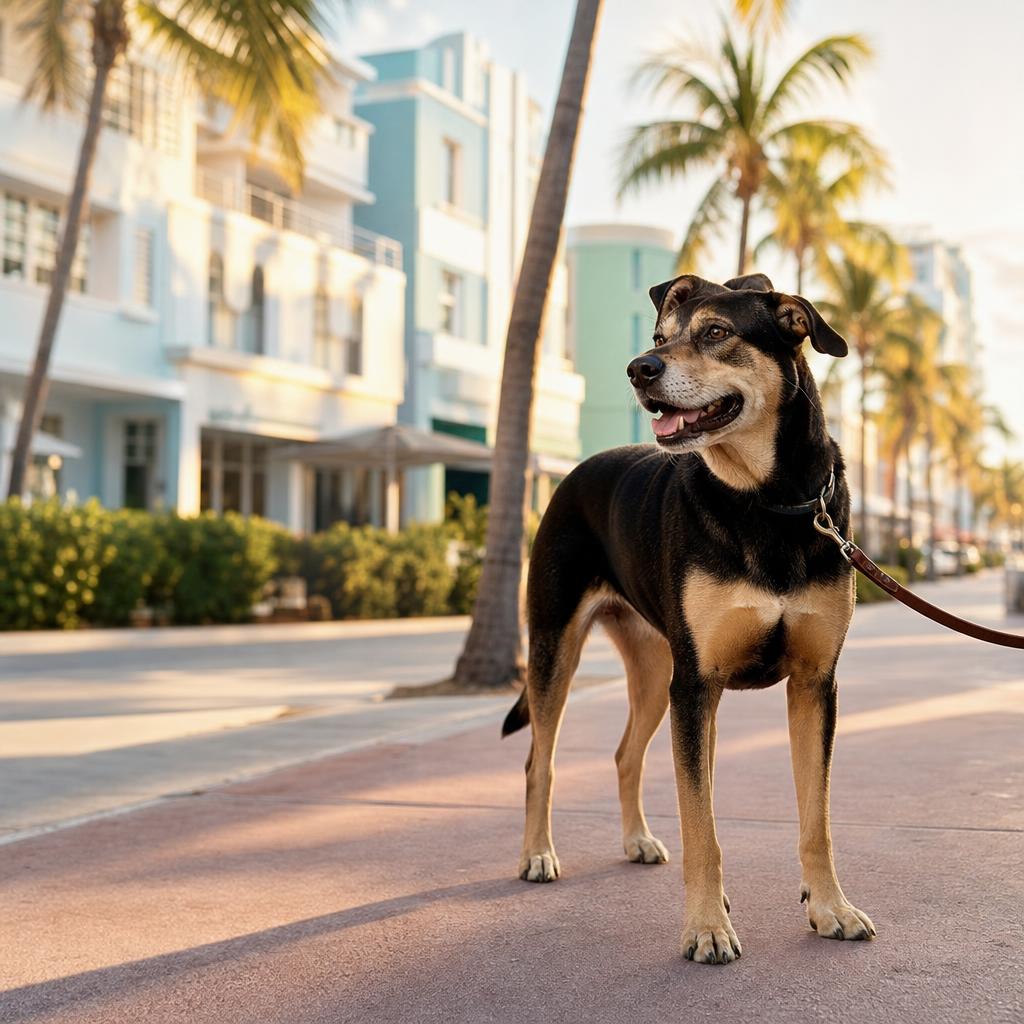
Florida is one of the friendliest states in the country for dog-bite victims — and one of the hardest on dog owners. Unlike the majority of states that follow some version of the common-law 'one bite rule,' Florida imposes strict liability on owners by statute. If a dog bites you in a public place, or lawfully in a private place, the owner is liable for your injuries even if the dog had never so much as growled before. This 2026 guide, written from a Miami personal injury attorney's perspective, explains the strict liability statute, the narrow defenses that survive it, how Florida classifies dangerous dogs, what changed after the 2023 repeal of the state's ban on breed-specific legislation, and how homeowners and renters insurance actually pays these claims. Every case turns on its own facts, and nothing here is a promise of any outcome.
Quick Answer: Florida Dog Bite Law in 2026
- Florida is a strict liability state for dog bites — Fla. Stat. § 767.04. No prior bite, no prior aggression, and no owner knowledge is required.
- Liability attaches when the dog bites a person in a public place or lawfully in a private place, which includes anyone on private property in the performance of a legal duty (mail carriers, meter readers, delivery drivers) and any invited guest.
- Comparative negligence reduces recovery — Florida is now a modified comparative negligence (50% bar) state under § 768.81(6) after HB 837 (2023).
- The 'bad dog' sign defense: a conspicuously displayed sign that reads 'Bad Dog' can limit the owner's liability where the victim is 6 or older and no negligence by the owner is proved.
- The statute of limitations is 2 years for bites occurring on or after March 24, 2023 — § 95.11(4)(a), as amended by HB 837.
- Florida repealed the state preemption of breed-specific legislation in 2023 (SB 942), so Miami-Dade's long-standing pit bull restrictions are no longer the only local ordinance in play, and other counties and cities may now enact their own breed rules.
- Homeowners and renters insurance is the usual source of recovery; many policies now exclude specific breeds or dogs with a prior bite history.
- Dangerous dog classification (§§ 767.11–767.13) is a separate administrative process handled by the local animal-services agency and can enhance criminal exposure after a second incident.
The Strict Liability Statute — § 767.04 in Plain English
Florida Statute § 767.04 says the owner of any dog that bites any person while such person is in or on a public place or lawfully in or on a private place, including the property of the owner of the dog, is liable for damages suffered by persons bitten, regardless of the former viciousness of the dog or the owners' knowledge of such viciousness. Three points make this statute unusually plaintiff-friendly:
- No prior bite is required. The old common-law rule that gave every dog 'one free bite' does not apply in Florida. A first-time bite from a puppy is enough.
- No knowledge is required. The owner does not have to have known the dog was dangerous. Even a lifetime family pet triggers strict liability the first time it bites.
- The victim's location matters. The statute covers public places (sidewalks, parks, beaches, streets) and lawful presence on private property. A social guest, a lawful business invitee, a mail carrier, a delivery driver, a utility worker, and a child visiting a friend are all 'lawfully' on the property.
Who Counts as an 'Owner' Under § 767.04
Florida courts read 'owner' broadly. It is not limited to the person on the registration or microchip. Someone who harbors or keeps a dog — a live-in partner, an adult child housing the family dog, a landlord who kept the dog after a tenant abandoned it, or a dog-sitter who assumed control for an extended period — can be treated as an owner or keeper for liability purposes. In apartment and condominium cases, the tenant is usually the owner and the landlord or association is normally not liable under § 767.04, though a separate common-law negligence theory may reach a landlord who knew of a specific dangerous dog and failed to enforce lease provisions or safety rules.
The Two Statutory Defenses
Section 767.04 preserves two — and only two — meaningful defenses:
- The 'Bad Dog' Sign. If the owner had displayed in a prominent place on the premises a sign easily readable including the words 'Bad Dog,' the owner is not liable except as provided in the paragraph on negligence below. This defense does not apply if the victim is under 6 years old or if the owner's negligence proximately caused the injury. In practice, a homemade sign hidden behind shrubs on a back gate will not qualify — Florida courts require the sign to be conspicuous, legible, and located where an ordinary visitor would see it before encountering the dog.
- Comparative Negligence. Any negligence on the part of the person bitten that is a proximate cause of the biting incident reduces the liability of the owner by the percentage bitten person's negligence bears to the owner's liability. Since HB 837 (2023), Florida is a modified comparative negligence (50% bar) state — a plaintiff more than 50% at fault recovers nothing. Provoking the dog, ignoring an owner's warning, trespassing, or teasing/hitting the dog before the bite are the fact patterns that most often reduce or bar recovery.
Assumption of the risk and trespass are not stand-alone defenses under § 767.04, but they collapse into the comparative-negligence and 'lawfully on private property' analyses.
Bites Against Dogs and Livestock — a Different Statute
Section 767.04 covers bites to people. If your leashed dog is attacked by another dog, the strict liability statute does not apply — you would proceed under common-law negligence and, in some cases, county 'dog-at-large' ordinances. Miami-Dade County Code Chapter 5 requires dogs off the owner's property to be under the control of a responsible person by leash or chain, and violation of that ordinance can be evidence of negligence per se in a civil suit for veterinary bills and related damages.
Dangerous Dog Classifications — §§ 767.11–767.14
Florida's dangerous dog statute is separate from the strict liability civil statute and is enforced by the local animal-services agency (in Miami, that is Miami-Dade Animal Services). Under § 767.11(1), a dog is 'dangerous' if it has, without provocation: (a) aggressively bitten, attacked, or endangered or has inflicted severe injury on a human being on public or private property; (b) more than once severely injured or killed a domestic animal off the owner's property; or (c) been used primarily or in part for the purpose of dog fighting or trained for dog fighting.
Once classified, the owner must comply with strict confinement, muzzling in public, liability insurance or bond, registration, warning-sign, and microchipping requirements under § 767.12. A subsequent bite by a classified dangerous dog can trigger felony charges under § 767.13(2) — up to a second-degree felony if the attack results in severe injury or death — and mandatory destruction of the dog. Preserving the animal-services file (classification hearing records, prior complaints, veterinary records) is often the strongest single piece of evidence in a civil case.
What Changed in 2023 — Breed-Specific Legislation
Since 1990, Florida § 767.14 preempted local governments from enacting breed-specific dog regulations, with a grandfather exception for Miami-Dade's pit bull ordinance that had been enacted before the preemption. In 2023, Governor DeSantis signed SB 942, which repealed the exception language and effectively made the preemption uniform going forward — meaning newly-enacted local breed bans are barred. Miami-Dade's long-standing pit bull ordinance was itself repealed by county referendum in 2023 after voters approved removing it. In 2026, no Florida local government may enact a new breed ban, and Miami-Dade no longer restricts pit bulls specifically. Individual dogs may still be classified 'dangerous' based on their behavior under §§ 767.11–767.13. This is a common area of confusion — always confirm the current version of any local ordinance rather than relying on old sources.
Miami-Specific Ordinances Still Worth Knowing
- Leash law. Miami-Dade County Code § 5-20 requires dogs off the owner's property to be leashed and under the control of a responsible person. Violation is evidence of negligence in civil cases involving dog-on-person or dog-on-dog attacks.
- Beach and park restrictions. Most Miami-Dade beaches and public parks require leashes; some prohibit dogs entirely. A bite on a beach where dogs are prohibited can support both a strict-liability claim and a separate negligence theory.
- City of Miami and Miami Beach have parallel local ordinances that may add licensing, vaccination, and confinement requirements. A rabies vaccination lapse discovered after a bite frequently triggers a 10-day quarantine at the owner's expense and can inform civil damages (mental anguish over rabies exposure is compensable).
Damages a Florida Dog-Bite Victim Can Recover
Recoverable damages in a § 767.04 case are the same categories available in any Florida negligence action:
- Medical expenses — emergency-room care, wound irrigation, plastic surgery and scar-revision procedures, rabies post-exposure prophylaxis when the dog cannot be located or vaccination status is unknown, tetanus, infection treatment, and psychological counseling.
- Future medical care — many bite injuries, especially to the face and hands, require multiple staged plastic-surgery procedures over years. A life-care plan supports future-care valuation.
- Lost wages and lost earning capacity — from time off for treatment and, in severe cases, permanent disability affecting the ability to work.
- Pain and suffering, mental anguish, disfigurement, and loss of enjoyment of life — dog bites disproportionately affect the face, hands, and forearms, and permanent scarring is often the largest single element of damages. Florida recognizes disfigurement as a distinct non-economic damage category.
- PTSD and cynophobia — post-traumatic stress and the fear of dogs are documented consequences, especially in children, and are compensable when supported by treating mental-health testimony.
- Punitive damages — rarely available, but possible under § 768.72 where the owner knew the dog had previously attacked and consciously disregarded the risk.
Children Are a Distinct Category
Children under 6 are the largest single group of Florida dog-bite victims. The 'Bad Dog' sign defense does not apply to victims under 6 — § 767.04 makes that explicit. Children also cannot legally be found comparatively negligent below the age of six under Florida common law, and the standard of care between 6 and 14 is measured against a child of similar age, intelligence, and experience. In practice, this means dog-bite cases involving young children face very few defenses beyond a challenge to the fact of the bite itself.
Homeowners and Renters Insurance — Where the Money Actually Comes From
The vast majority of Florida dog-bite recoveries are paid by the owner's homeowners or renters insurance under the personal-liability coverage (Coverage E). Policy limits of $100,000 to $500,000 are typical, with umbrella policies stacking on top when the owner has one. Two changes have reshaped this market:
- Breed exclusions. Many carriers exclude specific breeds outright — pit bulls, Rottweilers, Dobermans, Akitas, Chow Chows, wolf-hybrids, and, at some carriers, German Shepherds and Cane Corsos. A breed-excluded dog leaves the owner personally exposed and is a common reason a claim is denied.
- Prior-bite exclusions. Most Florida policies now exclude any dog with a prior bite history, regardless of breed. The first bite is often covered; the second is not, and the difference between coverage and no coverage frequently turns on the timing of the classification hearing and the insurer's underwriting notes.
A denied homeowners claim does not end the case — the owner remains personally liable, and asset investigation, umbrella policies, landlord policies, and separate commercial policies (for dogs kept at a home-based business) all become relevant.
Evidence to Preserve Immediately
- Photographs of every wound before it is closed and again during healing, at consistent lighting and distance, weekly for the first two months.
- The dog's location, breed if known, and any prior complaints on file with Miami-Dade Animal Services (a public-records request usually resolves this within days).
- Owner's identity, address, insurance information, and any recorded statement about prior aggression or vaccination status.
- Witness names and contact information — bites happen quickly and independent witnesses are decisive on comparative-fault issues.
- Medical records from the ER visit, including the physician's description of the wound pattern (crush vs. tear vs. puncture affects reconstruction).
- Any 'Bad Dog,' 'Beware of Dog,' or fence signage — photograph both sides of every gate and the property line.
- Video: doorbell cameras, neighbor Ring footage, and mail-carrier body cameras have become the single most decisive evidence in modern bite cases.
The 2-Year Statute of Limitations
For any dog bite occurring on or after March 24, 2023, the deadline to file suit is two years — Fla. Stat. § 95.11(4)(a), as amended by HB 837. Bites before that date retain the old 4-year negligence period, but virtually all live cases in 2026 are on the 2-year clock. Minors have separate tolling under § 95.051, but do not assume it — the parents' derivative claims still run on the standard clock and are often lost first.
When a Bite Becomes a Wrongful Death Case
Rare but real. Florida records several fatal dog attacks per year, most involving children or elderly victims. Wrongful-death dog-bite claims are governed by the Florida Wrongful Death Act (§§ 768.16–768.26), with damages defined for the personal representative and eligible survivors. Punitive damages are more common in fatal cases where the owner had documented prior warnings.
What a Miami Dog-Bite Attorney Actually Does in the First 30 Days
- Sends a preservation letter to the owner, landlord, insurer, and animal-services agency demanding retention of records, photos, and video.
- Files a public-records request with Miami-Dade Animal Services for prior complaints, rabies-vaccination status, and any pending dangerous-dog classification.
- Coordinates wound documentation with a plastic surgeon and a life-care planner in scarring cases.
- Identifies all applicable insurance — homeowners, renters, umbrella, landlord, and any commercial policy — and sends demand-and-tender letters.
- Handles the rabies-quarantine paperwork if the dog's vaccination status is uncertain.
- Preserves the 10-day observation window while injuries and evidence are fresh.
- Interviews witnesses before memories fade.
Bottom Line
Florida § 767.04 is one of the most victim-favorable dog-bite statutes in the country: no prior bite required, no owner knowledge required, and only two narrow defenses. But the practical value of a case is decided by three questions that have nothing to do with the statute: Is there insurance? Was there prior negligence that survives the sign defense and comparative fault? And how well was the wound documented in the first 30 days? Handled promptly, most Miami dog-bite cases resolve through the owner's homeowners carrier without ever reaching a courtroom. Handled slowly, evidence disappears, deadlines close, and coverage exclusions harden into denials.
This article is educational and not legal advice. Every case depends on its own facts. If you or your child was bitten by a dog in Miami-Dade or anywhere in Florida, contact The Farber Law Firm at 8888-FARBER for a free, confidential consultation. Prior results do not guarantee a similar outcome.
The Rabies Question — What Happens in the First 10 Days
Every reported dog bite in Miami-Dade triggers a mandatory 10-day quarantine of the biting animal under Chapter 5 of the Miami-Dade County Code and Fla. Admin. Code Rule 64D-3.042. If the dog is currently vaccinated and can be confined at home under animal-services supervision, the owner keeps custody. If the dog is unvaccinated, has an expired vaccine, or the owner cannot be located, the dog is confined at the Miami-Dade Animal Services facility. If the dog develops rabies signs during observation, it is euthanized and tested. If the dog cannot be located at all, the human victim must be presumed exposed and begin rabies post-exposure prophylaxis (a single dose of rabies immune globulin and four doses of rabies vaccine over 14 days), which is medically painful, logistically demanding, and expensive — often $8,000–$25,000 out of pocket before insurance. All of that is compensable in the civil case, as is the mental anguish of rabies exposure. The 10-day quarantine record is a public document from Miami-Dade Animal Services and is almost always the fastest way to establish the identity of the owner and the dog.
Scarring, Facial Disfigurement, and the Plastic-Surgery Timeline
Facial bites — the majority of pediatric bites — heal on a timeline that rarely matches insurance-adjuster patience. The initial wound closure at the ER is only the first of what is often three to seven procedures over 12 to 24 months: scar-revision at 6 months, laser resurfacing at 9 to 12 months, further revision at 18 months. Florida recognizes disfigurement as a stand-alone non-economic damage category under Fla. Std. Jury Instruction 501.2, and Miami-Dade juries routinely value permanent facial scarring on a child in the mid-six figures independently of medical expenses. Settling a pediatric bite case before the scar has fully matured (typically 12–24 months post-injury) leaves value on the table; a life-care plan and a board-certified plastic surgeon's future-treatment opinion are the tools that support the higher valuation. Minor's settlements over $15,000 net also require court approval and appointment of a guardian ad litem under Fla. Stat. § 744.387.
Postal Carriers, UPS, FedEx, Amazon Drivers, and Food Delivery
Delivery workers are one of the largest occupational categories in Florida dog-bite files. USPS carriers are federal employees — a bite that occurs during a delivery is a workers'-compensation claim through the Federal Employees' Compensation Act, but the § 767.04 civil claim against the dog owner runs in parallel and is not barred by the federal WC recovery. UPS, FedEx, Amazon Flex, DoorDash, Uber Eats, and Instacart couriers are typically classified as employees or independent contractors under their own arrangements; their workers'-comp availability varies, but the third-party § 767.04 claim against the homeowner is always available. Because delivery workers must approach front doors, mailboxes, and gates by definition, the 'lawfully on private property' element is uncontested in almost every case. USPS national data attributes roughly 5,300 mail-carrier bites annually to unrestrained dogs — a substantial subset of the Miami-Dade case volume.
Common-Law Negligence as a Parallel Theory
Strict liability under § 767.04 is not the only theory available. Florida recognizes a parallel common-law negligence claim for injuries caused by an owner's failure to control an animal — this matters because § 767.04's 'Bad Dog' sign defense does not apply to a negligence claim, and comparative-fault analysis is different for a pleading based on the owner's independent negligent acts (leaving a gate open, releasing the dog from a leash in violation of ordinance, ignoring prior aggression). Pleading both counts preserves alternative recovery paths and forces the defense to try more than one issue at trial.
Non-Owner Defendants Worth Considering
- Landlords — generally not liable under § 767.04 (which reaches owners and keepers), but liable under Florida common law when the landlord had actual knowledge of a specific dangerous dog on the leased premises, retained authority to require its removal or enforce lease conditions, and failed to act. Miami-Dade rental-history and prior-complaint records held by property managers are the key evidence.
- Condominium associations — liable for negligent enforcement of pet rules where the association had notice of prior aggression and did not act. The association's declaration and rules should be pulled early.
- Dog walkers, groomers, and daycare operators — liable as 'keepers' for the duration of their custody. Commercial liability policies are usually available.
- Airbnb and short-term rental hosts — a growing category in Miami Beach and the Grove. The host's homeowners policy usually excludes short-term-rental activity, and the STR-specific Airbnb Host Guarantee or Vrbo Liability Insurance may or may not respond depending on booking channel and cause. Read the policy and platform terms early.
- Government owners — police-K9 bites are subject to sovereign-immunity analysis under § 768.28 and often require a claim to be filed within 3 years and a 180-day pre-suit notice period; the caps ($200,000 per person, $300,000 per incident) apply absent a legislative claims bill.
Case Study Composite — Neighborhood Facial Bite on a Child
A 5-year-old girl visits a friend's home in a Kendall subdivision. The friend's mother owns a mixed-breed dog that has never bitten anyone. While the child is in the backyard, the dog lunges and bites her cheek and lower lip, requiring two-layer facial repair and, over the next 18 months, three scar-revision procedures. Analysis in 2026: (1) strict liability under § 767.04 attaches — no prior bite, no knowledge required; the child was lawfully on private property as an invited guest; (2) the 'Bad Dog' sign defense would not apply because the victim was under 6; (3) comparative negligence would not apply because a 5-year-old cannot be legally negligent under Florida common law; (4) the family's homeowners policy has a $300,000 Coverage E personal-liability limit with no breed exclusion; (5) the two-year deadline under § 95.11(4)(a) runs from the date of the bite for the parents' derivative claim, with tolling on the child's own claim under § 95.051 until the child reaches majority; (6) the case ultimately supports demand well in excess of policy limits because of permanent facial scarring, and a Cunningham hearing is used to test the carrier's willingness to tender. The most important early move was preserving the animal-services quarantine record and beginning photographic scar documentation the day of the ER visit.
Bad-Faith Setup Against the Homeowners Carrier
When a bite exceeds the dog owner's homeowners policy limits, Florida bad-faith law under § 624.155 and Cunningham v. Standard Guaranty Insurance Co., 630 So. 2d 179 (Fla. 1994), becomes central. A well-timed policy-limits demand with a short, reasonable deadline, complete medical records, an itemized damage summary, and a clear settlement offer sets up an excess-verdict claim against the carrier if it fails to tender. Post-HB 837 (2023) amendments narrowed some pre-suit bad-faith conduct but preserved the core Cunningham/Boston Old Colony framework. Getting the demand right in the first 60 days is often the difference between a policy-limits recovery and a multi-million-dollar excess judgment collectible against the carrier.
Home Insurance Coverage Verification Playbook
- Request a certified copy of the entire policy — declarations page, forms list, and endorsements — from the carrier under Florida's producer-record laws.
- Identify the specific animal-liability endorsement or exclusion; carriers often list breed exclusions on a separate schedule that adjusters do not volunteer.
- Confirm whether an umbrella policy is in place; umbrellas frequently follow the underlying homeowners exclusions, but not always — read the umbrella's independent definitions and exclusions.
- Check for a residence-employee endorsement if the dog was in the care of a nanny, house manager, or dog-walker at the time of the bite.
- Confirm the dwelling classification — a residence used as a short-term rental at the time of the bite may be excluded from the standard HO-3 policy under a business-pursuits exclusion.
Documenting the Bite — A Photo Protocol That Actually Works
- Same day: photograph the wound before ER wound closure if possible; wide shot of the affected body part, close-up of the wound with a ruler for scale.
- Every 3–5 days for the first month; then weekly through month 3.
- Consistent lighting (natural, north-facing window), consistent distance, consistent angle. Adjusters and juries respond to comparability.
- Video the range-of-motion loss on a hand or forearm bite at 2 weeks, 6 weeks, and 3 months.
- Preserve the torn clothing — bite pattern and blood staining corroborate mechanism and severity.
- Photograph the dog, the scene, and any 'Bad Dog' or 'Beware of Dog' signage from multiple angles the same day if possible.
Frequently Asked Questions
Is Florida a strict liability dog bite state in 2026?
Yes. Fla. Stat. § 767.04 makes dog owners strictly liable for bites in public places or where the victim is lawfully on private property, regardless of the dog's prior behavior or the owner's knowledge. Florida does not follow the common-law 'one bite rule.'
How long do I have to file a dog bite lawsuit in Florida?
Two years from the date of the bite for incidents on or after March 24, 2023, under HB 837's amendment to Fla. Stat. § 95.11(4)(a). Older bites may still be on the 4-year clock. Minors have limited tolling, but derivative parental claims typically run on the standard clock.
Does a 'Bad Dog' sign defeat my Florida dog bite claim?
Only in narrow circumstances. A conspicuously displayed 'Bad Dog' sign can limit the owner's liability under § 767.04, but the defense does not apply if the victim is under 6 or if the owner's own negligence caused the injury. Courts require the sign to be legible and placed where an ordinary visitor would see it.
Are pit bulls still banned in Miami-Dade County?
No. Miami-Dade voters repealed the pit bull ordinance by referendum in 2023, and Florida SB 942 (2023) barred future local breed bans. Any dog may still be classified as 'dangerous' based on its behavior under §§ 767.11–767.13, regardless of breed.
Who pays a Florida dog bite claim?
Usually the owner's homeowners or renters insurance under Coverage E personal liability. Many policies now exclude specific breeds or dogs with a prior bite. When coverage is denied or unavailable, the owner remains personally liable and umbrella, landlord, or commercial policies may respond.
Can I sue if I was bitten while trespassing?
Generally no under § 767.04, which requires that the victim be in a public place or lawfully on private property. Comparative negligence and the lawful-presence requirement together usually bar trespasser claims, though facts matter — a delivery driver briefly stepping past a property line is not the same as an unlawful entrant.
Is my landlord liable if my neighbor's dog bit me?
Only in narrow circumstances. Florida § 767.04 imposes strict liability on the owner or keeper, not the landlord. A common-law negligence claim against a landlord may proceed where the landlord had actual knowledge of a specific dangerous dog on the leased premises, retained the authority to require its removal, and failed to act. Miami-Dade property-management complaint records are the key evidence.
Does Florida cover the cost of rabies shots after a dog bite?
The dog owner is liable under Fla. Stat. § 767.04 for all reasonable medical expenses, including rabies post-exposure prophylaxis if the dog cannot be located or is unvaccinated. The out-of-pocket cost of rabies immune globulin and the 4-dose vaccine series often exceeds $8,000 and is fully compensable, along with lost wages for treatment appointments and mental-anguish damages tied to rabies exposure.
Are scars and disfigurement compensable in a Florida dog bite case?
Yes. Fla. Std. Jury Instruction 501.2 treats disfigurement as a distinct non-economic damage category separate from pain and suffering. Florida juries — and Miami-Dade juries in particular — often value permanent facial scarring on a child in the mid-six figures independently of medical expenses. Settling before the scar has fully matured (typically 12–24 months post-injury) usually undervalues the case.
What if the dog belongs to a friend or family member — should I still file a claim?
The claim is against the dog owner's homeowners or renters insurance policy, not the owner personally in most cases. Making a claim rarely costs the owner anything out of pocket beyond a possible premium increase or policy non-renewal at the next term, and it is the only way to pay for medical care, future surgeries, and lost wages. Homeowners policies exist precisely to cover this risk.
Have a similar situation?
Free, confidential case review with a South Florida trial attorney. Call 8888-FARBER.
Request a Free ConsultationAbout the Author
The Farber Law Firm, P.A.
The Farber Law Firm is a South Florida trial practice based in Coral Gables, representing injured people, policyholders and businesses across Miami-Dade, Broward and Palm Beach counties since 1995. The firm handles personal injury, wrongful death, insurance coverage disputes and commercial litigation, and its attorneys are members in good standing of The Florida Bar.
Articles on this site are written and reviewed by attorney David Farber and reflect Florida statutes, court rules and Florida Bar regulations current as of the publication date.
- Office
- 2199 Ponce de Leon Blvd #301
Coral Gables, FL 33134 - Phone
- 8888-FARBER
- Consultations
- Free and confidential