Rear-End Collisions in Florida (2026): The Rebuttable Presumption, PIP, and When the Rear Driver Isn't at Fault
Rear-ended in Miami? A Florida personal injury attorney explains the rear-end presumption under Florida law, the four recognized ways the rear driver can rebut it, how PIP and the § 627.737 serious injury threshold apply, and why HB 837's 50% comparative negligence bar and 2-year statute of limitations now decide these cases.
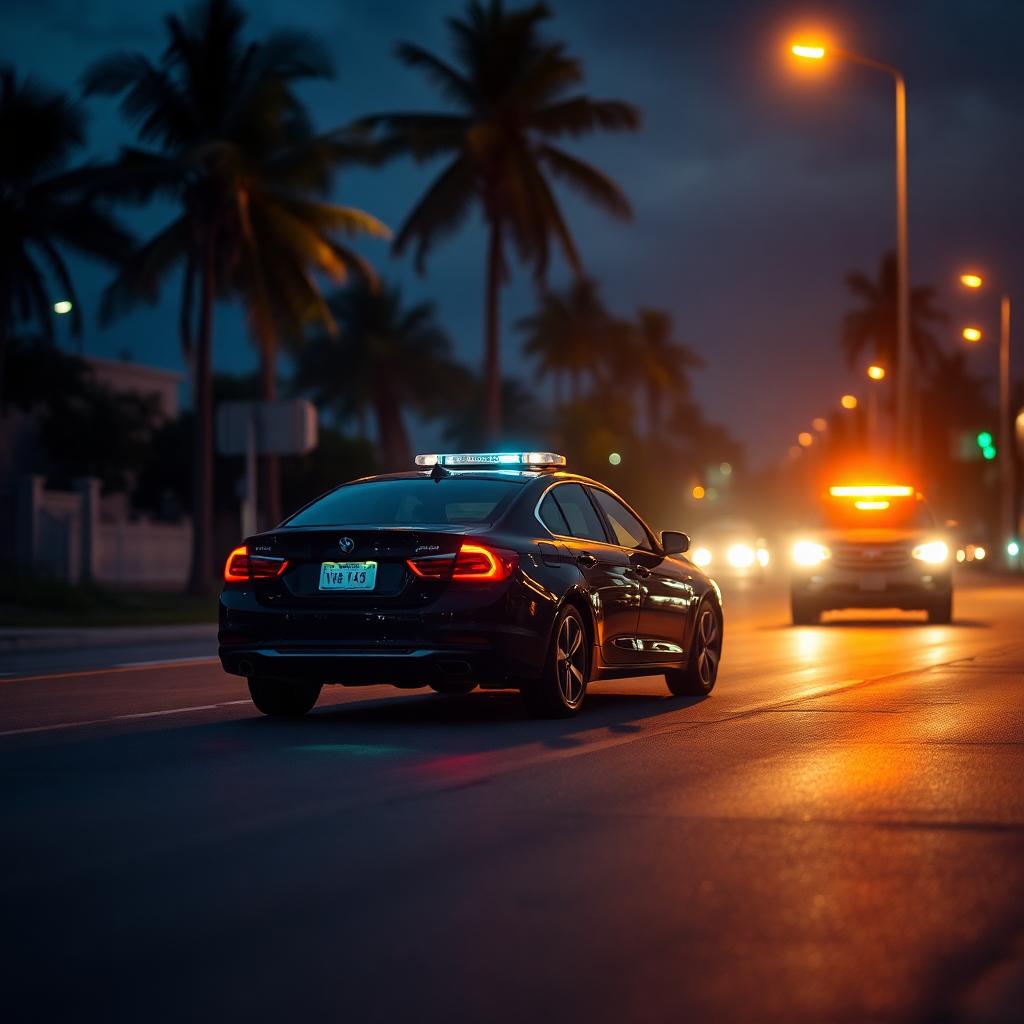
Rear-end collisions are the single most common crash type on Miami's arterials — I-95, the Palmetto, the Dolphin, Biscayne Boulevard, US-1, and the always-congested exits into Brickell and downtown. They also look like the simplest cases: the rear driver hit the front driver, so the rear driver is at fault. That is usually true in Florida — but not always. Florida applies a rebuttable presumption of negligence against the rear driver, and defense lawyers spend real time trying to rebut it. Combined with the state's no-fault PIP system, the § 627.737 serious injury threshold, and the 50% comparative negligence bar enacted by HB 837 (2023), a routine rear-end case in Miami is now a legal problem, not a formality. This 2026 guide, written by a Miami personal injury attorney, explains what actually controls these cases. Every case is different, and nothing here is a promise of any outcome.
Quick Answer for Miami Rear-End Crash Victims
- Florida applies a rebuttable presumption of negligence against the rear driver in a rear-end collision (Eppler v. Tarmac America, Inc., 752 So. 2d 592 (Fla. 2000); Clampitt v. D.J. Spencer Sales, 786 So. 2d 570 (Fla. 2001)).
- The rear driver can defeat the presumption by producing substantial evidence of one of four recognized categories: a mechanical failure, the lead driver's sudden stop in a place where a stop could not reasonably be expected, the lead driver's illegal or unexpected lane change, or a stopped/unlit vehicle in a place where a vehicle should not be.
- Florida is still a no-fault (PIP) state — your own auto insurer pays 80% of the first $10,000 of reasonable and necessary medical bills under Fla. Stat. § 627.736, regardless of fault, if you seek initial care within 14 days.
- To recover pain and suffering, you must meet Florida's serious injury threshold under § 627.737(2).
- Under HB 837 (2023), Florida is a modified comparative negligence (50% bar) state — Fla. Stat. § 768.81(6) — and the personal injury statute of limitations is 2 years under § 95.11(4)(a).
The Rebuttable Presumption Explained
Florida law does not automatically hold the rear driver liable. What Florida courts have done — going back to McNulty v. Cusack, 104 So. 2d 785 (Fla. 2d DCA 1958), and refined in Eppler and Clampitt — is create a procedural presumption. When the plaintiff shows the defendant's vehicle struck the plaintiff's vehicle from behind, the burden shifts to the defendant to come forward with evidence explaining why the presumption should not apply. If the defendant produces substantial, competent evidence of a recognized rebuttal, the presumption vanishes and the jury decides the case on ordinary negligence principles under Fla. Stat. § 316.0895 (following too closely) and § 316.183 (unlawful speed).
In plain English: the presumption gets you into the courtroom on solid footing, but it does not guarantee a verdict. Rear-end cases in Miami are won or lost on whether the defense can plausibly fit its facts into one of the four recognized rebuttal categories — and then on the comparative fault allocation under § 768.81(6).
The Four Ways the Rear Driver Can Rebut the Presumption
1. Sudden and unexpected stop in a place a stop could not reasonably be anticipated
The classic rebuttal. A driver who stops for no apparent reason in the middle of a travel lane on a limited-access highway — not for a red light, not for traffic, not for a hazard — may defeat the presumption. Courts require more than a routine stop for traffic: rush-hour brake-checks on I-95, stopping for a yellow light at Biscayne and 36th, or slowing for congestion on the Palmetto do not qualify. A stop at a green light with no traffic ahead, or a full stop in the passing lane for no visible reason, can.
2. Illegal or unexpected lane change immediately in front of the rear driver
If the front vehicle cut in front of the defendant with insufficient distance to stop — a common Miami merge conflict on the Airport Expressway, the Julia Tuttle, or the Dolphin approach to I-95 — the presumption can be rebutted. Fla. Stat. § 316.085 governs turning and lane changes. Dash-cam footage and merge-point geometry usually decide these disputes.
3. Mechanical failure the rear driver could not have anticipated
A sudden, unforeseeable brake failure — supported by post-crash inspection and maintenance records — is a recognized rebuttal. Courts scrutinize this heavily because the defense can be self-serving. Absent objective mechanical evidence (a documented brake-line failure, a manufacturer recall, a repair invoice), the argument usually fails.
4. Stopped vehicle in a location a vehicle should not be, without warning
A disabled car left in a live travel lane with no flashers, no reflective triangles, and no warning devices — after dark, on the Rickenbacker Causeway or the MacArthur — can support this rebuttal. Fla. Stat. § 316.194 governs stopping, standing, and parking outside of business or residential districts.
Note what is not on the list: raining hard, the sun in the driver's eyes, being on the phone, following at what the driver thought was a safe distance. These are not recognized rebuttals — they are the exact conduct § 316.0895 was written to prohibit.
Comparative Negligence After HB 837
Even where the rear driver defeats the presumption, comparative fault is decided under Fla. Stat. § 768.81. HB 837 (2023) converted Florida from a pure comparative fault state to a modified comparative negligence (50% bar) state under § 768.81(6). If a jury finds the plaintiff more than 50% at fault — for example, because the plaintiff brake-checked, changed lanes suddenly, or drove a vehicle with malfunctioning brake lights — the plaintiff recovers nothing. At 50% or less, damages are reduced proportionally. This is the single most important change in Florida rear-end litigation in the last twenty years, and it applies to all causes of action that accrued on or after March 24, 2023.
Florida's No-Fault System Still Applies
Rear-end collisions in Florida are first routed through the Personal Injury Protection (PIP) system under Fla. Stat. § 627.736. Every Florida-registered vehicle must carry $10,000 in PIP. After a rear-end crash, your own PIP carrier pays 80% of reasonable and necessary medical expenses and 60% of lost wages, up to the $10,000 limit, regardless of who caused the crash — but only if you receive initial medical care within 14 days of the collision. Miss the 14-day window and PIP medical benefits are lost entirely. For non-emergency injuries, PIP is capped at $2,500.
The § 627.737 Serious Injury Threshold
PIP is designed to keep small cases out of the tort system. To sue the at-fault driver for pain and suffering — the largest category of damages in most rear-end cases — Florida requires the plaintiff to meet the serious injury threshold under Fla. Stat. § 627.737(2): significant and permanent loss of an important bodily function; permanent injury within a reasonable degree of medical probability, other than scarring or disfigurement; significant and permanent scarring or disfigurement; or death. Soft-tissue rear-end cases live and die on the permanency opinion of the treating physician.
Evidence That Wins (or Loses) Miami Rear-End Cases
- Traffic and business surveillance video. FDOT intersection cameras, MDX gantry cameras, and nearby business DVRs often retain footage for only 7–30 days. A written preservation letter must go out immediately identifying date, time, direction, and camera area.
- Dash-cam footage from either driver. Increasingly dispositive on merge and brake-check disputes.
- Police (FHP or MDPD) traffic crash report — not admissible at trial, but drives insurance decisions and identifies witnesses.
- Event Data Recorder (EDR) downloads from both vehicles — pre-impact speed, throttle position, brake application, and delta-V.
- Photographs of vehicle damage and rest positions — the damage pattern is central to reconstruction.
- Skid marks, gouge marks, and debris field — documented before the scene is cleared.
- Brake-light and turn-signal function — a burned-out brake light on the lead car is often the defense's rebuttal theory.
- Medical records with a same-day complaint tied to the crash — critical for causation and permanency.
- Witness statements — bystanders, other motorists, and (on Miami's causeways) toll-gantry attendants.
- Cell-phone records for the rear driver, subpoenaed in litigation when distraction is suspected.
Common Miami Rear-End Scenarios
- I-95 rush hour — sudden slowdowns near the airport exit, Golden Glades, and downtown.
- Palmetto Expressway (SR 826) merge conflicts near the Doral and Miami Gardens interchanges.
- Dolphin Expressway (SR 836) stop-and-go into I-95.
- US-1 and Biscayne Boulevard left-turn queues and pedestrian stops.
- Rickenbacker Causeway — dark, unlit, and rear-end-prone.
- Rideshare pickup and drop-off stops in travel lanes on Brickell and Ocean Drive.
- Chain-reaction crashes — three or more vehicles, where fault allocation among multiple rear drivers becomes the main dispute.
Chain-Reaction and Multi-Vehicle Rear-Ends
In a three-car chain-reaction rear-end — Car A stopped, Car B rear-ends A, Car C rear-ends B — the presumption applies separately to each rearward impact. Car C is presumed negligent for hitting B; Car B is presumed negligent for hitting A. Each defendant tries to rebut its own presumption and shift responsibility to another. Under § 768.81, fault is apportioned among all defendants, and after HB 837 the plaintiff's own share (if any) triggers the 50% bar. Miami chain-reactions on I-95 and the Palmetto are among the most fact-intensive PI cases in Florida.
Uninsured Motorist Coverage Often Decides the Recovery
Florida requires only $10,000 in property damage liability and $10,000 in PIP. Bodily injury liability coverage is not mandatory for private passenger vehicles under current Florida law. Thousands of rear-end crashes in Miami involve at-fault drivers with no BI coverage at all. In those cases, your own Uninsured/Underinsured Motorist (UM/UIM) coverage under Fla. Stat. § 627.727 may be the only meaningful source of recovery for pain-and-suffering damages. UM/UIM is stackable and often the most important line item on your own policy.
Deadlines That Actually End Cases
- 14 days to receive initial medical care to preserve PIP under § 627.736(1)(a).
- 2 years to file the personal injury lawsuit under § 95.11(4)(a) (HB 837, for accidents on or after March 24, 2023).
- 2 years for wrongful death claims under § 95.11(4)(d).
- Government defendants (Miami-Dade County vehicles, City of Miami vehicles, state agencies) require pre-suit notice under § 768.28(6) before suit — with strict shorter timing.
Missing any of these deadlines is almost always fatal to the case.
Frequently Asked Questions
Is the rear driver always at fault in a Florida rear-end collision?
No. Florida applies a rebuttable presumption of negligence against the rear driver, not automatic liability. The presumption can be rebutted by evidence of a mechanical failure, an unexpected sudden stop, an illegal or sudden lane change, or a stopped vehicle in a place a vehicle should not be — see Eppler v. Tarmac America and Clampitt v. D.J. Spencer Sales.
Do I still have to use my own PIP if the other driver caused the crash?
Yes. Florida's no-fault system routes the first $10,000 in medical expenses through your own PIP under § 627.736, regardless of fault. You must seek care within 14 days or lose PIP medical benefits.
Can I recover pain and suffering after a Miami rear-end crash?
Only if you meet the serious injury threshold under Fla. Stat. § 627.737(2) — a permanent injury, significant loss of a bodily function, significant scarring, or death. Meeting the threshold is a medical-evidence question decided on the treating physician's permanency opinion.
What if the at-fault driver has no insurance?
Florida does not require bodily injury liability coverage for private cars. Your own Uninsured/Underinsured Motorist coverage under Fla. Stat. § 627.727 is often the only meaningful source of pain-and-suffering damages when the at-fault driver is uninsured or underinsured.
How long do I have to sue after a rear-end collision in Florida?
2 years from the date of the crash under Fla. Stat. § 95.11(4)(a), as amended by HB 837 for accidents on or after March 24, 2023. Wrongful death claims are also 2 years under § 95.11(4)(d). Claims against government vehicles require separate pre-suit notice under § 768.28(6).
What if I brake-checked and the driver behind me hit me — am I still covered?
A brake-check by the lead driver is one of the classic rebuttals of the rear-end presumption and can support a finding of comparative fault. Under HB 837, if the jury allocates more than 50% of fault to you, you recover nothing under § 768.81(6).
Do soft-tissue whiplash cases meet the serious injury threshold?
Sometimes. Whether a soft-tissue injury is 'permanent within a reasonable degree of medical probability' depends on imaging, treatment course, and the treating physician's opinion. Insurance carriers routinely challenge permanency in soft-tissue rear-end cases, which is why documented, consistent treatment matters.
Talk to a Miami Rear-End Collision Attorney
If you were rear-ended in Miami-Dade, the 14-day PIP clock, the 2-year statute of limitations, and the 30-day video-retention windows are already running — often before the pain has even fully set in. The Farber Law Firm has represented injured Floridians since 1995 and handles rear-end collision cases across South Florida. Consultations are free and confidential, and personal injury cases are handled on a contingency-fee basis — no attorney fee unless we make a recovery. Every case is different and past results do not guarantee future outcomes.
Frequently Asked Questions
Is the rear driver always at fault in a Florida rear-end collision?
No. Florida applies a rebuttable presumption of negligence against the rear driver, not automatic liability. The presumption can be rebutted by evidence of a mechanical failure, an unexpected sudden stop, an illegal or sudden lane change, or a stopped vehicle in a place a vehicle should not be — see Eppler v. Tarmac America and Clampitt v. D.J. Spencer Sales.
Do I still have to use my own PIP if the other driver caused the crash?
Yes. Florida's no-fault system routes the first $10,000 in medical expenses through your own PIP under Fla. Stat. § 627.736, regardless of fault. You must seek initial care within 14 days or lose PIP medical benefits entirely.
Can I recover pain and suffering after a Miami rear-end crash?
Only if you meet the serious injury threshold under Fla. Stat. § 627.737(2) — a permanent injury within a reasonable degree of medical probability, significant and permanent loss of an important bodily function, significant and permanent scarring or disfigurement, or death. Meeting the threshold is a medical-evidence question decided on the treating physician's permanency opinion.
What if the at-fault driver has no insurance?
Florida does not require bodily injury liability coverage for private passenger vehicles. Your own Uninsured/Underinsured Motorist coverage under Fla. Stat. § 627.727 is often the only meaningful source of pain-and-suffering damages when the at-fault driver is uninsured or underinsured.
How long do I have to sue after a rear-end collision in Florida?
Two years from the date of the crash under Fla. Stat. § 95.11(4)(a), as amended by HB 837 for accidents on or after March 24, 2023. Wrongful death claims are also two years under § 95.11(4)(d). Claims against government vehicles require separate pre-suit notice under § 768.28(6).
What if I brake-checked and the driver behind me hit me — am I still covered?
A brake-check by the lead driver is one of the classic rebuttals of the rear-end presumption and can support a finding of comparative fault. Under HB 837, if the jury allocates more than 50% of fault to you, you recover nothing under Fla. Stat. § 768.81(6).
Do soft-tissue whiplash cases meet the serious injury threshold?
Sometimes. Whether a soft-tissue injury is permanent within a reasonable degree of medical probability depends on imaging, treatment course, and the treating physician's opinion. Insurance carriers routinely challenge permanency in soft-tissue rear-end cases, which is why documented, consistent treatment matters.
Have a similar situation?
Free, confidential case review with a South Florida trial attorney. Call 8888-FARBER.
Request a Free ConsultationAbout the Author
The Farber Law Firm, P.A.
The Farber Law Firm is a South Florida trial practice based in Coral Gables, representing injured people, policyholders and businesses across Miami-Dade, Broward and Palm Beach counties since 1995. The firm handles personal injury, wrongful death, insurance coverage disputes and commercial litigation, and its attorneys are members in good standing of The Florida Bar.
Articles on this site are written and reviewed by attorney David Farber and reflect Florida statutes, court rules and Florida Bar regulations current as of the publication date.
- Office
- 2199 Ponce de Leon Blvd #301
Coral Gables, FL 33134 - Phone
- 8888-FARBER
- Consultations
- Free and confidential