What to Do If You Are Hurt by a Drunk Driver
DUI crashes open the door to punitive damages, dram shop liability, and claims that go far beyond a standard auto case.
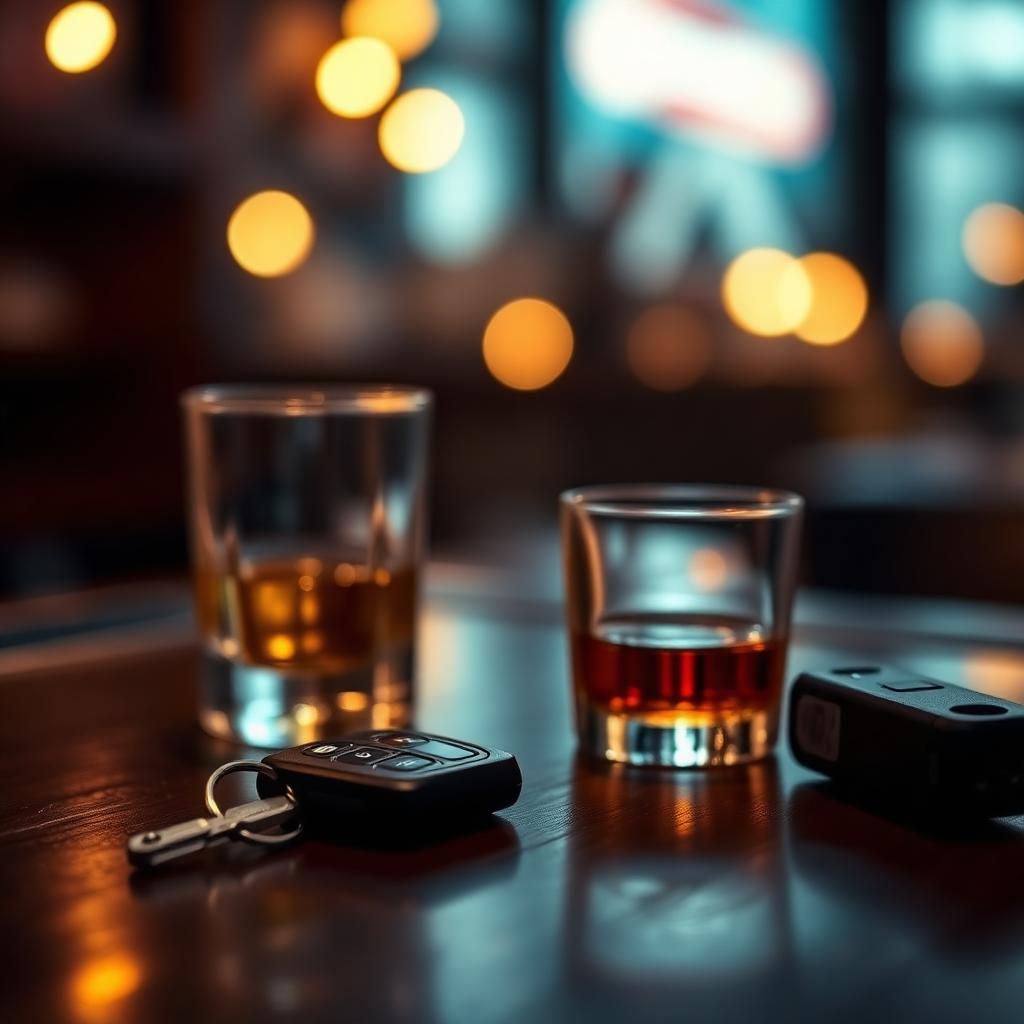
If you have been hurt by a drunk driver in Florida, you are facing one of the most devastating and preventable types of personal injury cases. Drunk driving accidents cause catastrophic injuries — broken bones, traumatic brain injuries, spinal cord damage, and wrongful death — and Florida law provides injured victims with powerful legal tools to pursue full compensation. Whether the crash occurred on I-95 in Miami-Dade, on US-1 through Coral Gables, or on a highway in Broward County, understanding your rights immediately after the accident can make the difference between recovering what you deserve and walking away with far less.
Florida's DUI Laws and What They Mean for Injury Victims
Florida Statute § 316.193 defines driving under the influence as operating a vehicle with a blood alcohol concentration (BAC) of 0.08% or higher, or while impaired by alcohol, controlled substances, or chemical substances. When a driver violates this statute and injures another person, they are not simply guilty of a traffic infraction — they have committed a criminal act that also gives rise to civil liability. As the injury victim, you have the right to pursue a separate civil lawsuit for compensatory damages entirely independent of any criminal prosecution the state pursues.
The 2-Year Statute of Limitations Under HB 837
One of the most critical deadlines Florida injury victims must understand is the statute of limitations. Under HB 837, signed into law in 2023, Florida reduced the negligence statute of limitations from four years to two years, codified at Fla. Stat. § 95.11(3)(a). This means that if you were injured by a drunk driver, you generally have two years from the date of the crash to file a civil lawsuit. Missing this deadline will almost certainly bar your claim forever, regardless of how strong the evidence is. Consulting an attorney promptly after a DUI accident in South Florida is essential.
Proving Negligence and Negligence Per Se
In a civil drunk driving case, your attorney will establish liability through two overlapping theories. First, ordinary negligence — the drunk driver failed to exercise reasonable care and that failure caused your injuries. Second, and more powerfully, negligence per se — because the driver violated Fla. Stat. § 316.193 (a safety statute enacted to protect the public), they are presumed negligent as a matter of law. This shifts the burden and can significantly strengthen your case. Evidence from the criminal case, including the police report, breathalyzer results, field sobriety test records, and any DUI conviction, is admissible and highly probative in your civil lawsuit.
Florida's Modified Comparative Fault Rule
Florida adopted a modified comparative negligence system under HB 837, amending Fla. Stat. § 768.81. Under this framework, if you are found to be more than 50% at fault for the accident, you are completely barred from recovering any damages. However, in a drunk driving crash where the other driver's BAC was over the legal limit, it is extremely difficult for a defense attorney to credibly argue that the victim was primarily at fault. Still, insurers will sometimes attempt to assign partial blame to the injured party, making thorough legal representation vital.
Punitive Damages in Drunk Driving Cases
Unlike ordinary car accident cases, crashes caused by drunk drivers may support an award of punitive damages under Fla. Stat. § 768.72. Punitive damages are designed not to compensate the victim, but to punish the defendant and deter others from similar conduct. Florida courts have consistently found that driving with a BAC significantly above the legal limit constitutes the kind of conscious disregard for others' safety that justifies punitive damages. While Florida generally caps punitive damages at three times the compensatory award or $500,000 — whichever is greater — higher awards are possible where the defendant's conduct was especially egregious.
Dram Shop Liability in Florida
Florida's Dram Shop Act, codified at Fla. Stat. § 768.125, may allow you to bring a claim against the bar, restaurant, or social host that served alcohol to the drunk driver. Florida's dram shop law is narrower than many states' laws — liability attaches only when the establishment knowingly serves a person who is habitually addicted to alcohol, or when the establishment serves alcohol to a person under 21. If the drunk driver who hit you was a minor, the establishment that served them faces significant civil exposure. An experienced South Florida attorney will investigate all potential defendants.
What to Do Immediately After Being Hit by a Drunk Driver
The steps you take in the hours and days following a DUI crash directly affect the strength of your civil case. Here is what Florida injury attorneys recommend: - Call 911 immediately and request both police and emergency medical services - Do not decline medical attention at the scene, even if you feel fine — adrenaline can mask serious injuries - Ask the responding officers for the incident report number and request the full report once available - Document the scene with photographs and video if you are physically able - Collect names and contact information of all witnesses - Preserve all clothing, vehicle damage evidence, and medical records - Notify your own insurance company of the accident but provide only basic facts - Contact a Florida personal injury attorney before giving any recorded statement to any insurer
Compensation Available to Drunk Driving Victims
Florida law allows injured drunk driving victims to seek a broad range of damages. Economic damages include all past and future medical expenses, rehabilitation costs, lost wages and diminished earning capacity, property damage, and out-of-pocket expenses. Non-economic damages encompass pain and suffering, mental anguish, loss of enjoyment of life, disfigurement, and loss of consortium for affected spouses. In catastrophic injury cases — spinal cord damage, traumatic brain injury, severe burns — the lifetime economic cost alone can reach into the millions. An experienced Miami-Dade personal injury attorney will retain medical experts and economists to document and present these losses compellingly.
Dealing With the Insurance Companies
Florida operates as a no-fault insurance state under the Personal Injury Protection (PIP) statute, Fla. Stat. § 627.736, which requires drivers to carry a minimum of $10,000 in PIP coverage. PIP pays a portion of your medical bills and lost wages regardless of fault. However, in a DUI accident you have the right to step outside the no-fault system and pursue the drunk driver's bodily injury liability coverage — and potentially your own underinsured motorist (UM) coverage — because your injuries are almost certain to meet Florida's serious injury threshold. Do not accept any settlement from an insurance company before consulting an attorney; early settlement offers rarely reflect the full value of your claim.
The Role of Criminal Proceedings in Your Civil Case
Florida drunk driving accidents frequently result in both criminal DUI charges and civil injury claims running simultaneously. While the criminal case is pursued by the State Attorney's Office and you have no direct control over it, a DUI conviction — or even a plea to a lesser offense — creates powerful evidence in your civil lawsuit. The standard of proof in criminal court (beyond a reasonable doubt) is higher than the civil standard (preponderance of the evidence), so an acquittal does not automatically defeat your civil claim. Your civil attorney will coordinate carefully around the criminal timeline to preserve evidence and leverage the outcome.
Frequently Asked Questions
Q: Can I sue a drunk driver even if they were not convicted of DUI? Yes. The civil and criminal legal systems are separate. Your civil lawsuit requires proof by a preponderance of the evidence — meaning it is more likely than not that the driver was impaired and caused your injuries. Even if criminal charges were reduced, dismissed due to a procedural issue, or the driver was acquitted, you can still succeed in your civil personal injury claim using the available evidence such as the accident report, witness statements, dashcam footage, and BAC records.
Q: What if the drunk driver had no insurance or minimal coverage? Florida requires only $10,000 in property damage liability coverage and has no mandatory bodily injury liability requirement for most drivers. Many drunk drivers carry inadequate coverage. In this situation your own uninsured/underinsured motorist (UM/UIM) coverage becomes critical. Additionally, if dram shop liability applies, the establishment's commercial liability policy may provide substantial additional coverage. An attorney will investigate all available sources of recovery.
Q: How long does a drunk driving injury lawsuit take in Florida? The timeline varies significantly based on injury severity, defendant cooperation, and court scheduling. Many cases resolve through negotiated settlement within 12 to 24 months. Cases that proceed to trial in Miami-Dade or Broward County can take 2 to 4 years from filing. Your attorney will work to resolve your case efficiently without sacrificing full compensation.
Q: Does Florida's 2-year statute of limitations ever have exceptions? Certain circumstances can toll (pause) the limitations period. If the injured person is a minor, the clock may not begin running until they reach age 18. If the defendant concealed their identity or fled Florida, tolling may apply. If injuries were not discoverable until later — though this is rare in traumatic accidents — the discovery rule may extend the deadline. Given the complexity, it is always safest to consult an attorney as soon as possible after a DUI crash.
Key Takeaways
- Florida's drunk driving statute (Fla. Stat. § 316.193) makes DUI victims eligible for both compensatory and potentially punitive damages in civil court
- HB 837 (2023) reduced the negligence statute of limitations to 2 years — act quickly
- Modified comparative fault under § 768.81 bars recovery if you are more than 50% at fault, but this is rarely an issue in DUI cases
- Negligence per se applies when the driver violated a safety statute — you do not need to prove unreasonableness separately
- Florida's Dram Shop Act (§ 768.125) may provide additional recovery against bars or restaurants that served the drunk driver under qualifying circumstances
- PIP covers initial losses, but serious injuries allow you to pursue the drunk driver's liability and your own UM coverage
- Consult a Florida personal injury attorney immediately to preserve evidence and meet all deadlines
If you or a loved one was injured by a drunk driver in Miami-Dade, Broward, or anywhere in South Florida, The Farber Law Firm is ready to fight for the full compensation you deserve. Our attorneys handle drunk driving injury cases on a contingency fee basis — you pay nothing unless we recover for you. Contact us today for a free, no-obligation consultation and let us put our experience to work for you.
This article is for general informational purposes only and does not constitute legal advice. Laws change; consult a licensed Florida attorney about your specific situation.
Frequently Asked Questions
Can I recover punitive damages from a drunk driver in Florida?
Yes. Fla. Stat. § 768.72(2) allows punitive damages for intentional misconduct or gross negligence, and DUI conduct typically qualifies.
Does dram-shop liability exist in Florida?
Limited. Under Fla. Stat. § 768.125, a bar or vendor is liable only for serving a minor or a known habitual drinker.
Do I still have to use PIP if a drunk driver hit me?
Yes. PIP is no-fault and pays regardless of the other driver's DUI status.
How long do I have to file suit?
Two years under Fla. Stat. § 95.11(4)(a) for accidents on or after March 24, 2023.
Have a similar situation?
Free, confidential case review with a South Florida trial attorney. Call 8888-FARBER.
Request a Free ConsultationAbout the Author
The Farber Law Firm, P.A.
The Farber Law Firm is a South Florida trial practice based in Coral Gables, representing injured people, policyholders and businesses across Miami-Dade, Broward and Palm Beach counties since 1995. The firm handles personal injury, wrongful death, insurance coverage disputes and commercial litigation, and its attorneys are members in good standing of The Florida Bar.
Articles on this site are written and reviewed by attorney David Farber and reflect Florida statutes, court rules and Florida Bar regulations current as of the publication date.
- Office
- 2199 Ponce de Leon Blvd #301
Coral Gables, FL 33134 - Phone
- 8888-FARBER
- Consultations
- Free and confidential
Florida Legal Insights, in Your Inbox
Subscribe to The Farber Law Firm’s email list for educational articles on Florida injury claims, insurance coverage, and consumer rights.
By subscribing, you request legal insights by email. This is not a consultation request and does not create an attorney-client relationship. Privacy Policy.