Is Florida a No-Fault State? The 2026 Guide to PIP Insurance and Car Accident Claims
Yes — Florida is a no-fault state, and every driver is required to carry PIP. Here's how PIP works in 2026, what it covers, and when you can sue the at-fault driver.
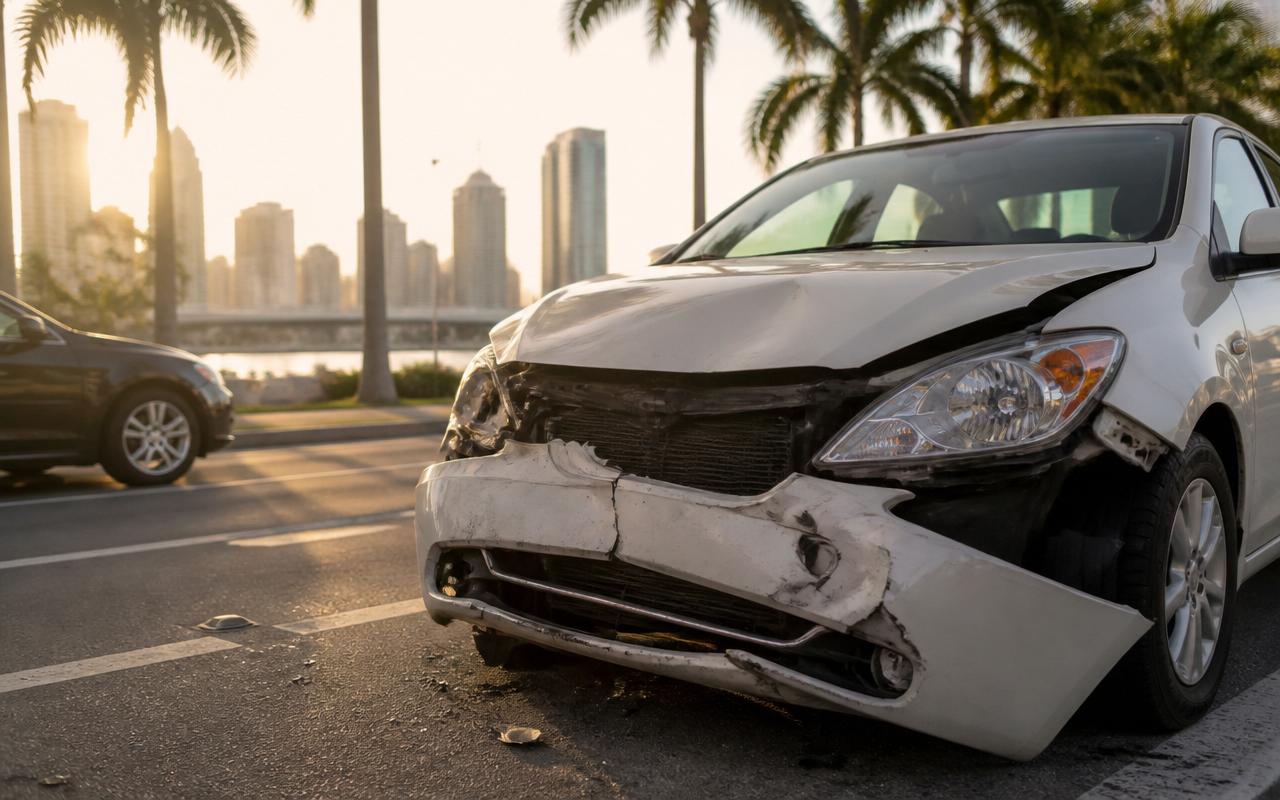
Is Florida a no-fault state? Yes. Florida has been a no-fault auto insurance state since 1972 under the Florida Motor Vehicle No-Fault Law, codified at Fla. Stat. §§ 627.730–627.7405. Under the no-fault system, every registered vehicle owner in Florida is required to carry Personal Injury Protection (PIP) coverage, and after a car accident your own PIP policy pays your initial medical bills and a portion of lost wages — regardless of who caused the crash. This guide, current as of 2026, explains how Florida's no-fault and PIP rules actually work, what PIP covers, the strict 14-day medical treatment deadline, when you are allowed to step outside the no-fault system and sue the at-fault driver, and how a Miami car accident lawyer can help you protect every dollar of recovery you are entitled to under Florida law.
What Does 'No-Fault' Actually Mean in Florida?
The phrase 'no-fault' is one of the most misunderstood terms in Florida auto insurance. It does not mean that no one is at fault for a crash, and it does not mean you cannot recover compensation from the negligent driver. What 'no-fault' means in Florida is that, for most car accidents, each driver first turns to their own auto insurance policy — specifically the PIP portion — to pay initial medical expenses and lost wages, without having to prove the other driver was negligent. Florida's no-fault statute was designed to ensure prompt payment of medical bills after a crash and to reduce small-claim litigation. It does not eliminate the right to sue; it limits when you may sue an at-fault driver for pain and suffering and other non-economic damages, as discussed below.
What Is PIP Insurance in Florida?
Personal Injury Protection — PIP — is the no-fault portion of a Florida auto insurance policy. Florida law requires every owner of a registered motor vehicle with four or more wheels to carry a minimum of $10,000 in PIP coverage and $10,000 in Property Damage Liability (PDL) coverage. This is often referred to as Florida's '10/10' minimum. Unlike Bodily Injury Liability coverage, which most states require but Florida does not, PIP pays your own medical bills and a portion of your lost wages after a crash, regardless of fault. PIP also pays a death benefit of $5,000 in addition to the medical and disability limits if the insured dies as a result of the accident.
What Does Florida PIP Insurance Cover in 2026?
Under Fla. Stat. § 627.736, PIP coverage pays the following benefits up to the $10,000 policy limit after a covered motor vehicle accident:
- 80% of reasonable and necessary medical expenses, including hospital care, surgery, diagnostic testing, X-rays, MRIs, rehabilitative services, and prescription medications;
- 60% of lost wages and loss of earning capacity if the injury prevents you from working;
- Replacement services — payment for household tasks you can no longer perform, such as childcare, housekeeping, and yard maintenance;
- A $5,000 death benefit payable in addition to medical and disability benefits;
- Limited mileage and transportation costs to and from medical appointments related to the crash.
Important coverage limitations to understand: PIP does not pay for property damage to your vehicle (that is collision coverage), it does not pay for pain and suffering (that requires a third-party bodily injury claim), and the full $10,000 limit is only available if a licensed physician, osteopathic physician, dentist, or supervised physician's assistant or ARNP determines within 14 days of the accident that you have an 'emergency medical condition' (EMC). Without an EMC determination, PIP medical benefits are capped at $2,500 — a critical detail covered in the next section.
The 14-Day Rule: Florida's Most Important PIP Deadline
Florida's 14-day rule, enacted as part of the 2012 PIP reforms (HB 119) and still in force in 2026, is one of the most unforgiving deadlines in Florida auto insurance law. To receive any PIP medical benefits at all, you must receive initial medical treatment within 14 days of the motor vehicle accident. If you wait more than 14 days to see a qualifying provider, your PIP carrier is permitted by statute to deny medical benefits entirely. Even if you treat within 14 days, the $10,000 in PIP medical benefits is only fully available if a qualifying provider — a medical doctor, doctor of osteopathic medicine, dentist, supervised physician's assistant, or ARNP — diagnoses an 'emergency medical condition.' If no EMC is diagnosed, PIP medical benefits cap at $2,500. Chiropractors may treat you within the 14-day window, but only an MD, DO, dentist, PA, or ARNP can make the EMC determination that unlocks the full $10,000. If you have been in a crash anywhere in Miami-Dade, Broward, or Palm Beach County, do not 'wait and see' — get evaluated promptly and document everything.
Who Is Covered by Your Florida PIP Policy?
Florida PIP is unusual in how broadly it extends coverage. Your PIP policy generally covers: you, the named insured, in any motor vehicle accident (including as a pedestrian or bicyclist struck by a car); resident relatives in your household who do not own a vehicle of their own; passengers in your vehicle who do not own a Florida-registered vehicle and do not live with someone who does; and certain people occupying your vehicle with permission. Florida residents who own a vehicle but are injured as a passenger in someone else's car generally must look to their own PIP first. This 'follows the person' rule frequently confuses crash victims and is one of the reasons it is worth speaking with a Florida personal injury lawyer before you sign anything an insurer puts in front of you.
When Can You Sue the At-Fault Driver in Florida? The 'Serious Injury Threshold'
Because Florida is a no-fault state, you cannot automatically sue the other driver for pain and suffering after every crash. To 'step outside' the no-fault system and pursue a bodily injury claim against the at-fault driver for non-economic damages (pain, suffering, mental anguish, loss of enjoyment of life), your injury must meet Florida's serious injury threshold defined in Fla. Stat. § 627.737(2). The statute permits a non-economic damages claim only when the injury consists in whole or in part of:
- Significant and permanent loss of an important bodily function;
- Permanent injury within a reasonable degree of medical probability, other than scarring or disfigurement;
- Significant and permanent scarring or disfigurement; or
- Death.
If your injury meets the threshold, you can sue the at-fault driver for the full range of damages — past and future medical expenses beyond what PIP paid, lost wages above PIP's 60%, future loss of earning capacity, pain and suffering, mental anguish, and loss of consortium. You can also pursue economic damages (medical bills, wage loss) that exceed your PIP limits even without meeting the threshold — but non-economic damages require the threshold be met. Whether your injury qualifies is often the central battleground in Florida auto cases, and detailed medical evidence from treating physicians is essential.
The HB 837 Tort Reform: What Changed in 2023 and Why It Still Matters in 2026
On March 24, 2023, Florida enacted HB 837, the most sweeping civil-justice reform in a generation. While the legislature ultimately did not eliminate PIP and no-fault as some early drafts proposed, HB 837 made several changes that directly affect Florida car accident claims in 2026:
- Statute of limitations for general negligence claims (including most car accidents) was shortened from 4 years to 2 years from the date of the accident for crashes occurring on or after March 24, 2023. Missing this 2-year deadline almost always means your claim is barred forever.
- Modified comparative negligence: a plaintiff who is found more than 50% at fault for the accident is now barred from recovering any damages (with a carve-out for medical-malpractice cases). Previously Florida followed pure comparative negligence, where any percentage of fault simply reduced your recovery proportionally.
- Changes to how medical-bill evidence is presented to juries, generally limiting recovery to amounts actually paid or reasonably necessary to satisfy the bill rather than the higher 'sticker' price.
The combination of the shorter 2-year deadline and the 50% bar makes early case evaluation by an experienced Florida personal injury lawyer more important than ever. Evidence disappears, witnesses move, surveillance video is overwritten, and the clock now runs twice as fast.
Uninsured/Underinsured Motorist Coverage: Florida's Critical Optional Coverage
Because Florida does not require bodily injury liability coverage, an estimated 20% of Florida drivers are uninsured, and many more carry only the bare-minimum $10,000 in bodily injury limits — far less than the medical bills generated by a serious crash. Uninsured/Underinsured Motorist (UM/UIM) coverage is optional in Florida but is, in many ways, the most important coverage you can buy. UM steps in to pay your bodily injury damages — including pain and suffering once the threshold is met — when the at-fault driver either has no insurance or has limits too low to cover your damages. Florida law requires insurers to offer UM in the same limits as your bodily injury coverage and to obtain a signed rejection if you decline it. If you are not sure whether you have UM, call your agent today — not after a crash.
Common PIP Denials in Miami and How to Fight Them
Even though PIP is 'no-fault,' Florida insurers deny and underpay PIP benefits constantly. Common reasons we see PIP claims denied or trimmed in Miami-Dade and Broward include: alleged failure to seek initial treatment within 14 days; insurer-ordered Independent Medical Examinations (IMEs) that 'cut off' future PIP benefits; refusal to recognize an EMC determination, capping medical benefits at $2,500; disputes over the reasonableness or necessity of specific bills; allegations that the insured failed to attend an Examination Under Oath (EUO); and accusations of fraud or staged-accident concerns. Many of these denials are improper under Florida law and can be challenged. PIP suits are governed by Fla. Stat. § 627.736(10), which requires a written pre-suit demand letter to the insurer and a 30-day cure period before litigation may be filed.
What to Do Immediately After a Miami Car Accident
If you have been in a crash in Miami, Coral Gables, or anywhere in South Florida, the following steps protect both your health and your legal claim:
- Call 911. Florida law requires reporting any crash involving injury, death, or apparent property damage of $500 or more. A Florida Traffic Crash Report is critical evidence.
- Get medical attention within 14 days — sooner is better. Tell every provider that your injuries are from a motor vehicle accident so PIP processing is triggered.
- Photograph the scene, vehicle damage, license plates, and any visible injuries. Save dashcam footage immediately.
- Get the other driver's name, license, insurance information, and the names and contact information of any witnesses.
- Notify your own auto insurer promptly — most policies require prompt notice as a condition of coverage.
- Do not give a recorded statement to the other driver's insurer without first speaking to an attorney.
- Keep a written record of every medical visit, every missed day of work, and every out-of-pocket expense related to the crash.
- Speak with a Miami car accident lawyer before signing any release, settlement, or 'final-payment' check from any insurer.
Frequently Asked Questions About Florida PIP and No-Fault
Is PIP insurance mandatory in Florida?
Yes. Every owner of a motor vehicle with four or more wheels registered in Florida must carry at least $10,000 in PIP coverage and $10,000 in Property Damage Liability coverage. Driving without it can result in license suspension and steep reinstatement fees, and leaves you without no-fault medical benefits after a crash.
How much PIP insurance do I need in Florida?
The statutory minimum is $10,000. Many Florida drivers benefit from higher limits where available, but more important than higher PIP limits is carrying meaningful Bodily Injury Liability and Uninsured/Underinsured Motorist coverage — the coverages that actually protect you in a serious crash.
Does Florida PIP cover passengers?
Generally yes — PIP follows the named insured and resident relatives, and also extends to passengers who do not own a Florida-registered vehicle and do not live with someone who does. Passengers who own a Florida-registered car must usually look to their own PIP first.
Does PIP cover motorcycle accidents in Florida?
No. Florida's PIP statute applies only to motor vehicles with four or more wheels, so motorcycles are excluded. Motorcyclists injured in Florida crashes must look to health insurance, the at-fault driver's bodily injury coverage, and any UM/UIM coverage. This is one of many reasons motorcycle riders should consult a motorcycle accident attorney as quickly as possible.
Can I sue the other driver if I only have PIP?
Yes — if your injury meets Florida's serious injury threshold under § 627.737(2). You can also pursue economic damages above your PIP limit even without meeting the threshold. Coverage you bought has no bearing on the at-fault driver's liability.
How long do I have to file a Florida car accident lawsuit in 2026?
For crashes on or after March 24, 2023, the statute of limitations is generally 2 years from the date of the accident under HB 837. Wrongful death actions also follow a 2-year deadline. Claims against governmental entities have shorter pre-suit notice requirements. Talk to a Florida personal injury attorney as soon as possible — waiting is the single biggest mistake injured Floridians make.
Will I owe taxes on a PIP or settlement payment?
Compensation for physical injuries is generally not taxable as federal income under IRC § 104(a)(2). Punitive damages and interest on settlements may be taxable. Florida has no state income tax, which simplifies the analysis for Miami-Dade and Broward residents. Always consult a tax professional regarding your specific settlement.
How The Farber Law Firm Helps Miami Car Accident Victims
David Farber spent years on the insurance-defense side before founding The Farber Law Firm, and that inside knowledge of how Florida carriers value, delay, and deny PIP and bodily injury claims drives how the firm prepares every case. From our office at 2199 Ponce de Leon Blvd in Coral Gables, we represent injured drivers, passengers, pedestrians, and cyclists throughout Miami-Dade, Broward, Palm Beach, and across Florida. We handle car accident cases on a contingency-fee basis — no fee unless we recover for you — and consultations are always free. If you or a loved one has been hurt in a Florida crash, call us at (888) 832-7237 or request a free case review online. The 14-day PIP clock and the 2-year statute of limitations do not stop running while you decide; the sooner we get to work, the more options you have.
Frequently Asked Questions
What does PIP cover in Florida?
PIP pays 80% of reasonable medical bills and 60% of lost wages up to $10,000 total, regardless of fault, under Fla. Stat. § 627.736.
Do I need PIP if I have health insurance?
Yes. Florida law requires every registered vehicle to carry PIP; health insurance doesn't satisfy the no-fault statute.
What is the emergency medical condition (EMC) rule?
Without an EMC diagnosis from a qualifying provider, PIP medical benefits are capped at $2,500 instead of $10,000.
Can I sue the at-fault driver?
Only if your injuries meet the serious injury threshold under Fla. Stat. § 627.737(2).
Have a similar situation?
Free, confidential case review with a South Florida trial attorney. Call 8888-FARBER.
Request a Free ConsultationAbout the Author
The Farber Law Firm, P.A.
The Farber Law Firm is a South Florida trial practice based in Coral Gables, representing injured people, policyholders and businesses across Miami-Dade, Broward and Palm Beach counties since 1995. The firm handles personal injury, wrongful death, insurance coverage disputes and commercial litigation, and its attorneys are members in good standing of The Florida Bar.
Articles on this site are written and reviewed by attorney David Farber and reflect Florida statutes, court rules and Florida Bar regulations current as of the publication date.
- Office
- 2199 Ponce de Leon Blvd #301
Coral Gables, FL 33134 - Phone
- 8888-FARBER
- Consultations
- Free and confidential