Miami Boat Accident Guide (2026): Your Rights, Maritime Law, and How to Get Compensated in Florida
Hit on Biscayne Bay, the Intracoastal, or off Key Biscayne? A Miami maritime attorney's 2026 guide to Florida boat accident law — reporting deadlines, jurisdiction, cruise-line 1-year notice traps, jet ski rules, and how to maximize your recovery.
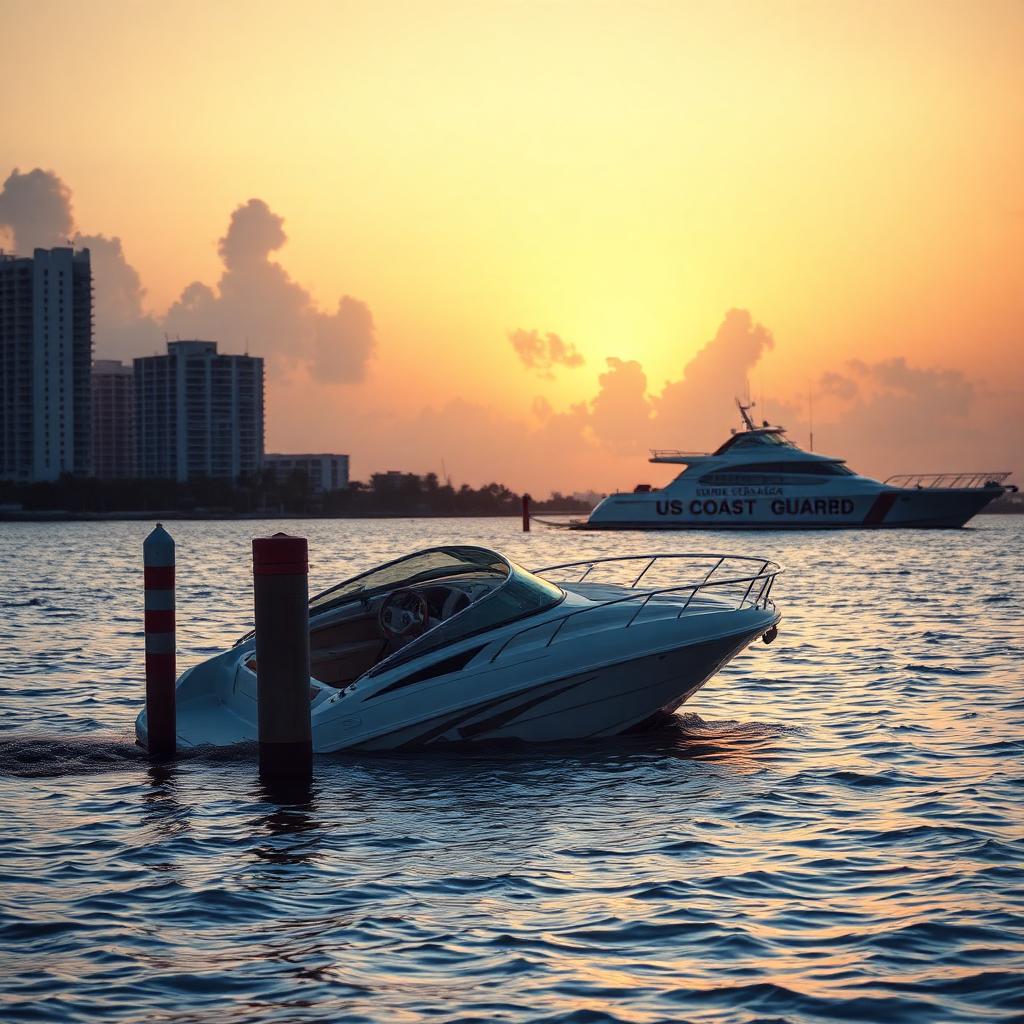
Miami is the boating capital of the United States. Miami-Dade County leads Florida — and Florida leads the country — in registered vessels and reported boating accidents year after year, according to the Florida Fish and Wildlife Conservation Commission (FWC) Boating Accident Statistical Report. Between Biscayne Bay, Government Cut, Haulover Inlet, the Intracoastal Waterway, Stiltsville, Key Biscayne, and the cruise terminals at PortMiami, thousands of boats, jet skis, charters, and cruise ships share crowded, often poorly marked water. When something goes wrong — a collision, a wake injury, a propeller strike, a drunk operator, a rented jet ski with no real safety briefing — the legal rules that apply are completely different from a Florida car crash. This 2026 guide, written by a Miami personal injury and maritime attorney, walks you through exactly what to do after a Miami boat accident, which law applies (Florida or federal maritime), the deadlines that can quietly destroy your case, and how compensation actually works.
Quick Answer: What to Know About a Miami Boat Accident in 2026
- Florida boat operators must report any accident with injury, death, disappearance, or more than $2,000 in damage to FWC, the Coast Guard, or local law enforcement under Fla. Stat. § 327.30.
- Personal-injury claims from most Florida boating accidents follow Florida's 2-year statute of limitations under Fla. Stat. § 95.11(4)(a) after 2023's HB 837.
- Cruise line passenger injuries usually require written notice within 6 months and a lawsuit within 1 year under the ticket contract, enforced under 46 U.S.C. § 30508.
- Maritime (admiralty) law often controls accidents on navigable waters — that means federal rules, not Florida negligence law, can decide your case.
- Florida does not require boating liability insurance; recovery often depends on the operator's homeowners umbrella, charter policy, or rental company coverage.
- Boating under the influence in Florida is a BAC of 0.08 or higher under Fla. Stat. § 327.35 — the same as driving, and frequently a factor in serious Biscayne Bay crashes.
Miami's Boating Hot Spots — and Why They Matter Legally
Where the accident happened changes which court hears it and which law applies. Inside Biscayne Bay, the Intracoastal Waterway, the Miami River, and Haulover Inlet, you are on navigable waters of the United States. That means federal admiralty jurisdiction can apply under 28 U.S.C. § 1333, even when you sue in a Florida state court under the 'saving to suitors' clause. Inside marinas, canals, and small inland lakes, Florida negligence law usually controls outright. Offshore — past the three-nautical-mile Florida boundary into the Atlantic — federal maritime law clearly controls, and for deaths beyond three nautical miles the federal Death on the High Seas Act (DOHSA), 46 U.S.C. §§ 30301–30308, limits recovery to pecuniary losses only. That single fact has cost grieving Miami families millions in non-economic damages they did not know were unavailable.
Step 1: What to Do in the First Hour After a Miami Boat Accident
Your priorities, in order, are safety, medical care, and evidence. After a crash on the water:
- Get everyone into life jackets and account for every person aboard — falls overboard are the leading cause of boating deaths in Florida per FWC.
- Call 911 or hail the Coast Guard on VHF Channel 16. In Miami, USCG Sector Miami and Miami-Dade Fire Rescue marine units respond to Biscayne Bay.
- Get medical attention even if you feel fine — adrenaline masks concussions, internal injuries, and spinal trauma.
- Photograph everything: both vessels, damage, registration numbers ('FL' numbers on the hull), the water conditions, navigation markers, your injuries, and any visible alcohol.
- Exchange operator names, addresses, vessel registration, and insurance information just like a car crash.
- Get names and phone numbers of every witness on your boat, the other boat, and any nearby vessel that stopped.
- Do not give a recorded statement to the other operator's insurer. Do not post anything on social media.
Step 2: Reporting the Accident (Florida Law Requires It)
Under Fla. Stat. § 327.30, the operator of any vessel involved in an accident must, by the quickest means available, give notice to FWC, the Coast Guard, or the county sheriff's office if any of the following occurred: a person dies; a person disappears under circumstances suggesting death or injury; a person needs medical treatment beyond immediate first aid; or property damage to any one vessel or other property is $2,000 or more, or there is a total loss of a vessel. A written report must follow within the timeframes set by the statute. Failure to report is a separate criminal offense and can be used against the operator in your civil case. If you were the injured passenger, you do not personally have to file the FWC report — but you should confirm one was filed and request a copy. FWC accident reports are critical evidence and frequently identify the at-fault operator before insurance gets involved.
Step 3: Know Which Law Applies — Florida vs. Federal Maritime
This is the single biggest mistake injured Miami boaters make: assuming a boat accident works like a car accident. It does not. Three overlapping legal regimes can apply, sometimes to the same crash:
Florida Negligence Law
Applies cleanly to accidents on non-navigable waters (small inland lakes, isolated canals) and to many recreational claims that are filed in state court under the saving-to-suitors clause. Florida's comparative-negligence rule changed in 2023: under Fla. Stat. § 768.81(6), a plaintiff who is more than 50% at fault recovers nothing. That modified comparative-fault bar applies to most Florida boating injury cases — but not to admiralty claims, where pure comparative fault still controls. That distinction alone can be worth six figures.
General Maritime Law (Admiralty)
Applies when the incident has a maritime situs (navigable waters) and a maritime nexus (traditional maritime activity). Most Biscayne Bay, Intracoastal, and offshore collisions qualify. Maritime law brings federal rules of seamanship (the COLREGS — Inland and International Rules of the Road), pure comparative fault, and a federal 3-year statute of limitations for personal injury under 46 U.S.C. § 30106. It also opens the door to the federal Limitation of Liability Act, 46 U.S.C. §§ 30501–30530, which lets vessel owners try to cap their liability at the post-accident value of the boat. That law is regularly invoked in serious Miami crashes and must be challenged quickly.
Death on the High Seas Act (DOHSA)
If a wrongful death occurs more than 3 nautical miles from the U.S. shore — common in offshore fishing trips out of Haulover or Government Cut — DOHSA preempts state wrongful death law and limits recovery to pecuniary losses (lost financial support, funeral expenses). Pain and suffering of survivors is generally not recoverable. Families need a maritime attorney immediately to evaluate whether the death falls inside or outside the 3-nautical-mile line.
Step 4: Deadlines That Can Destroy Your Case
Boat accident deadlines in Florida are shorter and more varied than car accident deadlines. Miss one and your claim is gone.
- Florida personal injury (state-law negligence): 2 years from the date of injury under Fla. Stat. § 95.11(4)(a), as amended by HB 837 in March 2023.
- Florida property damage: 4 years under Fla. Stat. § 95.11(3)(a).
- Florida wrongful death: 2 years under Fla. Stat. § 95.11(4)(d).
- General maritime personal injury or wrongful death: 3 years under 46 U.S.C. § 30106.
- Death on the High Seas Act: 3 years under 46 U.S.C. § 30106.
- Cruise line passenger injuries: typically written notice to the cruise line within 6 months and lawsuit within 1 year, as authorized by 46 U.S.C. § 30508. These contractual deadlines are buried in the ticket and are enforced by federal courts in Miami (where Carnival, Royal Caribbean, NCL, and MSC are headquartered or designate venue).
- Claims against the federal government (e.g., a Coast Guard vessel): Suits in Admiralty Act / Public Vessels Act — 2 years.
- Florida FWC accident report: 'immediate' notice plus a written report within statutory timeframes under Fla. Stat. § 327.30.
Step 5: Cruise Ship Injuries Are Their Own World
If you were hurt on a Carnival, Royal Caribbean, Norwegian, MSC, Disney, or Virgin cruise out of PortMiami or Port Everglades, your ticket is a binding contract. It almost always requires written notice of any injury claim within 6 months, a lawsuit filed within 1 year, and venue exclusively in the U.S. District Court for the Southern District of Florida (Miami) for most major lines. The Supreme Court upheld these clauses in Carnival Cruise Lines v. Shute, 499 U.S. 585 (1991), and federal courts in Miami enforce them strictly. Slip-and-falls on wet decks, shore-excursion injuries, assaults by crew, tender boat accidents, food poisoning, and medical malpractice by the ship's doctor are all subject to these deadlines. Do not call the cruise line's claims department before talking to a maritime attorney — recorded statements taken in those first calls are routinely used to defeat passenger claims.
Step 6: Jet Ski, Rental, and Charter Accidents
Miami Beach, Key Biscayne, and Haulover rentals put thousands of inexperienced tourists on personal watercraft every weekend. Florida law (Fla. Stat. § 327.54) requires liveries to provide pre-rental instruction covering operation, navigation rules, and local hazards, and prohibits renting to anyone under 18 without a Florida Boating Safety Education ID Card (anyone born on or after January 1, 1988 must have one to operate a vessel of 10 HP or more under Fla. Stat. § 327.395). Rental companies that hand out keys without proper instruction can be sued for negligent entrustment and statutory violations. Charter and 'six-pack' captains operating under a USCG license owe a heightened duty of care to paying passengers under maritime law. Identify whether the operator was a paid captain — it changes the standard of care and the available insurance.
Step 7: Boating Under the Influence (BUI) in Miami
Florida treats boating under the influence the same way it treats DUI: a BAC of 0.08 or higher (or impairment by any substance) under Fla. Stat. § 327.35. Alcohol is involved in a disproportionate share of fatal Miami boating crashes — especially night runs across Biscayne Bay and weekend sandbar gatherings near Nixon Beach and Haulover Sandbar. Criminal BUI charges create powerful civil leverage: dram-shop liability under Fla. Stat. § 768.125 against the bar or marina that served a habitually addicted person, negligent entrustment against the owner who handed over the keys, and punitive damages under Fla. Stat. § 768.72 against a grossly impaired operator. If alcohol may have been involved, request preservation of bar tabs, marina security video, and toxicology results immediately.
Step 8: Who Pays — Insurance Realities for Florida Boats
Unlike cars, Florida does not require boat owners to carry liability insurance. Recovery sources usually include: the boat owner's voluntary boat policy (often Progressive, GEICO Marine, BoatUS, or Markel); a homeowners umbrella policy that may extend to owned watercraft up to certain horsepower or length; a rental company's commercial general liability policy; a charter operator's protection and indemnity (P&I) coverage; uninsured boater coverage if the at-fault operator has none; and the operator's personal assets. Stacking these sources takes work — your lawyer needs to demand certified copies of every policy, including declarations, exclusions, and endorsements, and to identify whether the boat was being used in a way the policy excludes (racing, charter without a commercial endorsement, etc.).
Common Miami Boating Accident Scenarios We See
- Wake injuries — a passenger thrown across a deck or off a bow seat when a larger vessel ignores no-wake zones near Bayside, the Miami River, or Government Cut.
- Propeller strikes — swimmers, divers, and people thrown overboard hit by an operator who failed to use the engine kill switch (federal kill-switch law, 46 U.S.C. § 4312, has required use on vessels under 26 feet since 2021).
- Collisions at Haulover Inlet — narrow, current-driven, often packed with rented center consoles and inexperienced operators.
- Sandbar incidents — alcohol-fueled crashes at Nixon Beach / Haulover Sandbar on weekends.
- Diver-down violations — boaters ignoring divers-down flags off Key Biscayne and the upper Keys, in violation of Fla. Stat. § 327.331.
- Cruise ship gangway and tender boat falls — at PortMiami and at Caribbean ports of call.
- Shore excursions — parasailing, snorkeling, and ATV tours booked through the cruise line; passenger rights against the cruise line depend on the ticket contract and federal precedent.
What Damages Can You Recover?
Recoverable damages depend on which law applies. Under Florida negligence law you can pursue past and future medical expenses, lost wages and loss of earning capacity, past and future pain and suffering, mental anguish, loss of enjoyment of life, and — where authorized by Fla. Stat. § 768.72 — punitive damages. Under general maritime law you can pursue the same compensatory categories with pure comparative fault. Under DOHSA, recovery for deaths beyond 3 nautical miles is limited to pecuniary losses only — no survivor pain and suffering. Cruise line claims follow general maritime law but are channeled into the federal court in Miami and are subject to the ticket's contractual limits.
How a Miami Maritime Attorney Builds Your Case
A serious Miami boating case is built quickly because evidence on the water disappears fast. Within the first 30 days a competent maritime lawyer will: secure the FWC and Coast Guard investigation files; subpoena marina, fuel-dock, and PortMiami security video before retention windows expire (often 30–90 days); preserve AIS, GPS, chartplotter, and engine ECM data from both vessels; identify all applicable insurance, including umbrella and charter policies; file a 'Notice of Claim' with the cruise line within the 6-month contractual window when applicable; and evaluate whether to file in state court (saving-to-suitors) or federal admiralty court — a tactical decision that affects jury rights, comparative fault rules, and venue.
Why Choose The Farber Law Firm for a Miami Boating Case
The Farber Law Firm has handled Florida maritime, cruise ship, and recreational boating cases for nearly three decades from our office at 2199 Ponce de Leon Blvd in Coral Gables, minutes from Biscayne Bay, Dinner Key, and PortMiami. David Farber's prior insurance-defense experience means we know how marine carriers value, delay, and deny claims — and how to push back. We work most personal injury and wrongful death boating cases on a contingency fee: you pay nothing unless we recover.
Frequently Asked Questions
Is a Miami boat accident treated like a car accident?
No. Boats are not covered by Florida's no-fault PIP system. There is no $10,000 first-party medical benefit. Recovery comes from the at-fault operator's liability coverage or assets, and federal maritime law often applies instead of Florida negligence law.
How long do I have to sue after a Biscayne Bay boat crash?
Most Florida personal injury claims must be filed within 2 years under § 95.11(4)(a). Maritime claims governed by federal law have a 3-year deadline under 46 U.S.C. § 30106. Cruise line passenger claims are usually 1 year by contract. The shortest applicable deadline controls — call a lawyer immediately.
Do I need boat insurance in Florida?
Florida does not require boating liability insurance. That is exactly why injured passengers often need to dig into homeowners umbrellas, commercial policies, and personal assets to get fully compensated.
What if the other operator was drunk?
BUI under Fla. Stat. § 327.35 opens the door to punitive damages, dram-shop claims against the bar that served them, and negligent-entrustment claims against the owner who handed over the keys.
Can I sue a cruise line for an injury on the ship?
Yes, but you must follow the ticket's contractual deadlines — typically 6 months notice and a 1-year lawsuit window — and you must usually sue in the U.S. District Court for the Southern District of Florida in Miami.
Talk to a Miami Boat Accident Attorney Today
If you or a loved one was hurt in a Miami or South Florida boating, jet ski, charter, or cruise ship accident, do not wait. Evidence disappears, deadlines run, and the other side's insurer is already building its defense. Contact The Farber Law Firm in Coral Gables for a free, confidential case review. We will evaluate the FWC and Coast Guard reports, identify every available insurance policy, and tell you straight whether you have a case worth pursuing.
Frequently Asked Questions
Does Florida law or federal maritime law govern boat accidents?
It depends on where the accident happened and the vessel type. Navigable waters generally trigger federal maritime jurisdiction; inland lakes and rivers usually stay in Florida law.
How long do I have to sue after a Miami boat accident?
Generally 2 years for Florida claims and 3 years for most federal maritime claims — but cruise-line contracts often shorten this to 1 year with 6 months' written notice.
Does PIP apply to boating injuries?
No. PIP is auto insurance. Boat injuries usually depend on the vessel owner's liability policy, homeowners umbrella, or a Jones Act/maritime claim.
Do I need a lawyer for a boating accident?
Maritime and Florida boating statutes are complex, deadlines are short, and evidence disappears fast. Early legal help is usually critical.
Have a similar situation?
Free, confidential case review with a South Florida trial attorney. Call 8888-FARBER.
Request a Free ConsultationAbout the Author
The Farber Law Firm, P.A.
The Farber Law Firm is a South Florida trial practice based in Coral Gables, representing injured people, policyholders and businesses across Miami-Dade, Broward and Palm Beach counties since 1995. The firm handles personal injury, wrongful death, insurance coverage disputes and commercial litigation, and its attorneys are members in good standing of The Florida Bar.
Articles on this site are written and reviewed by attorney David Farber and reflect Florida statutes, court rules and Florida Bar regulations current as of the publication date.
- Office
- 2199 Ponce de Leon Blvd #301
Coral Gables, FL 33134 - Phone
- 8888-FARBER
- Consultations
- Free and confidential