Miami Jet Ski Accident Lawyer's 2026 Guide: Liability, Rental Waivers, and Federal Maritime Law on Biscayne Bay
A Miami maritime and personal injury attorney's 2026 guide to jet ski accident claims — Florida operator rules under Chapter 327, rental-facility duties, federal maritime jurisdiction, cruise-line excursion traps, and the deadlines that quietly kill cases.
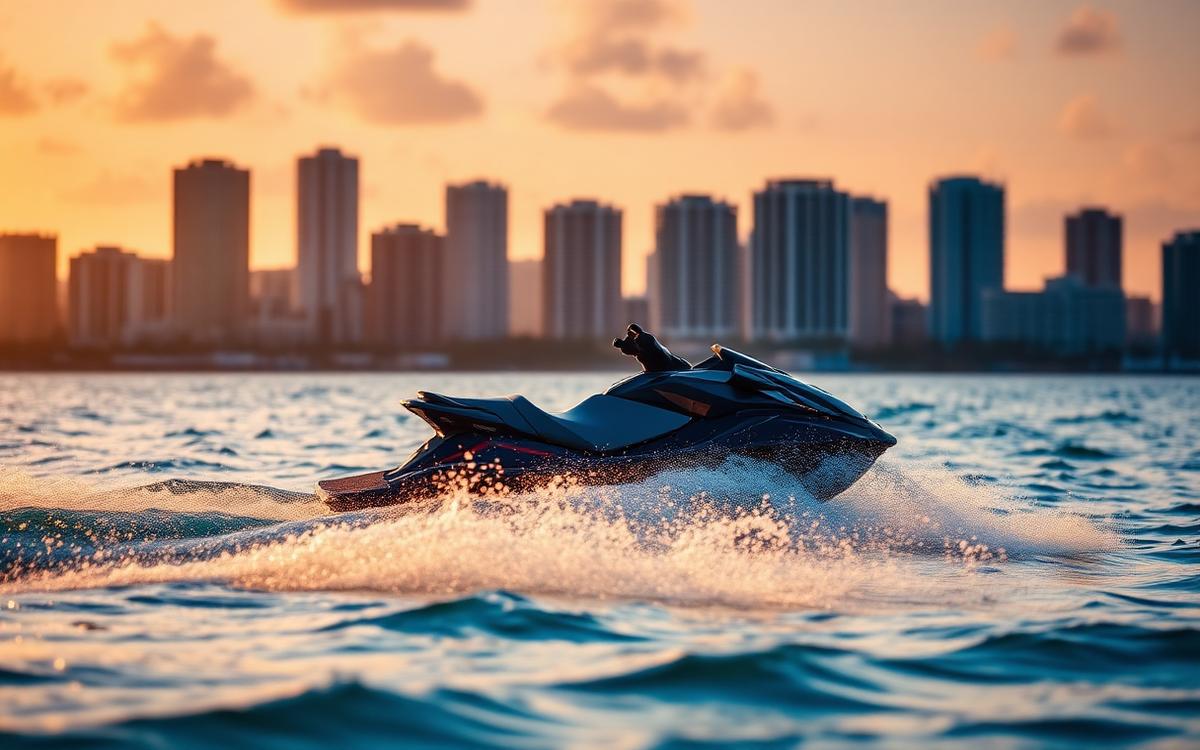
Miami is the busiest personal-watercraft market in the United States. On any given weekend, hundreds of rented jet skis crisscross Biscayne Bay, the Intracoastal Waterway, Haulover Inlet, Key Biscayne, and the sandbars off Nixon Beach and Boca Chita. Most riders have never operated a personal watercraft (PWC) before. Many rental briefings last five minutes, are given in a language the renter does not fully speak, and end with a signature on a waiver almost no one reads. When something goes wrong — a collision with another PWC, a wake-jump ejection, a propeller injury, a rear-passenger fracture, a drunk-operator crash off a sandbar — the legal rules that apply are unlike a Florida car crash. This 2026 guide, written from a Miami jet ski accident lawyer's perspective, walks through Florida operator rules, rental-facility liability, when federal maritime law takes over, the effect of cruise-ship shore-excursion contracts, and what to do in the first seven days. Every case turns on its own facts, and nothing here is legal advice or a promise of any outcome.
Quick Answer: Florida Jet Ski Claims in 2026
- A personal watercraft (jet ski, WaveRunner, Sea-Doo) is a 'vessel' under Fla. Stat. § 327.02 and federal maritime law.
- Florida operator rules are in Fla. Stat. § 327.39: no rental to anyone under 18, no operation by anyone under 14, mandatory boater education for anyone born on or after January 1, 1988, and no nighttime operation.
- Rental facilities have a specific pre-rental instruction duty under § 327.54 and must provide a Coast Guard-approved personal flotation device (PFD) for every rider.
- When the accident happens on navigable waters, federal admiralty law usually supplies the substantive rules — including comparative fault under United States v. Reliable Transfer Co., 421 U.S. 397 (1975).
- Florida's four-year personal injury statute of limitations was cut to two years by HB 837 (2023) for causes of action accruing on or after March 24, 2023 (Fla. Stat. § 95.11(3)(a)); federal maritime claims generally have a three-year period under 46 U.S.C. § 30106.
- A cruise-ship shore-excursion jet ski accident may be governed by a one-year suit deadline and a South Florida forum-selection clause under 46 U.S.C. § 30527, following Carnival Cruise Lines v. Shute, 499 U.S. 585 (1991).
- Pre-printed rental waivers are enforced in Florida only when they are clear, unambiguous, and do not attempt to release the facility from its own gross negligence or from statutory duties under Chapter 327.
Where Miami-Dade Jet Ski Accidents Happen
- Biscayne Bay from the Rickenbacker Causeway south to Stiltsville and Boca Chita.
- Haulover Inlet and the Intracoastal north to Aventura, one of the most crowded PWC corridors in Florida.
- The sandbars off Nixon Beach, Elliott Key, and Sands Cut on summer weekends.
- Miami Beach oceanfront rental operations from South Pointe to Sunny Isles.
- Government Cut and the entrance to PortMiami, where PWCs share water with cruise ships, cargo vessels, and pilot boats.
- Cruise-ship shore excursions in Nassau, Cozumel, and the private-island stops booked through the Miami-based cruise lines.
Florida Operator and Age Rules Under § 327.39
Florida law makes it unlawful to knowingly rent a personal watercraft to any person under 18 years old. It is also unlawful for anyone under 14 to operate a PWC, and for any person to allow it. Every operator born on or after January 1, 1988 must have completed a Florida Fish and Wildlife Conservation Commission (FWC)-approved boating safety course and must carry a Boating Safety Education ID card together with a government-issued photo ID. Personal watercraft cannot be operated between the hours between one-half hour after sunset and one-half hour before sunrise, even if the PWC has navigation lights. All operators and passengers must wear a Coast Guard-approved PFD, and the engine cut-off lanyard must be attached to the operator's wrist, PFD, or clothing. Violating any of these rules is negligence per se and, in most Miami cases, is the opening move in the plaintiff's liability story.
The Rental Facility's Duty Under § 327.54
A Florida livery that rents a PWC to a person who has not completed an approved boating course must first provide onboard, in-person, pre-rental instruction that covers, at minimum, operation and safe handling of the vessel, local boating laws, navigation rules, the effect of alcohol and drugs, environmental concerns, emergency and distress procedures, and the specific waters where the rental will be used. The livery must also provide a Coast Guard-approved PFD for every rider, an engine cut-off lanyard, and a whistle or other sound-producing device. When a rental customer is injured after a five-minute parking-lot briefing that skipped navigation rules or the sandbar traffic pattern, the § 327.54 duty is often the single strongest liability theory in the case, independent of any operator negligence.
Common Miami Jet Ski Injuries
- Blunt-force chest, abdominal, and orthopedic trauma from PWC-to-PWC collisions at closing speeds of 60 miles per hour or more.
- Ejection injuries — spinal fractures, traumatic brain injuries, and drownings when a rider is thrown from the PWC and separated from the engine cut-off lanyard.
- Rear-passenger orifice injuries — a known PWC-specific catastrophic injury pattern when a rear passenger falls off the back of an accelerating PWC without wearing a wetsuit bottom, addressed in Coast Guard safety advisories for decades.
- Propeller and jet-intake injuries during boarding, re-boarding, or when a swimmer is near an idling PWC. Modern PWCs are jet-driven and have no exposed propeller, but jet-intake injuries and impact-with-hull injuries remain serious.
- Wake-jump injuries — spinal compression fractures when a PWC launches off a boat wake and lands hard.
- Carbon-monoxide exposure on stationary PWCs used as swim platforms.
- Fuel and burn injuries during refueling incidents at rental docks.
When Federal Maritime Law Applies
A Florida PWC accident on navigable waters generally satisfies both parts of the modern admiralty jurisdiction test set out in Jerome B. Grubart, Inc. v. Great Lakes Dredge & Dock Co., 513 U.S. 527 (1995): the incident happened on navigable water, and PWC operation is a traditional maritime activity with a potentially disruptive impact on maritime commerce. When admiralty jurisdiction attaches, federal substantive rules generally apply — including pure comparative fault under United States v. Reliable Transfer Co., 421 U.S. 397 (1975), the standard of ordinary reasonable care for passengers under Kermarec v. Compagnie Generale Transatlantique, 358 U.S. 625 (1959), and the three-year statute of limitations in 46 U.S.C. § 30106. Whether a specific Miami PWC case sounds in admiralty or under Florida law is a threshold question that changes deadlines, damages, and jury-trial rights, and it is almost always the first legal issue counsel evaluates.
Cruise-Ship Shore-Excursion Jet Ski Cases
Jet ski excursions booked at a cruise-line shore-excursion desk are governed by the cruise ticket contract. Under 46 U.S.C. § 30527, a cruise line may enforce a one-year deadline to file suit and a six-month written-notice requirement, and the Supreme Court in Carnival Cruise Lines v. Shute, 499 U.S. 585 (1991), enforced a forum-selection clause requiring suit in a specific court — for the Miami-based lines this is typically the United States District Court for the Southern District of Florida. Liability against the cruise line itself usually turns on whether the shore-excursion operator was an apparent agent of the cruise line under Franza v. Royal Caribbean Cruises, Ltd., 772 F.3d 1225 (11th Cir. 2014), or whether the cruise line's marketing, ticketing, and on-ship promotion created a duty independent of the local operator. Missing the one-year deadline in a cruise-jet-ski case is a common, fatal, and preventable error.
Rental Waivers — What Florida Actually Enforces
Florida enforces pre-injury exculpatory clauses in recreational contracts only when the waiver is clear, unambiguous, and communicates plainly that the signer is releasing the facility from its own negligence. The Florida Supreme Court's decision in Sanislo v. Give Kids the World, Inc., 157 So. 3d 256 (Fla. 2015), held that the word 'negligence' is not magic, but the release language must still be specific enough that an ordinary person would understand what is being given up. No Florida waiver releases a defendant from its own gross negligence, intentional misconduct, or a statutory duty imposed for the safety of the public — including the pre-rental instruction duty under § 327.54. A waiver signed by a person under 18, or signed on behalf of a minor, is subject to Kirton v. Fields, 997 So. 2d 349 (Fla. 2008), which held that parents cannot generally waive a minor child's future tort claims arising from commercial activity. Every Miami jet ski waiver should be read with these limits in mind, not accepted at face value.
Comparative Fault and the HB 837 Bar
Under Florida law, comparative fault in general negligence cases is now governed by the modified 51% bar in Fla. Stat. § 768.81(6) as amended by HB 837 (2023): a plaintiff more than 50% at fault recovers nothing. Under federal admiralty law, by contrast, comparative fault is pure — a plaintiff 80% at fault still recovers 20% of damages under Reliable Transfer. Which rule applies to a specific Miami PWC case depends on whether admiralty jurisdiction attaches, and this is often the most consequential legal question in the case. HB 837 also cut the general negligence limitations period from four years to two under § 95.11(3)(a), effective for causes of action accruing on or after March 24, 2023. Federal maritime claims retain the three-year period under 46 U.S.C. § 30106.
Insurance — Who Actually Pays
- The rental facility's commercial general liability and marine liability policies, which typically carry limits between $1 million and $5 million per occurrence in Miami-Dade.
- The rental facility's umbrella or excess policy, often placed with a separate marine underwriter.
- The individual operator's homeowner or personal umbrella policy — many personal umbrellas cover watercraft the insured operates, including rentals, subject to horsepower and length exclusions.
- The operator's own boater or PWC policy if the operator owns and insures a personal watercraft.
- The cruise line's maritime liability program, where the case involves a booked shore-excursion.
- Uninsured or underinsured watercraft coverage on the injured rider's own boat policy where available.
Reporting Requirements — Do Not Skip
Fla. Stat. § 327.30 requires the operator of any vessel involved in a Florida boating accident to file a written report with the FWC when there is death, disappearance, injury requiring more than first aid, property damage of $2,000 or more, or total loss of a vessel. The Coast Guard has parallel federal reporting duties under 33 C.F.R. Part 173 for accidents on navigable waters. Failing to report is itself a violation and is regularly used by defense counsel to attack credibility and to argue that the injuries were not serious. Miami-Dade Fire Rescue, the Coast Guard Miami Sector, and Miami-Dade Police Marine Patrol are the responding agencies most commonly involved on Biscayne Bay incidents.
What to Do in the First Seven Days
- Get medical care immediately, even if the pain seems manageable. Spinal, internal, and closed-head injuries from PWC crashes often present days later.
- Report the accident to FWC and, when the incident is on navigable water, to the Coast Guard. Keep copies of every report.
- Photograph the PWC, the damage, the water conditions, the sandbar or channel, and any other vessels involved.
- Get names and phone numbers of witnesses, other operators, and any rental-facility staff on scene.
- Ask for a copy of the signed rental agreement, the waiver, the pre-rental instruction checklist, and the FWC boating-safety course card the operator was required to hold.
- Do not give a recorded statement to the rental facility's insurer, the cruise line, or any other liability carrier before speaking with a lawyer.
- Preserve everything — the wetsuit, the PFD, the engine cut-off lanyard, any GoPro or phone video, and the medical records from the emergency department visit.
- Send a written spoliation letter — or have counsel send one — to preserve rental-dock video, dock-side surveillance, GPS telematics from the PWC (many rental fleets now use GPS and speed governors), maintenance records, and prior-incident reports.
- Do not post about the accident on social media. Defense investigators monitor plaintiffs' accounts.
- Contact a Miami jet ski accident lawyer within days, not weeks. The admiralty-versus-Florida jurisdiction question, the cruise-line one-year deadline, and the FWC reporting deadline all move quickly.
Damages Available in a Miami PWC Case
- Past and future medical expenses, including trauma-center care, orthopedic surgery, rehabilitation, and long-term neurologic care.
- Past and future lost earnings and loss of earning capacity.
- Pain, suffering, mental anguish, disability, disfigurement, and loss of enjoyment of life.
- Property damage to personal watercraft, cameras, phones, and other belongings.
- Loss of consortium for a spouse.
- Wrongful death damages under Fla. Stat. §§ 768.16–768.26 for eligible survivors when the accident happened in state waters, or under the Death on the High Seas Act (46 U.S.C. §§ 30301–30308) for deaths more than 3 nautical miles offshore, which is a materially different damages regime with no non-pecuniary recovery for most beneficiaries.
- Punitive damages in cases of intentional misconduct or gross negligence, subject to the caps in § 768.73.
Bottom Line
A Miami jet ski accident is not a routine personal injury case. It sits at the intersection of Florida boating law, federal maritime law, cruise-line ticket contracts, and heavily litigated rental waivers, and every one of those layers has its own deadline. Handled promptly, the evidence is usually there — GPS telematics, rental waivers, FWC reports, dock video, and the safety-course record — to build a strong liability case within weeks. Handled slowly, the one-year cruise-line deadline, the two-year Florida deadline, and the three-year admiralty deadline start to close, video is overwritten, and the same fact pattern that would have supported a full recovery becomes unwinnable. When in doubt, treat every serious PWC incident as a maritime case and get counsel involved within days.
When to Call a Miami Jet Ski Accident Lawyer
Call as soon as the injured rider is medically stable. A free consultation costs nothing and, in almost every case, gives the family a clear picture of whether the case sounds in admiralty or under Florida law, which insurance layers apply, and what steps to take in the next 72 hours to preserve evidence and protect the claim.
Frequently Asked Questions
How long do I have to sue after a Miami jet ski accident?
It depends on where the accident happened and who the defendant is. Florida personal injury claims under state law are now two years under Fla. Stat. § 95.11(3)(a) as amended by HB 837 (2023). Federal maritime claims are generally three years under 46 U.S.C. § 30106. A cruise-ship shore-excursion jet ski case is usually one year under the ticket contract per 46 U.S.C. § 30527 and Carnival Cruise Lines v. Shute.
Are jet ski rental waivers enforceable in Florida?
Sometimes. Florida enforces clear, unambiguous pre-injury releases under Sanislo v. Give Kids the World, but never for gross negligence, intentional misconduct, or statutory duties like the pre-rental instruction requirement in Fla. Stat. § 327.54. Waivers signed by or on behalf of minors are limited by Kirton v. Fields.
Who can operate a rented jet ski in Florida?
Under Fla. Stat. § 327.39, no one under 14 may operate a personal watercraft, and no livery may rent one to anyone under 18. Every operator born on or after January 1, 1988 must carry an FWC Boating Safety Education ID card and a photo ID.
Does federal maritime law or Florida law apply?
It depends on whether the accident meets the modern admiralty jurisdiction test in Jerome B. Grubart, Inc. v. Great Lakes Dredge & Dock Co. Most Biscayne Bay PWC accidents on navigable water satisfy the test, which brings in federal comparative-fault and limitations rules. This is a threshold question that changes deadlines, damages, and jury rights.
Can I sue a cruise line for a jet ski excursion injury?
Sometimes, under an apparent-agency theory following Franza v. Royal Caribbean Cruises, Ltd., 772 F.3d 1225 (11th Cir. 2014), if the cruise line marketed and sold the excursion in a way that led a reasonable passenger to believe the operator was part of the cruise line. The ticket contract's one-year deadline and forum clause apply either way.
What insurance pays a Miami jet ski accident claim?
Typically the rental facility's commercial general liability and marine liability policies, any umbrella or excess coverage, and in some cases the operator's homeowner or personal umbrella policy. Where a cruise line is involved, its maritime liability program applies. Personal PWC ownership policies may also respond.
Do I have to report a Florida jet ski accident?
Yes, under Fla. Stat. § 327.30 when there is death, disappearance, injury beyond first aid, property damage of $2,000 or more, or total vessel loss. Federal Coast Guard reporting under 33 C.F.R. Part 173 may also apply on navigable waters. Failing to report is a violation and hurts credibility in the civil case.
Have a similar situation?
Free, confidential case review with a South Florida trial attorney. Call 8888-FARBER.
Request a Free ConsultationAbout the Author
The Farber Law Firm, P.A.
The Farber Law Firm is a South Florida trial practice based in Coral Gables, representing injured people, policyholders and businesses across Miami-Dade, Broward and Palm Beach counties since 1995. The firm handles personal injury, wrongful death, insurance coverage disputes and commercial litigation, and its attorneys are members in good standing of The Florida Bar.
Articles on this site are written and reviewed by attorney David Farber and reflect Florida statutes, court rules and Florida Bar regulations current as of the publication date.
- Office
- 2199 Ponce de Leon Blvd #301
Coral Gables, FL 33134 - Phone
- 8888-FARBER
- Consultations
- Free and confidential
Florida Legal Insights, in Your Inbox
Subscribe to The Farber Law Firm’s email list for educational articles on Florida injury claims, insurance coverage, and consumer rights.
By subscribing, you request legal insights by email. This is not a consultation request and does not create an attorney-client relationship. Privacy Policy.