Miami Pedestrian Accident Lawyer: 2026 Guide to Florida Crosswalk Injury Claims, PIP, and Damages
A Coral Gables trial attorney explains how Florida law handles Miami pedestrian and crosswalk crash cases in 2026 — including right-of-way rules under Fla. Stat. § 316.130, HB 837's 2-year deadline and 50% comparative-fault bar, PIP coverage under § 627.736, uninsured motorist stacking, and how catastrophic damages are proven under § 768.0427.
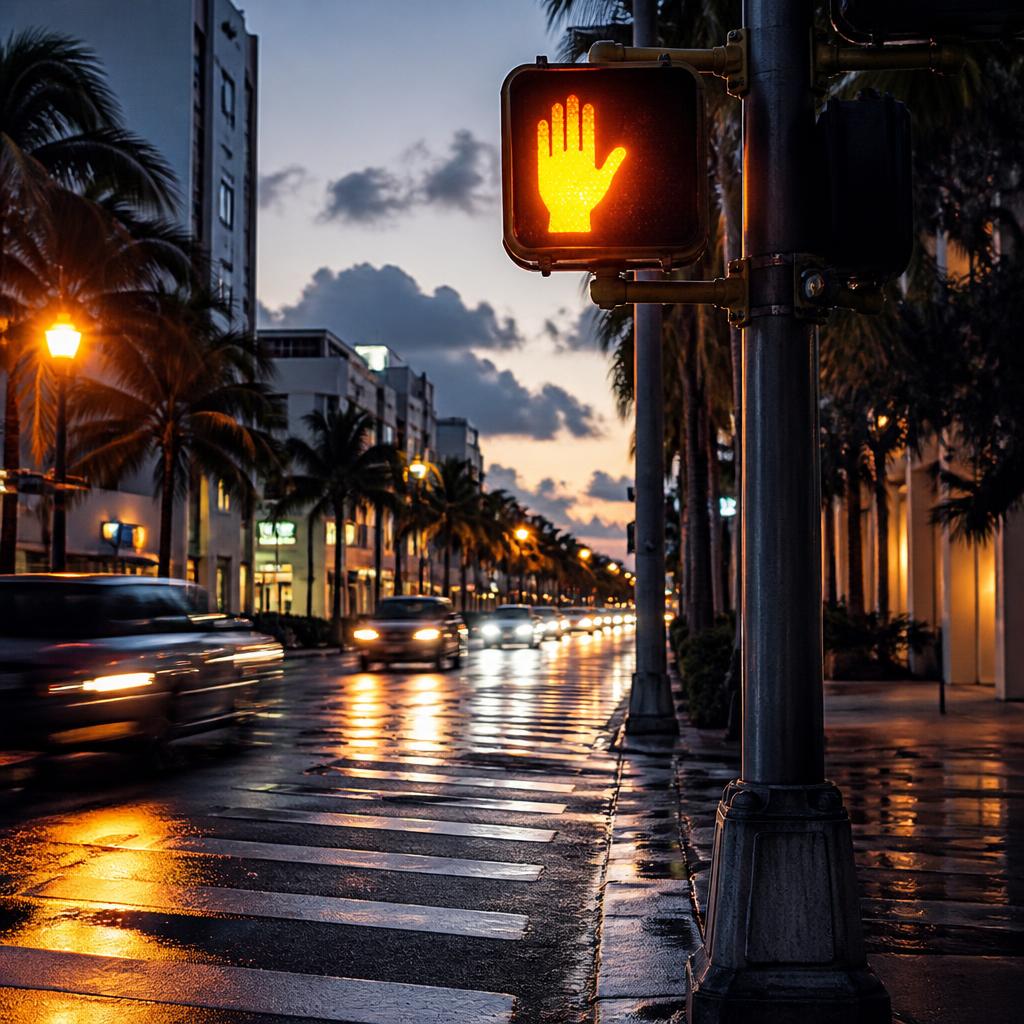
Miami-Dade is one of the most dangerous places in the United States to walk. Year after year, the Miami-Fort Lauderdale metro ranks in the top ten of Smart Growth America's Dangerous by Design report, with wide arterial roads, high speed limits, aggressive left-turn geometry, tourist-heavy corridors like Ocean Drive and Collins Avenue, and near-constant construction that pushes people into travel lanes. When a Miami driver hits a person on foot, the injuries are almost never minor. This 2026 guide from The Farber Law Firm in Coral Gables explains how Florida law handles pedestrian-crash claims under current statutes, how HB 837 changed the deadlines and comparative-fault rules, how Florida PIP interacts with a pedestrian injury, and what a family should do in the first 30 days. Every case turns on its own facts, and nothing here is a promise about any particular outcome.
Quick Answer: Florida Pedestrian Accident Law in 2026
- The deadline to file a Florida negligence lawsuit for a pedestrian crash occurring on or after March 24, 2023 is two years from the date of injury under Fla. Stat. § 95.11(4)(a). Wrongful-death claims run two years under § 95.11(4)(d).
- Florida is a modified comparative-negligence state under Fla. Stat. § 768.81(6). A pedestrian found more than 50% at fault recovers nothing.
- Pedestrians who are also Florida-registered vehicle owners or household members of one are covered by their own PIP under Fla. Stat. § 627.736 for up to $10,000 in medical bills and lost wages, subject to the 14-day initial-treatment rule.
- Pedestrians who do not own a vehicle and do not live with a vehicle owner may still recover PIP from the at-fault driver's PIP policy under § 627.736(4)(d)(1).
- Right-of-way in and near crosswalks is governed by Fla. Stat. § 316.130. Drivers must yield to pedestrians in a marked or unmarked crosswalk at an intersection when the pedestrian is on the driver's half of the roadway or approaching so closely as to be in danger.
- Past medical damages are proven using amounts actually paid, amounts still owed, and evidence of reasonable and necessary charges under Fla. Stat. § 768.0427 — not sticker-price billed amounts.
Why Miami Is Uniquely Dangerous for Pedestrians
Miami-Dade combines several risk factors that other US metros do not share at the same intensity. Arterial roads such as Biscayne Boulevard, Kendall Drive, Coral Way, Bird Road, US-1, NW 27th Avenue, and Collins Avenue were designed for vehicle throughput, not for the crosswalk-to-crosswalk distances that pedestrians actually walk. Nighttime tourism traffic on South Beach, transit gaps that push residents to walk along shoulders, ride-share pickups that stop in travel lanes, sudden tropical rainstorms that reduce visibility, and impaired driving in entertainment districts all appear repeatedly in Florida Highway Patrol and Miami-Dade Police crash reports. The result is a steady stream of catastrophic and fatal pedestrian collisions across Miami, Coral Gables, Miami Beach, Doral, Hialeah, Homestead, and unincorporated Miami-Dade.
Who Can Be Held Liable in a Miami Pedestrian Crash
Florida law allows an injured pedestrian, or the personal representative of a deceased pedestrian's estate, to pursue every party whose negligence contributed to the collision. In a typical Miami-Dade case, potential defendants include:
- The driver who struck the pedestrian, for negligence such as speeding, distracted driving, running a red light, failing to yield in a crosswalk, impaired driving, or unsafe turning.
- The vehicle owner under Florida's dangerous-instrumentality doctrine, even if the owner was not driving.
- A ride-share company (Uber, Lyft) if the driver was logged into the app, under the tiered coverage requirements of Fla. Stat. § 627.748.
- An employer, if the driver was in the course and scope of employment at the time of the crash.
- A commercial establishment under Florida's limited dram-shop statute, Fla. Stat. § 768.125, if it knowingly served a habitually addicted person or a minor who then caused the crash.
- A governmental entity responsible for a dangerous roadway design, malfunctioning traffic signal, missing crosswalk striping, or obstructed sight line, subject to the sovereign-immunity caps in Fla. Stat. § 768.28.
- A construction contractor whose work zone forced pedestrians into travel lanes without adequate signage or protection.
Florida Right-of-Way Rules That Decide Pedestrian Cases
Crosswalks at Intersections (Fla. Stat. § 316.130(7))
When traffic control signals are not in place or not in operation, drivers must yield the right-of-way, slowing down or stopping if need be, to a pedestrian crossing the roadway within a crosswalk when the pedestrian is upon the driver's half of the roadway or is approaching so closely from the opposite half as to be in danger. Every unmarked intersection in Florida contains an implied crosswalk on each leg — a fact many drivers do not realize.
Pedestrian Duties (Fla. Stat. § 316.130(10)-(11))
Pedestrians crossing outside a marked crosswalk or an unmarked crosswalk at an intersection must yield the right-of-way to vehicles. Between adjacent signalized intersections, pedestrians must cross only in a marked crosswalk. These duties inform comparative-fault analysis but do not eliminate a driver's separate duty to keep a proper lookout and to avoid a collision when possible.
Traffic Signals (Fla. Stat. § 316.0755)
A pedestrian facing a WALK signal may proceed across the roadway in the direction of the signal, and drivers must yield. A pedestrian facing a DON'T WALK or upraised-hand signal may not start to cross but, if already partially across, is entitled to continue to a safety island or sidewalk.
School Zones and Vulnerable Users
Florida enforces reduced speed limits in marked school zones and imposes enhanced penalties for moving violations that injure vulnerable road users under Fla. Stat. § 316.1926. Evidence of a speed-zone violation is admissible on the question of negligence.
How Florida PIP Applies to a Pedestrian Struck by a Car
Personal Injury Protection is not just for people inside a car. Under Fla. Stat. § 627.736(4)(d):
- A Florida-registered vehicle owner injured as a pedestrian is covered by his or her own PIP policy for up to $10,000 in medical bills and lost wages, regardless of fault.
- A resident relative of a Florida vehicle owner is covered by that household PIP policy.
- A pedestrian who neither owns a vehicle nor lives with an owner is covered by the PIP policy on the vehicle that struck them, or by any other applicable PIP policy, depending on the fact pattern.
PIP requires that initial services be received within 14 days of the crash. Non-emergency treatment is capped at $2,500 unless a qualified provider certifies an Emergency Medical Condition. PIP is primary to health insurance for treatment covered by the policy, and its exhaustion or denial does not extinguish the right to sue the at-fault driver when the § 627.737(2) serious-injury threshold is met.
The Serious-Injury Threshold in Pedestrian Cases
To recover pain-and-suffering and other non-economic damages against an at-fault driver in a Florida motor-vehicle case, the plaintiff must show one of the categories in Fla. Stat. § 627.737(2): significant and permanent loss of an important bodily function, permanent injury within a reasonable degree of medical probability other than scarring or disfigurement, significant and permanent scarring or disfigurement, or death. Pedestrian-crash injuries — fractured pelvises, traumatic brain injury, spinal cord damage, degloving injuries, amputations, and complex orthopedic trauma — almost always satisfy this threshold.
How HB 837 Changed Miami Pedestrian Claims
House Bill 837, signed on March 24, 2023, restructured Florida civil litigation and applies to any pedestrian crash occurring on or after that date. The key changes:
- The statute of limitations for negligence dropped from four years to two years under Fla. Stat. § 95.11(4)(a).
- Florida moved from pure to modified comparative negligence under Fla. Stat. § 768.81(6). A pedestrian found more than 50% at fault recovers nothing.
- Past medical damages must be proven with evidence of amounts actually paid, amounts still owed, and reasonable and necessary charges under Fla. Stat. § 768.0427.
- Letters of protection are subject to enhanced disclosure requirements.
- The one-way attorney-fee statute for first-party insurance disputes (former § 627.428) was repealed for most policies issued or renewed after March 24, 2023.
Damages in a Florida Pedestrian Crash Case
A Miami pedestrian accident lawyer typically pursues economic damages, non-economic damages, and — in appropriate cases — punitive damages.
Economic damages include past and future medical expenses, past and future lost earnings and loss of earning capacity, life-care planning costs (assistive equipment, wheelchair-accessible home modifications, attendant care), household services, and out-of-pocket expenses. Under Fla. Stat. § 768.0427, past medicals are proven at the amount actually paid by health insurance, workers' compensation, Medicare, or Medicaid, plus amounts still owed under a valid Letter of Protection subject to the statute's disclosure rules.
Non-economic damages compensate for pain and suffering, mental anguish, inconvenience, loss of capacity to enjoy life, and disfigurement, provided the § 627.737(2) threshold is met.
Punitive damages under Fla. Stat. § 768.72 require clear and convincing evidence of intentional misconduct or gross negligence. Common triggers in pedestrian cases include driving under the influence, hit-and-run, and street racing under Fla. Stat. § 316.191.
Insurance Coverage That May Apply
One of the first jobs of a Miami pedestrian accident lawyer is to identify every layer of coverage:
- The at-fault driver's bodily-injury liability policy. Florida does not require BI coverage for private passenger vehicles, so many drivers carry only PIP and property damage.
- The vehicle owner's separate policy, if different from the driver.
- The pedestrian's own Uninsured/Underinsured Motorist coverage under Fla. Stat. § 627.727. UM coverage follows the person, not the vehicle, and may be stackable if not lawfully rejected in writing.
- Any household UM policy on a resident relative's vehicle.
- The pedestrian's own PIP or the striking vehicle's PIP, as described above.
- A ride-share company's contingent liability and UM coverage under Fla. Stat. § 627.748, if the driver was logged into the app.
- A commercial umbrella policy of an employer, if the driver was on the job.
Wrongful Death in Pedestrian Crashes
When a Miami pedestrian crash is fatal, the case proceeds under the Florida Wrongful Death Act, Fla. Stat. §§ 768.16-768.26. Only the personal representative of the estate may file suit, and recoverable damages are defined by statute — including the surviving spouse's and minor children's loss of companionship and mental pain and suffering, adult children's mental pain and suffering when there is no surviving spouse, each parent's mental pain and suffering for the loss of a minor child, lost support and services, funeral expenses, and the estate's lost prospective net accumulations in certain circumstances. The two-year deadline under Fla. Stat. § 95.11(4)(d) is jurisdictional.
What To Do in the First 30 Days After Being Hit While Walking
- Call 911 and accept transport to the emergency department. Florida's 14-day PIP rule under Fla. Stat. § 627.736(1)(a) requires initial treatment within 14 days.
- Get the driver's name, license, plate, insurance, and phone number if you are able. If not, ask a bystander or officer to preserve it.
- Photograph the scene — the crosswalk, signals, sight lines, skid marks, and your injuries — as soon as it is safe.
- Get contact information for every witness. Miami-Dade pedestrian witnesses often move on within minutes.
- Request the Florida Traffic Crash Report; it is available to parties and their attorneys during the 60-day confidentiality window under Fla. Stat. § 316.066(2).
- Notify your own auto insurer to preserve PIP and UM rights, even though you were on foot.
- Do not give a recorded statement to the driver's insurer without counsel.
- Do not accept a fast settlement offer before the full extent of your injuries is known.
- Follow every medical recommendation and document symptoms, missed work, and household limitations.
- Retain a Miami pedestrian accident lawyer promptly so nearby surveillance video, intersection cameras, and ride-share telematics can be preserved before they cycle.
Common Miami-Dade Fact Patterns
In the firm's experience, recurring pedestrian-crash scenarios include: left-turning drivers who fail to yield to a pedestrian in a crosswalk with a WALK signal; right-on-red drivers who look only for oncoming cars; distracted drivers on Biscayne Boulevard, US-1, and Kendall Drive; impaired drivers leaving Wynwood, Brickell, and South Beach entertainment districts; drivers who fail to see pedestrians in unmarked crosswalks at unsignalized intersections; ride-share vehicles that stop suddenly in a travel lane and open doors; and hit-and-run drivers who flee the scene, triggering UM coverage and, in many cases, felony liability under Fla. Stat. § 316.027.
Case Study: The Left-Turn Crosswalk Crash
Consider a common Miami fact pattern (illustrative only). A pedestrian steps off the curb into a marked crosswalk on Coral Way with a WALK signal. A driver making a left turn from the opposite direction accelerates through the intersection without looking to the passenger side and strikes the pedestrian, causing a tibia-plateau fracture and closed head injury. Counsel obtains signal-phase timing data from Miami-Dade Traffic Signals and Signs, preserves nearby restaurant surveillance video within 72 hours, and secures ride-share telematics showing the driver had accepted a fare and was accelerating to a pickup. Under Fla. Stat. § 316.075 and § 316.130(7), the driver had a clear duty to yield. The ride-share contingent coverage under § 627.748 applies because the driver was logged in and en route to a pickup, opening a $1,000,000 liability layer in addition to the driver's personal policy. The pedestrian's UM coverage is examined as a further source of recovery.
Frequently Asked Questions
See the FAQ block at the end of this article for answers to the most common Miami pedestrian-crash questions in 2026, including deadlines, PIP coverage as a pedestrian, comparative fault at unmarked crossings, and how contingency fees work.
Talk to a Miami Pedestrian Accident Lawyer
If you or a family member was seriously injured, or a loved one was killed, in a pedestrian crash in Miami-Dade, Broward, or Monroe County, contact The Farber Law Firm in Coral Gables for a free, confidential consultation. The two-year clock under Fla. Stat. § 95.11(4)(a) starts on the date of the crash, and surveillance video that decides many pedestrian cases can be overwritten within days. Call, use the contact form, or request a free case review — there is no fee unless we recover for you.
Frequently Asked Questions
How long do I have to sue after a Miami pedestrian accident in 2026?
Two years from the date of injury under Fla. Stat. § 95.11(4)(a), as amended by HB 837, for crashes on or after March 24, 2023. Wrongful-death claims must be filed within two years under § 95.11(4)(d). Claims against a governmental defendant also require pre-suit notice under Fla. Stat. § 768.28(6).
Does Florida PIP cover me if I was hit as a pedestrian?
Usually yes. Under Fla. Stat. § 627.736(4)(d), your own PIP applies if you own a Florida-registered vehicle or live with someone who does. If not, the PIP policy on the vehicle that struck you generally applies. PIP provides up to $10,000 in medical bills and lost wages and requires initial treatment within 14 days.
What if the driver had no insurance or fled the scene?
Your own Uninsured/Underinsured Motorist coverage under Fla. Stat. § 627.727 can compensate you when the at-fault driver has no liability coverage or cannot be identified in a hit-and-run. UM coverage follows the person, not the vehicle, and may be stackable across household vehicles if not lawfully rejected in writing.
What if I was crossing outside a crosswalk?
You can still recover, but comparative fault under Fla. Stat. § 768.81(6) may reduce your award. A pedestrian found more than 50% at fault recovers nothing. Drivers still have an independent duty to keep a proper lookout and avoid a collision when possible, so counsel evaluates the crash as a whole.
How is a pedestrian's serious injury proven for pain-and-suffering damages?
Under Fla. Stat. § 627.737(2), the plaintiff must show a significant and permanent loss of an important bodily function, permanent injury within a reasonable degree of medical probability, significant and permanent scarring or disfigurement, or death. Serious pedestrian injuries almost always meet this threshold.
How are lawyer's fees handled in Florida pedestrian cases?
Personal-injury and wrongful-death cases are handled on a contingency-fee basis under Florida Bar Rule 4-1.5. You pay no attorney's fee unless there is a recovery. Every fee agreement is in writing and explained in detail before you sign.
Have a similar situation?
Free, confidential case review with a South Florida trial attorney. Call 8888-FARBER.
Request a Free ConsultationAbout the Author
The Farber Law Firm, P.A.
The Farber Law Firm is a South Florida trial practice based in Coral Gables, representing injured people, policyholders and businesses across Miami-Dade, Broward and Palm Beach counties since 1995. The firm handles personal injury, wrongful death, insurance coverage disputes and commercial litigation, and its attorneys are members in good standing of The Florida Bar.
Articles on this site are written and reviewed by attorney David Farber and reflect Florida statutes, court rules and Florida Bar regulations current as of the publication date.
- Office
- 2199 Ponce de Leon Blvd #301
Coral Gables, FL 33134 - Phone
- 8888-FARBER
- Consultations
- Free and confidential