How to Get Out of a Solar Panel Contract in Florida: A Homeowner’s Legal Guide
Florida solar contract you want to cancel? Understand the three-day rules, financing, misleading savings promises, post-installation options, and practical steps to protect your rights.
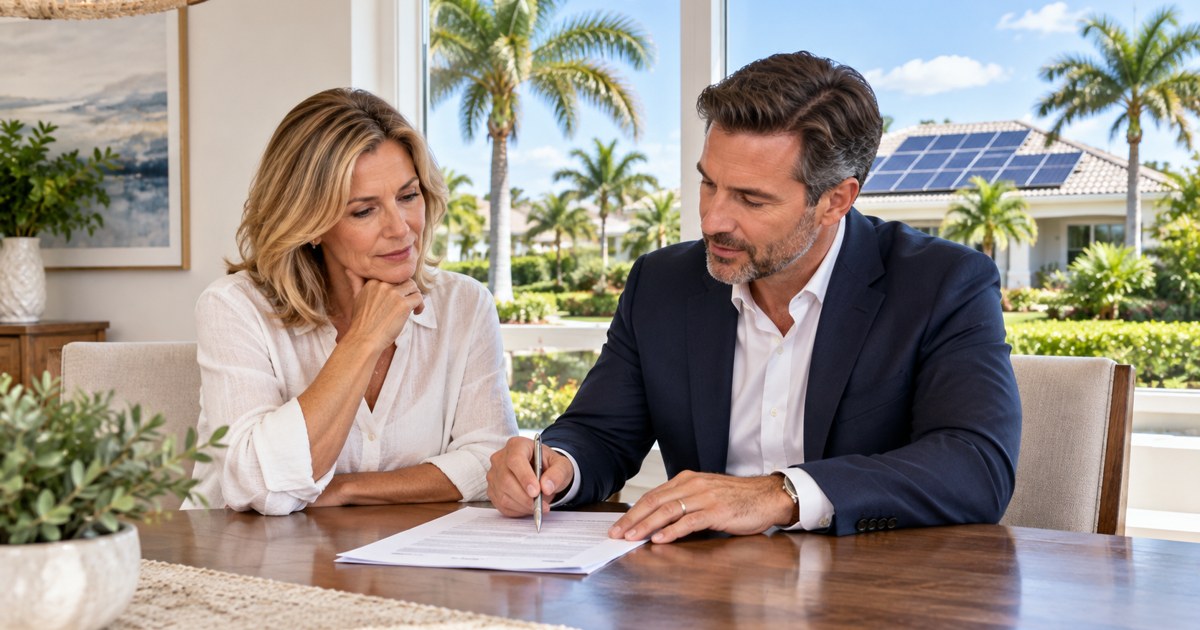
Quick Answer: Can You Get Out of a Solar Panel Contract in Florida?
Sometimes. A Florida homeowner may be able to cancel during an applicable rescission period, use a termination provision in the agreement, negotiate a written release, or pursue legal remedies for a material breach, deceptive sales practices, or another recognized basis. The first document to check is the solar disclosure statement: Florida Statutes § 520.23(13) requires covered solar sale and lease agreements to disclose a right to rescind for at least three business days after signing, subject to specified solar-community exceptions. Florida home-solicitation law and federal rules may provide additional rights for qualifying transactions.
After a cancellation window closes, there is no universal right to walk away because the payments are expensive or the savings are disappointing. A purchase agreement, installation contract, loan, lease, and power purchase agreement can create different obligations. Canceling one does not necessarily discharge the others. Preserve the documents, send any time-sensitive notice correctly, and obtain advice before stopping payments, signing a release, or removing equipment.
Published November 25, 2026. This educational guide addresses Florida homeowners, including Miami, Coral Gables, Miami-Dade, Broward, and Palm Beach counties. It draws on the cited Florida statutes and federal authorities; the law applicable when you signed, later changes, and your actual documents must be reviewed. It is not individual legal or tax advice, does not create an attorney-client relationship, and does not guarantee cancellation or any result.
The Five Questions That Determine Your Exit Options
- What did you sign: a cash purchase, financed purchase, lease, power purchase agreement, or PACE financing agreement?
- When and how did you sign, and what cancellation disclosures did you receive?
- Has the company ordered equipment, obtained permits, installed the panels, received final approval, or funded a loan?
- What specific promise or obligation was broken, and what evidence and financial loss support that position?
- What notices, cure periods, arbitration provisions, payment obligations, and deadlines appear in every related agreement?
These questions separate a timely cancellation from a later contract dispute. They also help identify which company should receive a notice: the seller, installer, system owner, lender, servicer, or PACE program administrator. For an overview of the firm's existing service, see Solar Panel Contract Disputes.
Solar Contract Cancellation Options at a Glance
| Situation | Possible route | Important limit |
|---|---|---|
| Recently signed a covered solar sale or lease | Review the rescission disclosure required by § 520.23(13) | At least three business days; specified solar-community exceptions apply |
| Qualifying sale made at home or another covered location | Florida home-solicitation cancellation and/or the FTC Cooling-Off Rule | Coverage, exemptions, notice method, and day counting must be checked |
| Signed a residential PACE financing agreement | Statutory cancellation using the administrator's form | Three business days after signing under § 163.081(6) |
| Certain credit secured by a principal dwelling | Federal Regulation Z rescission | Does not apply to every solar loan; triggering events and exceptions matter |
| Installation has not begun but the ordinary window expired | Contract termination provision or negotiated release | Deposits, earned charges, financing, and cancellation fees need separate review |
| Misleading sales claims or serious nonperformance | Contract, fraud, or consumer protection analysis | Proof of the legal elements and available remedies is required |
| Installed system with a lease or long-term payment agreement | Transfer, buyout, negotiated modification, warranty claim, or legal remedy | Physical removal or a home sale alone does not terminate the agreement |
The table summarizes § 520.23, § 501.025, § 163.081, the FTC Cooling-Off Rule, and Regulation Z § 1026.23. These routes overlap in some cases but are not interchangeable.
Florida's Solar Disclosure Law: A Cancellation Right Homeowners Should Check First
What the Separate Disclosure Must Explain
Section 520.23 requires a separate written statement in at least 12-point type, separately acknowledged by the buyer or lessee, with applicable disclosures about ownership, total cost, payments, financing, savings assumptions, incentives, system specifications, installation dates, warranties, interconnection, removal, liens, and transfer. The statute also addresses qualifying electronic delivery. An electronic signature does not make those disclosure requirements irrelevant.
The scope comes from § 520.20: it concerns agreements to sell or lease a qualifying distributed energy generation system. A contract described only as a power purchase agreement or a separate bank loan requires its own analysis; do not assume every document carries exactly the same statutory right.
The At-Least-Three-Business-Day Rescission Provision
Section 520.23(13) requires a provision notifying the buyer or lessee of the right to rescind for at least three business days after signing. It contains an exception for specified solar communities marketed as such or incorporating solar technology to meet Florida Building Code requirements. Your agreement may provide a longer period. A homeowner should request the complete disclosure statement, not merely the sales brochure or the final loan balance.
If the statement is missing, incomplete, or delivered late, save the original email and signature records. A disclosure violation can matter, but it is not a sound basis to declare that every affected contract is automatically void or that a cancellation right lasts indefinitely. A lawyer must evaluate the applicable law, remedies, notice history, and timing.
Florida Door-to-Door Solar Sales and the FTC Cooling-Off Rule
Florida Home-Solicitation Cancellation
Under § 501.025, a buyer may cancel a qualifying home-solicitation sale until midnight of the third business day after the signing day. Written notice may be given in person, by telegram, or by mail to the seller at the stated address; mailed notice is effective when postmarked. The notice need not use a particular form if it expresses the buyer's intention not to be bound.
Coverage is defined by § 501.021, which addresses sales over $25, off-premises solicitation and consummation, certain unsolicited telephone transactions, and exclusions. Not every online purchase, office visit, or homeowner-requested transaction qualifies. Florida's home-solicitation statute has its own definition of business day: every calendar day except Sunday or a federal holiday. Saturdays count under that definition.
For that Florida home-solicitation calculation only, if you sign on Monday and there are no intervening federal holidays, the three days are Tuesday, Wednesday, and Thursday. If you sign Friday, the three days are Saturday, Monday, and Tuesday. Do not automatically apply this example to a different statutory or contractual cancellation clock. Send notice promptly rather than using the last possible hour.
Federal Cooling-Off Protections
The FTC Cooling-Off Rule, 16 C.F.R. § 429.1, requires cancellation disclosures and forms for covered door-to-door transactions. It provides a cancellation period through midnight of the third business day and directs a covered seller to refund payments within ten business days after receiving a valid cancellation notice. The rule also addresses delivered goods and security interests created by the transaction.
An important South Florida detail is language: for covered transactions, the receipt or contract must be in the language principally used in the oral sales presentation, and the cancellation forms must use the contract's language. A Spanish-language sales pitch followed by English-only cancellation paperwork deserves review. The rule has coverage limits and exceptions; it is not an unconditional cancellation rule for every solar agreement.
How to Send a Solar Contract Cancellation Notice
Use the Right Recipient and the Right Delivery Method
Locate the legal seller's name and cancellation address in the agreement and disclosure. Follow the method required by the right you are exercising and any additional contractual instructions. For Florida home-solicitation cancellation, § 501.025 expressly recognizes mailed notice effective upon postmarking. An email or portal message can be useful additional evidence, but do not rely on it as a replacement for a required delivery method without confirming that it is legally sufficient.
Keep a dated copy, mailing receipt, tracking, screenshots, and the complete envelope or electronic acknowledgement. If a salesperson tells you to call them personally instead of using the stated address, preserve that instruction but do not let it replace the legal notice. Ask for written confirmation of cancellation, the deposit accounting, the installation status, and the status of any related financing.
What the Notice Should Identify
- Your name, property address, and available contact details.
- The seller's legal name and the agreement date or reference number.
- A clear statement that you are canceling the identified transaction or exercising the applicable rescission right.
- The date and your signature when required.
- A request for written confirmation, refund information, and clarification of related loan or installation arrangements.
A simple illustration is: “I am giving written notice that I cancel the solar purchase agreement signed on the date identified above for the property identified above. Please confirm the cancellation and advise how any deposit and related installation arrangements will be handled.” This is an illustration of clear wording, not a universal notice template or individualized legal advice. PACE financing has a specific administrator form, and another transaction may require different recipients or content.
Notify the Financing Company Separately When Appropriate
A seller may have already submitted loan documents or requested funding. Contact the lender or servicer through the channels in the finance agreement, explain that you sent a cancellation notice, and request written confirmation of the funding and account status. Do not assume that a salesperson's “we took care of it” message closes the account. Keep statements and monitor for unexpected payments or collection activity.
What If the Cancellation Period Has Already Expired?
Read the Termination and Cure Provisions
A contract may allow cancellation before a defined milestone, termination for cause, or a buyout. It may also impose a fee or require notice and an opportunity to cure. Check what starts the milestone: signature, engineering, permit submission, equipment order, installation, inspection, or permission to operate. Ask the company to identify the provision supporting any claimed charge and provide an itemized accounting.
A quoted cancellation fee is not automatically enforceable merely because the seller asks for it, but neither is it automatically unlawful. Its wording, legal character, timing, and relationship to the claimed loss matter. Have substantial disputed charges reviewed before paying or refusing them.
Negotiate a Complete Written Release
Negotiation can be more practical than litigation when work has not started or the documented loss is limited. A useful resolution addresses the seller's contract, installation work, loan funding, deposits, removal obligations, warranties, and any release or lien documentation. If several companies are involved, an agreement signed by only one may leave another obligation outstanding.
Avoid signing a broad release before you understand which claims you are surrendering. A settlement can affect claims for roof damage, misleading financing, or future repairs that are not obvious from the cancellation discussion. No settlement amount or cancellation outcome is assured.
Evaluate Legal Grounds Instead of Buyer’s Remorse Alone
A serious failure to perform, a provable deceptive sales practice, fraud, or a legally significant disclosure problem may support claims or defenses. Rescission generally seeks to unwind the transaction and can involve restoration of benefits and other conditions; contract damages seek compensation for a legally recognized loss. They are different remedies. A court or arbitrator may reject cancellation while addressing a narrower breach or repair issue.
Misleading Solar Savings, “Free Panels,” and Tax-Credit Promises
Separate an Estimate From a False or Misleading Representation
A disappointing electric bill does not by itself prove deception. Compare the promised system output, household usage, shading, rate assumptions, financing payments, ongoing utility charges, and any written production guarantee. A proposal can estimate savings without guaranteeing them, but hiding major costs or describing a loan as a no-cost government benefit can raise different issues.
Florida's Deceptive and Unfair Trade Practices Act, § 501.204, prohibits unfair methods of competition, unconscionable acts, and unfair or deceptive acts or practices in trade or commerce. Under § 501.211, qualifying claims can involve actual damages and declaratory or injunctive relief. Statutory coverage, causation, actual loss, exclusions, and the identity of each defendant must be analyzed. FDUTPA is not an automatic solar-loan forgiveness program.
Preserve the proposal version you actually received, advertisements, text messages, emails, payment illustrations, salesperson identity, and lawful recordings already in your possession. Do not secretly record new conversations without advice about Florida's recording laws. Write down what was said, by whom, and when, while the details are fresh.
A Critical 2026 Tax-Credit Issue
Do not rely on an old brochure promising every new homeowner a 30 percent federal solar credit. The IRS Residential Clean Energy Credit guidance states that the credit is not available for property placed in service after December 31, 2025. A sales presentation for a 2026 installation that relies on the older availability period needs careful tax and legal review. Eligibility for an earlier installation, carryforwards, and other incentives are separate questions for a qualified tax professional.
If a financing illustration assumes you will make a large tax-credit-based principal payment, identify what happens when you do not. Some arrangements change payments after an introductory period or a planned paydown date. That possibility should be evaluated against the actual disclosures rather than an assumption that the advertised payment will remain unchanged. An incorrect tax promise may be evidence in a dispute; it does not automatically cancel the loan.
Solar Loans, Leases, PPAs, and PACE: Different Agreements, Different Risks
A Financed Purchase Usually Has Separate Loan Obligations
When you borrow to purchase panels, you may own the equipment while owing a lender under a separate agreement. Compare the cash price, financed amount, annual percentage rate, finance charge, payment schedule, dealer-related costs, and any security interest. Request the original disclosures, disbursement dates, completion certificates, and electronic signature history if you dispute what was authorized.
Do not stop paying merely because the installer is unresponsive. Missed payments may produce fees, credit reporting, collection, or enforcement of a security interest. Ask a lawyer whether a defense or claim applies and ask the creditor about any documented hardship or dispute process. A complaint alone does not suspend payments.
The FTC Holder Rule May Preserve Claims Against a Financing Holder
The FTC Holder Rule, 16 C.F.R. § 433.2, addresses covered consumer credit contracts and seller-arranged purchase-money financing. Its required notice preserves consumer claims and defenses against a holder arising from the seller's transaction. It is one reason to review the loan alongside the sales pitch rather than treating the installer and lender as unrelated in every case.
The rule does not make every bank responsible for every installer. Coverage, the required notice, the transaction relationship, the underlying claim, and defenses matter. Recovery under the notice is subject to its amount-paid limitation; fee issues and any independent claims require separate analysis. It is not a promise that the full outstanding balance will be erased.
Federal Rescission for Certain Home-Secured Credit
Regulation Z § 1026.23 gives rescission rights for certain credit transactions involving a security interest in a consumer's principal dwelling, with exceptions. The ordinary period runs until midnight of the third business day after the last of consummation, delivery of the required rescission notice, or delivery of the material disclosures. Missing required information can raise additional issues and limits that need prompt professional review.
An unsecured solar loan does not qualify merely because the panels are installed on your house. A fixture filing also should not be casually equated with a mortgage on the entire home. Review the collateral description, financing structure, and applicable regulation before assuming a federal right applies. This is distinct from canceling a solar sale or lease under Florida law.
A Lease or Power Purchase Agreement Can Continue After Installation
A lease typically involves paying to use a system owned by another company. A power purchase agreement generally involves purchasing the energy produced under its terms. Read the ownership, maintenance, production, escalator, insurance, buyout, transfer, and removal provisions. The contract's label alone does not answer every legal coverage question.
A home sale does not necessarily end either arrangement. Buyers may need to assume an agreement, qualify with the provider, or negotiate a buyout. Obtain a written transfer or payoff quotation early and have the closing professional confirm what must be addressed. Never assume a new buyer automatically takes over your obligations.
PACE Financing Appears on the Property-Tax Side
Residential PACE financing is not simply a conventional monthly solar loan. Florida Statutes § 163.081 addresses financing qualifying improvements through non-ad valorem assessments and associated liens. Subsection (6) allows a property owner to cancel on the program administrator's form within three business days after signing without a financial penalty.
Review the assessment, financing agreement, administrator identity, recorded documents, and escrow implications. Sending only an installer cancellation letter may not satisfy the separate PACE process. Unpaid assessments can create serious property consequences; do not treat the tax bill as optional while a contractor dispute is pending.
Can You Cancel a Solar Contract After Installation?
Installation Is Not the Same as a Fully Operational System
A solar system may be physically installed but still awaiting inspection, utility interconnection, or permission to operate. Compare the contractual completion milestone with the permit records and utility communications. Do not sign a completion or satisfaction certificate unless it accurately reflects the work and the document's purpose.
Document failed inspections, missing equipment, warning messages, monitoring history, unresolved wiring or roof issues, and requests for service. An expert assessment may be needed to separate poor workmanship from shading, equipment failure, weather variation, or utility delays. A working system with less-than-expected savings presents a different case from a system that was never connected.
Serious Breach or Defective Work May Support Other Remedies
If the contractor did not perform a material obligation, possible routes can include written notice and cure, warranty enforcement, damages, a negotiated solution, or litigation or arbitration. Termination and rescission depend on the specific breach and legal requirements. Florida construction-defect procedures, including Chapter 558 notice requirements, can affect certain claims for defective work; do not assume a lawsuit can be filed immediately.
For unfinished projects, read Can You Sue a Contractor for Abandoning a Renovation Project in Florida?. For workmanship and property damage issues, see the firm's Construction Defects practice.
Do Not Remove Panels Yourself to Force a Cancellation
Removing panels can damage the roof, create electrical hazards, destroy evidence, violate ownership or warranty terms, and leave the payment obligation intact. Any agreed removal should address who performs it, roof restoration, permits, cost, and the release of related obligations. Use qualified professionals for safety issues and preserve evidence before repairs when reasonably possible.
Storm damage is also a separate question. A hurricane does not automatically cancel financing, and an insurance claim does not automatically determine the seller's liability. Our guide to Florida homeowners insurance and storm-damaged solar panels explains that related coverage analysis.
A Florida Homeowner's Document Checklist
- Every signed purchase, installation, lease, PPA, finance agreement, and change order.
- The separate § 520.23 disclosure, cancellation forms, and proof of when you received them.
- Proposals, advertisements, savings calculations, tax-credit statements, and payment illustrations.
- Emails, texts, cancellation notices, delivery records, and the seller's responses.
- Loan disclosures, account statements, funding records, and completion certifications.
- Utility bills before and after installation and downloadable production records.
- Permit and inspection history, interconnection correspondence, and permission-to-operate status.
- Equipment specifications, manufacturer and workmanship warranties, and service requests.
- Photographs, repair estimates, expert reports, receipts, and any recorded lien or fixture documents.
Build a one-page timeline with the signing date, disclosure delivery, installation milestones, first payment, cancellation request, and first known problem. Keep unedited originals and a backup. Do not post account numbers or identifying documents publicly. For initial intake, provide a brief description rather than confidential documents and ask the firm about a secure delivery method.
Miami and South Florida Practical Considerations
Homeowners in Miami, Coral Gables, Doral, Kendall, Homestead, Fort Lauderdale, and Palm Beach County face the same core Florida contract and consumer statutes, but the project record is local. Identify the city or county that issued the permit; a Coral Gables project may involve municipal records rather than only county records. Verify the contractor's license and responsible qualifying agent through the Florida Department of Business and Professional Regulation.
Miami-Dade and Broward projects can raise High-Velocity Hurricane Zone design, roof attachment, and inspection issues. Have the relevant building authority or a qualified professional evaluate the actual installation rather than assuming that panels are noncompliant. Save roof-condition photographs from before the project if available, and clarify responsibilities for any future roof replacement.
Ask your own utility for the project's interconnection status and current billing or export terms. A salesperson's claim that the utility “approved everything” is not the same as a documented permission-to-operate letter. Also review association approval requirements for a condominium, townhouse, or HOA property without assuming that an association rule decides your contract rights.
Complaints, Arbitration, Lawsuits, and Deadlines
Regulatory Complaints Can Help Document a Problem
Potential complaint channels include DBPR for relevant licensing or contractor issues, the Florida Attorney General's consumer protection resources, and the Consumer Financial Protection Bureau complaint process for covered consumer financial products. Choose the channel that fits the company and transaction. An agency may request a response, investigate, or take enforcement action; it does not guarantee a personal refund or contract release.
Keep the complaint number and supporting materials. A complaint generally is not a substitute for contractual notice or a civil claim, and should not be assumed to toll a filing deadline. Continue responding to court papers, arbitration notices, creditor communications, and legally required payments while obtaining advice.
The Dispute Forum and Available Relief Require Review
Read arbitration, mediation, venue, notice, and any opt-out provisions in each agreement. Different documents can designate different processes. Whether a particular provision can be enforced, and against whom, is a legal question. A homeowner should not assume that every solar dispute belongs in Miami court or that an online complaint replaces a formal arbitration demand.
Potential relief depends on the claim and can include legally supported contract damages, consumer actual damages, warranty or repair relief, declaratory or injunctive relief, or rescission where authorized. Refunds, loan adjustment, lien release, and removal costs must be addressed specifically rather than lumped together as “getting out.” Attorney fees are not automatic: a contract or statute must authorize them, and possible opposing-party fee exposure should be evaluated.
Do Not Wait for the Company's Final Answer Before Checking Deadlines
Different clocks can govern cancellation, contract notice, construction claims, consumer claims, financing claims, and arbitration. Florida Statutes § 95.11 contains multiple limitation periods; classification and accrual are important, especially when a solar dispute overlaps with construction. Negotiations or a promise to call back do not necessarily suspend a deadline.
A lawyer should identify the earliest plausible deadline and any pre-suit notice requirement from your dates. This article intentionally does not calculate a filing date for an unknown contract. Seek prompt advice if a cancellation period is still open, money is being disbursed, collection has started, or you received formal legal papers.
Mistakes That Can Make a Solar Contract Dispute Harder
- Assuming every agreement has the same three-day rule or that weekends never count.
- Calling the salesperson but failing to send the legally required written notice.
- Canceling the installation agreement without confirming what happens to financing.
- Stopping payments or ignoring property assessments based only on an online cancellation promise.
- Signing a completion certificate, replacement loan, or broad release without understanding it.
- Removing equipment or allowing repairs to erase evidence before documentation.
- Paying an “exit” company that guarantees debt elimination without explaining the legal basis and risks.
- Waiting for a regulatory complaint to resolve while a contractual or court deadline passes.
A sound plan begins with the documents and the applicable legal right, not a promise that a loophole works for everyone. For broader contract remedies, read Florida business breach-of-contract remedies and damages, recognizing that a homeowner's consumer transaction may involve additional protections and different claims.
How The Farber Law Firm Helps With Solar Contract Disputes
The Farber Law Firm's Solar Panel Contract Disputes service focuses on Florida homeowner concerns including cancellation, deceptive sales practices, misleading savings claims, financing disputes, installation issues, breach of contract, and potential consumer protection remedies. A review can identify which documents and companies matter, whether a time-sensitive notice is needed, and what evidence supports a practical next step.
Depending on the documents and whether the firm accepts the matter, representation may include notice and negotiation, contract and financing analysis, and litigation or arbitration when appropriate. No cancellation, fee recovery, or settlement is promised. Learn about the related Consumer Protection practice, or use the solar case-review form below to request a free initial consultation.
The firm is located at 2199 Ponce de Leon Blvd #301, Coral Gables, FL 33134, serving Miami and reviewing relevant matters throughout Florida. Call 305-774-0134 or 8888-FARBER. Initial consultations are free; representation, fees, and costs require a written engagement agreement. Sending a request does not create an attorney-client relationship, suspend payments, or protect a deadline.
Primary Sources and Further Reading
- Florida Statutes § 520.20 — Distributed energy generation system definitions.
- Florida Statutes § 520.23 — Solar disclosures, rescission notice, ownership, costs, financing, and transfer terms.
- Florida Statutes § 501.021 — Home-solicitation coverage and business-day definition.
- Florida Statutes § 501.025 — Home-solicitation cancellation and written notice.
- 16 C.F.R. § 429.1 — FTC Cooling-Off Rule.
- 16 C.F.R. § 433.2 — FTC Holder Rule.
- 12 C.F.R. § 1026.23 — Rescission for certain covered home-secured credit.
- Florida Statutes § 163.081 — Residential PACE financing and cancellation.
- Florida Statutes § 501.204 — Unfair and deceptive acts prohibited.
- Florida Statutes § 501.211 — Individual FDUTPA remedies.
- IRS — Residential Clean Energy Credit and the December 31, 2025 placed-in-service cutoff.
- Florida Statutes § 558.004 — Construction defect notice procedure.
- Florida Statutes § 95.11 — Civil limitation periods.
These authorities are provided for verification and context, not as a substitute for counsel reviewing your transaction. Readers should check the current official law and any changes applicable to their dates. Hiring a lawyer is an important decision that should not be based solely on advertisements; no result is guaranteed.
If this article describes your situation, these practice pages explain how The Farber Law Firm can help: Consumer Protection and TCPA Robocall & Spam Text Claims. You can also call 8888-FARBER for a free case review.
Tell us when you signed, which solar company or lender is involved, and what concern you want reviewed. Do not send sensitive documents through this initial form; ask the firm how to provide them securely. Sending an inquiry does not protect a filing deadline or mean the firm has accepted representation.
Frequently Asked Questions
Can I get out of a solar panel contract in Florida?
Possibly. Options include an applicable cancellation period, a contractual termination provision, a negotiated release, or legally supported claims for breach, deception, or another recognized basis. After a cancellation window expires, changing your mind alone generally does not release you from all obligations.
Does Florida have a three-day solar contract cancellation rule?
Section 520.23(13) requires covered solar sale and lease agreements to disclose a right to rescind for at least three business days after signing, with specified solar-community exceptions. Qualifying home-solicitation transactions and some financing have additional rules. Review the scope and notice instructions for each agreement.
Do Saturdays count when canceling a door-to-door solar sale?
Under Florida's home-solicitation definition in § 501.021, business days include Saturdays but exclude Sundays and federal holidays. The signing day is excluded from the § 501.025 three-day calculation. Do not assume that this definition governs a different statutory or contractual clock.
Can I cancel my solar contract by email?
An email may help document your intention, but it should not be assumed to satisfy every applicable notice rule. Section 501.025 specifies written notice in person, by telegram, or by mail to the stated seller address, with mailed notice effective upon postmarking. Check the relevant statute and contract promptly.
Can I cancel after the solar panels are installed?
Sometimes, but installation does not create a general right to cancel. The contract, remaining cancellation rights, material nonperformance, consumer protection claims, warranties, and possible negotiated terms determine the options. Removal by itself does not extinguish a loan, lease, or other payment obligation.
Does canceling the installation cancel the solar loan?
Not necessarily. The sale, installation, and financing agreements may create separate obligations. Notify the relevant companies and obtain written confirmation of funding, account status, refunds, and any release before assuming the loan is closed.
Should I stop paying while disputing my solar contract?
Do not assume a dispute suspends payments. Missed payments can lead to fees, credit reporting, collections, or lien-related consequences. Have the agreements and any defenses reviewed, and ask the creditor about its documented dispute or hardship process.
What if the salesperson promised free panels or guaranteed savings?
Preserve the sales proposal, advertisements, messages, disclosures, bills, and production data. A misleading representation, omitted cost, or broken guarantee may support legal claims if the required elements and loss are established. Disappointing savings alone do not automatically cancel an agreement.
Is the federal 30 percent homeowner solar credit available for a new 2026 installation?
The cited IRS guidance states that the Residential Clean Energy Credit is not available for property placed in service after December 31, 2025. Earlier installations, carryforwards, and other incentives require separate tax review. An outdated sales promise may matter legally, but does not automatically erase a loan.
Can the solar lender be responsible for the installer's misconduct?
Potentially. The FTC Holder Rule preserves certain claims and defenses in covered consumer credit transactions, subject to coverage, the underlying claim, and its limitations. It does not apply to every loan or guarantee cancellation of the outstanding balance.
Can I cancel a Florida PACE solar financing agreement?
Section 163.081(6) allows cancellation of a residential PACE financing agreement on the program administrator's form within three business days after signing without a financial penalty. Notify the correct administrator; an installer-only letter may not satisfy that separate process.
Does selling my house end a solar lease or PPA?
Not automatically. Transfer, assumption, buyout, and approval terms depend on the agreement. Obtain written terms before closing, and confirm how the provider and any creditor will release or transfer the obligations.
What if the solar company goes out of business?
The closure does not automatically cancel financing. Identify the legal seller, installer, lender, system owner, servicer, and warranty provider. Available claims, servicing obligations, warranty rights, and collection prospects require separate review.
Will a regulatory complaint cancel my solar contract?
No cancellation is guaranteed. An agency complaint may document the dispute, obtain a response, or trigger investigation, but it is not a substitute for required notice, a civil claim, or responding to legal papers. Do not assume it pauses a deadline or payment obligation.
How can The Farber Law Firm review my solar contract dispute?
Request a free initial case review using this page's solar form or call 305-774-0134. Provide a brief timeline and description, and ask for a secure method before sending confidential documents. Representation requires a written engagement agreement; no outcome is promised and an inquiry does not protect a deadline.
About the Author
The Farber Law Firm, P.A.
The Farber Law Firm is a South Florida trial practice based in Coral Gables, representing injured people, policyholders and businesses across Miami-Dade, Broward and Palm Beach counties. Founding attorney David Farber has more than 25 years of Florida litigation experience and has been a member of The Florida Bar since 2000. The firm handles personal injury, wrongful death, insurance coverage disputes and commercial litigation.
Articles on this site are written and reviewed by attorney David Farber and reflect Florida statutes, court rules and Florida Bar regulations current as of the publication date.
- Office
- 2199 Ponce de Leon Blvd #301
Coral Gables, FL 33134 - Phone
- 8888-FARBER
- Consultations
- Free and confidential
Florida Legal Insights, in Your Inbox
Subscribe to The Farber Law Firm’s email list for educational articles on Florida injury claims, insurance coverage, and consumer rights.
By subscribing, you request legal insights by email. This is not a consultation request and does not create an attorney-client relationship. Privacy Policy.
The Farber Law Firm, P.A. · Solar Panel Contract Disputes
Before you pay more, understand what you signed.
An unexpected solar payment, rejected cancellation, or unfinished installation deserves more than another sales pitch. The Farber Law Firm helps Florida homeowners evaluate their contracts, preserve evidence, and identify a practical legal response—without promising a cancellation or recovery.
See the complete agreement
Review the sale, financing, cancellation disclosures, and installation obligations together.
Compare the promises with the paperwork
Assess documented claims about savings, tax incentives, payments, and system performance.
Evaluate realistic remedies
Consider notice, negotiation, consumer protection claims, arbitration, or litigation when supported.
Choose an informed next step
Discuss costs, deadlines, and risks before deciding whether to pursue representation.
Explore our Solar Panel Contract Disputes service
2199 Ponce de Leon Blvd #301, Coral Gables, FL 33134. Initial consultations are free. Representation, fees, and costs require a written engagement agreement. No cancellation, settlement, or other outcome is guaranteed. Do not submit confidential documents before the firm confirms a secure method. An inquiry does not create an attorney-client relationship, stop a payment obligation, or extend a deadline.