Hurricane Damage in Florida: 10 Mistakes Homeowners Make That Could Cost Them Their Insurance Claim
A practical Florida homeowner guide to hurricane insurance claim mistakes, reporting deadlines, wind versus flood coverage, evidence, repairs, and dispute options in 2026.
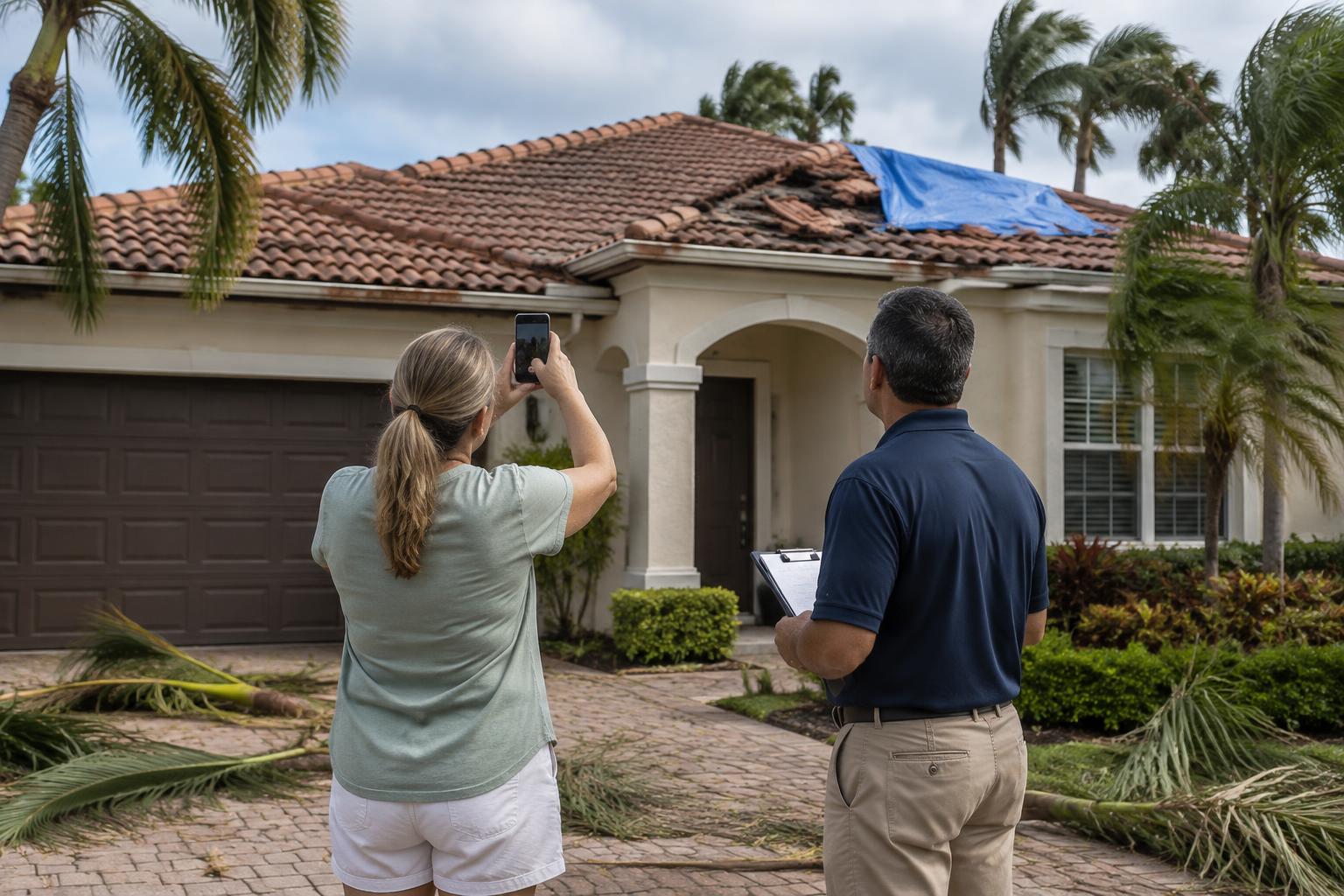
After a hurricane, protecting your family and making your home safe come first. Insurance paperwork follows, often while electricity, contractors, and ordinary routines are disrupted. A missed notice, discarded roof material, or misunderstood settlement can make an otherwise supportable claim harder to prove. These ten mistakes explain practical risks for Florida homeowners without assuming that every storm loss is covered or that every insurer denial is wrong. Coverage depends on the policy in force, the cause of damage, the evidence, and compliance with applicable conditions.
Quick Answer: What Can Put a Florida Hurricane Claim at Risk?
The main risks are late reporting, failing to prevent avoidable additional damage, losing evidence, confusing wind and flood coverage, ignoring policy requests, unsupported descriptions of the loss, misunderstanding deductibles and depreciation, signing agreements without review, overlooking covered expenses, and missing dispute or lawsuit deadlines. A mistake does not automatically defeat every claim; its effect depends on the policy, applicable law, and facts. Prompt notice and accurate records are usually more useful than a rushed demand for a particular payout.
This guide is for homeowners in Miami, Coral Gables, Homestead, Miami Beach, and other Florida communities. It also explains why condominium unit owners should coordinate their own claim with the association. It is general educational information and attorney advertising, not advice about a particular policy or a promise of recovery. The image is an illustrative depiction, not a client property or evidence of a firm result.
The 10 Mistakes at a Glance
| Mistake | Why it can matter | Better approach |
|---|---|---|
| 1. Waiting to report | Notice periods and policy duties can affect coverage | Notify the correct insurer promptly and save confirmation |
| 2. Leaving damage unprotected | Avoidable additional loss may be disputed | Arrange safe, reasonable temporary protection and keep receipts |
| 3. Repairing before documenting | Original condition and causation evidence can disappear | Photograph, preserve samples, and coordinate inspection |
| 4. Treating all storm water as wind damage | Flood and wind can fall under different policies | Document the water path and notify each potentially involved insurer |
| 5. Ignoring claim requirements | Proof-of-loss and cooperation disputes can develop | Track requests and seek clarification before deadlines |
| 6. Guessing or overstating facts | Inconsistencies weaken credibility and false claims have serious consequences | Separate what you observed from what you do not know |
| 7. Misreading the payment | Deductibles, limits, and depreciation change what is payable | Compare the estimate with every applicable endorsement |
| 8. Signing without review | Releases and contractor terms can affect rights | Read the entire agreement and obtain advice where needed |
| 9. Omitting other covered losses | Contents and additional living expenses may be missed | Keep separate inventories and documented expense records |
| 10. Assuming negotiations stop deadlines | Informal discussions may not preserve a lawsuit | Calendar notice, dispute, and court deadlines separately |
1. Waiting to Report Until a Contractor Gives You a Final Estimate
You generally do not need a completed repair estimate to tell the insurer that a loss occurred. Waiting for a roofer, adjuster, or public adjuster to identify the entire scope can consume time that the policy and statute do not give back. Notify the insurer through its designated reporting method, describe what you actually know, request a claim number, and keep a copy or dated confirmation. A contractor's promise to handle everything is not confirmation that the insurer received notice.
Under Fla. Stat. § 627.70132, claims governed by the current rule generally require notice of an initial or reopened property claim within one year after the date of loss, and a supplemental claim within 18 months. A reopened claim concerns additional costs for damage previously disclosed; a supplemental claim concerns additional loss or damage not previously disclosed. Those are different categories, not interchangeable extensions.
For hurricane claims, the statute ties the date of loss to hurricane landfall; for other listed weather events, it refers to the event verified by NOAA. Do not assume the clock begins when a ceiling stain appears or an insurer denies the claim. Policies may require prompt notice sooner than the statutory outside limit. Older losses, specific coverage categories, and statutory tolling can involve different rules, so an attorney should examine the actual dates rather than simply applying the current rule to every past storm.
2. Failing to Protect the Home From Additional Damage
Many policies require reasonable steps to protect property after a loss. Leaving an exposed roof or active water intrusion untreated when safe temporary measures are available can create a dispute over whether later damage was avoidable. Reasonable protection may include professional tarping, temporary boarding, water extraction, and drying, depending on conditions and the policy.
Safety controls the response. Do not climb a damaged roof, enter an unstable building, work near fallen electrical lines, or disturb hazardous materials just to satisfy an insurance request. Follow emergency officials and qualified professionals. Notify the insurer about necessary emergency work, photograph before and during the work if safe, and retain contracts, invoices, moisture records, and proof of payment. Temporary work is not automatically reimbursable in any amount: coverage, limits, reasonableness, and documentation still matter.
The Florida Department of Financial Services homeowners insurance overview explains policy coverage and the importance of understanding the contract. Ask the carrier which emergency-repair conditions and limits apply to your policy, and keep its response in writing.
3. Making Permanent Repairs or Throwing Away Evidence Too Soon
Replacing a roof before documenting its condition can remove the evidence needed to distinguish wind uplift, impact damage, deterioration, installation problems, and previous repairs. A finished roof shows the cost of replacement, but it may not show why the original roof failed. The same issue affects wet drywall, damaged flooring, appliances, and personal property.
When practical and safe, give the insurer a reasonable opportunity to inspect before permanent work changes the condition. Take wide views and close-ups, label rooms and locations, and preserve original photo files. Ask contractors to document removed components and retain representative samples where feasible. If immediate removal is required for health or safety, document why it could not wait, record each stage, and tell the insurer. Do not keep hazardous debris inside a living area solely for evidence.
For Miami-Dade tile roofs, relevant records may include pre-storm roof photographs, displaced tiles, underlayment condition, permit history, and prior repair invoices. An engineer or qualified roofing professional can explain observations within their expertise. Weather data supports a timeline, but a storm near the property does not by itself prove every damaged item was caused by that storm.
4. Assuming Homeowners Insurance Covers Storm Surge and Every Type of Water Damage
A hurricane can produce wind damage, wind-driven rain, rising water, and storm surge in the same neighborhood. Standard homeowners policies typically exclude flood, while separate flood coverage may respond. Whether rain entering through a damaged roof is covered depends on the homeowners policy, including any storm-created-opening condition and water exclusions. A flood policy has its own definitions, limits, exclusions, and procedures.
Document the apparent water path without pretending to know technical causation: photograph roof openings, water lines, ground-level entry, damaged windows, attic conditions, and when water was first observed. If both wind and flood may be involved, promptly notify each potentially relevant insurer and give consistent, accurate information. Do not label all damage as wind to avoid a flood exclusion or assume a flood claim automatically excludes every separate wind loss.
The federal National Flood Insurance Program has distinct proof-of-loss rules. Its standard policy generally requires a signed, sworn proof of loss within 60 days after the loss unless FEMA issues an applicable extension or waiver. Private flood insurance may use different conditions. Check FloodSmart's official flood claims guidance and obtain confirmation of any storm-specific extension. Florida homeowners notice periods are not substitutes for federal flood requirements, and flood litigation involves separate federal deadlines and procedures.
5. Ignoring Proof-of-Loss Forms, Inspections, or Examination-Under-Oath Requests
Opening a claim is not necessarily the last required step. Duties after loss may include providing records, preparing an inventory, showing damaged property, submitting a signed sworn proof of loss, and attending an examination under oath when properly requested. The exact obligations and time periods come from the policy and applicable law. An adjuster inspection does not necessarily satisfy a separate sworn-proof requirement.
Keep a request log with the date received, due date, documents requested, your response, and delivery confirmation. If you cannot meet a deadline, request an extension in writing before it passes and retain the response. Do not assume silence means agreement. If a request is unclear, unusually broad, or raises a coverage concern, ask an attorney to review it rather than simply refusing or sending speculative answers.
An examination under oath is a formal insurance-contract procedure and is different from an ordinary recorded claim interview. Review the request, prepare accurate records, and obtain legal advice where appropriate. Failure to cooperate can create a coverage dispute, but the legal consequences depend on the particular condition, facts, and controlling law.
6. Guessing About the Loss Date, Cause, or Value
A homeowner can truthfully report what they saw without determining the engineering cause. Explain when you first noticed damage, whether the area leaked before, what maintenance was performed, and which items were affected. If you do not know exactly when a tile broke or how old an appliance is, say so and look for records. Do not turn uncertainty into a confident statement because a contractor or salesperson suggests a more convenient answer.
Avoid inflated inventories, invented receipts, altered photographs, duplicate charges, or shifting the loss date to another storm. A genuine hurricane claim can include pre-existing wear and new covered damage, but the distinction needs evidence. Accurate disclosure allows qualified professionals to separate the two. Ordinary roof aging is not automatically insured, and roof age alone does not necessarily exclude a distinct covered storm loss.
Florida's insurance fraud statute, Fla. Stat. § 817.234, addresses knowingly false, incomplete, or misleading information submitted with intent to injure, defraud, or deceive. An honest uncertainty is not the same as intentional fraud, but accuracy remains important throughout the claim.
7. Misunderstanding the Hurricane Deductible, Depreciation, and Repair Estimate
A coverage decision and a payment calculation are different questions. A covered loss can produce a small payment or no payment if covered damage does not exceed the applicable deductible. A percentage hurricane deductible is generally calculated using the specified insured value, not the repair bill; review the declarations and endorsement to identify the actual calculation.
For illustration only, a 2 percent hurricane deductible based on $400,000 of dwelling coverage is $8,000. That is arithmetic, not an estimate of your deductible or claim value. Florida's residential hurricane deductible framework generally operates on a calendar-year basis under Fla. Stat. § 627.701. Multiple hurricanes, different insurers, policy changes, and non-hurricane wind losses require closer review; save records of earlier covered hurricane damage and deductible application.
Read the estimate item by item. Identify replacement cost, actual cash value, depreciation, exclusions, sublimits, and whether any depreciation is recoverable after repairs. Some roof endorsements change valuation. Ordinance-or-law coverage and matching questions may also affect repair scope, but neither automatically guarantees a complete roof replacement. Ask for written explanations of omitted items and discrepancies supported by qualified estimates.
8. Signing Contractor Documents or a Settlement Release Without Understanding Them
A post-storm document can be more than permission to inspect a roof. It may include a repair contract, direction to pay, financing terms, cancellation provisions, an assignment, or a release. A settlement agreement can resolve specified claims even if additional damage later appears. Read every page, including attachments, and keep the signed version. Do not assume a payment is final or nonfinal without reviewing the accompanying language and communications.
For property insurance policies issued on or after January 1, 2023, Fla. Stat. § 627.7152 prohibits assignment of post-loss benefits under the policies described there. Older policies and other documents require separate analysis. A direction to pay is not necessarily the same legal instrument as an assignment, so the document's wording matters.
Verify contractor licensing, understand who is responsible for the deductible, and be cautious about offers to make insurance pay for unrelated upgrades. Fla. Stat. § 489.147 regulates specified contractor insurance-related practices, including prohibited deductible waivers or rebates. Obtain legal review when a document changes control over the claim or releases rights you do not understand.
9. Overlooking Contents, Additional Living Expenses, and Condominium Coverage
The roof may be the most visible loss, but the policy may also address personal property, other structures, debris removal, and additional living expenses, subject to coverage and limits. If a covered loss makes the home uninhabitable, qualifying additional living expense coverage generally concerns the necessary increase over normal living costs, not every expense incurred after evacuation. Save hotel bills, temporary housing agreements, meal receipts, and a record of ordinary household spending for comparison.
Create a contents inventory with the item, room, approximate age, condition, replacement information, and photographs. Receipts are helpful, but other reliable records may support ownership and value. Keep repair costs, contents, and living expenses in separate folders. Ask whether special limits affect jewelry, electronics, outdoor property, or other categories. Standard NFIP flood coverage generally does not provide additional living expenses; do not assume a homeowners benefit applies to a flood policy.
Condominium unit owners should review both the association's master-policy response and their own HO-6 coverage. Structural property, interior improvements, personal property, and loss assessments can fall into different categories. Fla. Stat. § 718.111(11) addresses association insurance responsibilities. An association claim does not automatically report or preserve a unit owner's separate claim.
10. Treating a Denial as Final or Assuming Negotiations Stop Legal Deadlines
A denial or partial payment is a reason to review the policy and evidence, not proof that a lawsuit is necessary or that the insurer acted in bad faith. Request the specific written basis, compare it with the policy, and address the disputed issue with records or qualified analysis. Reconsideration, a timely supplemental submission, eligible mediation, appraisal, or litigation may be options, depending on the dispute.
Under Fla. Stat. § 627.70131, insurers generally must acknowledge claim communications within seven calendar days and pay or deny a claim or portion within 60 days after notice, subject to statutory exceptions and tolling. Those provisions do not guarantee payment of every demand, and a missed processing deadline does not automatically establish bad faith.
Florida offers nonbinding residential property mediation through DFS for eligible disputes. Appraisal usually addresses the amount of loss under the contract and may not resolve a complete coverage denial; causation and appraisal authority can be legally disputed. Before invoking appraisal, consider its costs, effect, and whether the actual disagreement concerns valuation or coverage.
The notice deadline is separate from the lawsuit deadline. Fla. Stat. § 95.11(2)(e) generally provides five years from the date of loss for a breach of a property insurance contract. This is not the two-year negligence limitation. Other types of claims, federal flood disputes, insolvency procedures, and particular circumstances may use different deadlines. Informal negotiations should not be assumed to extend any filing period.
Where Fla. Stat. § 627.70152 governs, a notice of intent to initiate litigation must generally be submitted through DFS at least 10 business days before suit and after a coverage determination. Application to older policies has been litigated. An attorney should confirm the required process and any applicable tolling instead of treating a complaint, appraisal request, or ordinary demand as a substitute for statutory notice.
Florida Hurricane Claim Deadlines: Keep These Separate
| Requirement | General rule | Important caution |
|---|---|---|
| Initial or reopened property claim notice | One year after date of loss under current § 627.70132 | Prompt-notice policy duties and applicability to older losses require review |
| Supplemental property claim notice | 18 months after date of loss under current § 627.70132 | Not an extra 18 months after the original claim closes |
| Property insurance contract lawsuit | Generally five years from date of loss under § 95.11(2)(e) | Different claims, federal flood cases, and insolvency matters may differ |
| Pre-suit notice where § 627.70152 applies | At least 10 business days before suit | Required content, coverage determination, and policy-date issues matter |
| Standard NFIP sworn proof of loss | Generally 60 days after loss | FEMA storm-specific extensions or waivers must be confirmed |
| Policy proof of loss or cooperation request | The applicable policy and request control | Do not assume a universal homeowners deadline |
A Practical Post-Hurricane Evidence Checklist
- Follow safety instructions and document the property only when safe.
- Notify each potentially applicable insurer and keep claim confirmations.
- Photograph exterior and interior conditions before temporary work when possible.
- Arrange reasonable emergency protection and keep itemized invoices.
- Save the complete policy, endorsements, declarations, and deductible information.
- Create separate folders for the building, contents, temporary expenses, and communications.
- Preserve original photos, pre-storm records, and representative materials where safe.
- Track proof-of-loss forms, inspections, and requests with due dates.
- Review estimates, deductions, payment letters, and releases carefully.
- Obtain advice early when coverage, causation, or a deadline is disputed.
Why South Florida Homeowners Need Property-Specific Documentation
A tile-roof home in Coral Gables, a coastal Miami Beach condominium, and a manufactured home near Homestead can involve different forms, construction, repair requirements, and water pathways. Location alone does not establish coverage. Useful local evidence includes permit records, the actual roof system, pre-storm condition, storm timing, and the entry point of wind or water. Miami-Dade's high-velocity hurricane-zone building requirements can affect repairs, but applicable code requirements and insurance coverage for those costs remain separate questions.
Homeowners should distinguish contractor findings, public-adjuster estimates, engineering opinions, and legal advice. Each serves a different purpose. A credible claim file explains what happened at the particular property rather than relying on generalized statements that every nearby home was damaged or every insurer follows the same approach.
Official Sources and Further Reading
- Florida Legislature: § 627.70132, property claim notice deadlines
- Florida Legislature: § 95.11, lawsuit limitations
- Florida Legislature: § 627.70131, insurer claim-handling duties
- Florida Senate: § 627.70152, property insurance pre-suit notice
- Florida Legislature: § 627.701, hurricane deductibles
- Florida DFS: homeowners insurance overview
- Florida DFS: residential property mediation
- FloodSmart: filing a flood insurance claim
- Florida roof leak claim denied for wear and tear
- Water damage insurance claim tips
- Additional living expenses after a hurricane
How The Farber Law Firm Helps With Hurricane Claims
The Farber Law Firm represents Florida policyholders in denied, delayed, and underpaid hurricane, roof, water-damage, and other property claims. Led by attorney David Farber, whose background includes insurance-defense work and more than 25 years of experience, the firm reviews your policy, the insurer's handling of the claim, causation evidence, repair estimates, and the deadlines that still apply, then explains your options in plain language. Whether the firm can accept a matter depends on its facts and the engagement process; no payment, settlement, or result is promised.
- Florida insurance disputes services
- Hurricane damage and insurance claims practice
- Insurance coverage disputes practice
- Miami hurricane insurance attorney
- Condominium association property claims
- All The Farber Law Firm services
Ready to find out where your claim stands? Use the hurricane claim intake form below for a free, confidential initial review, or contact The Farber Law Firm directly. Call (305) 774-0134 or 8888-FARBER. The office is at 2199 Ponce de Leon Blvd #301, Coral Gables, FL 33134, serving Miami-Dade, Broward, Palm Beach, and other Florida communities as appropriate. The initial consultation is free. If the firm accepts representation, fees and responsibility for costs are explained in a written agreement before work begins.
Publication date: October 11, 2026. This guide uses the official sources linked above, which can change. It is general information, not individualized legal advice or a certification of compliance. Do not send confidential or sensitive material through an initial website inquiry. Reading the article or submitting the form does not create an attorney-client relationship, establish privilege, or preserve a deadline. Representation begins only after a signed written engagement. Prior results do not guarantee a similar outcome.
Share a brief description of the loss, its date, and your insurer’s response. Do not send sensitive documents through this initial form; ask the firm how to provide them securely. Sending an inquiry does not protect a filing deadline or mean the firm has accepted representation.
Frequently Asked Questions
Can a mistake automatically void my hurricane insurance claim?
Not every mistake has the same effect. The policy condition, facts, applicable law, and issues such as notice and prejudice can matter. Obtain a policy-specific review rather than assuming the claim is either lost or guaranteed.
How long do I have to report hurricane damage in Florida?
For claims governed by current Fla. Stat. § 627.70132, initial and reopened claim notice is generally due within one year after the date of loss, and supplemental claim notice within 18 months. Policy duties may require prompt notice sooner. Older losses and specific exceptions require review.
Should I repair hurricane damage before the adjuster visits?
Take reasonable, safe steps to prevent further damage. When possible, document the original condition and coordinate an inspection before permanent repairs. If urgent work cannot wait, photograph each stage, keep invoices, and notify the insurer.
Does homeowners insurance cover hurricane storm surge?
Standard homeowners policies typically exclude flood, including storm surge. Separate flood insurance may cover qualifying damage. Wind-driven rain and storm-created openings are different issues governed by the homeowners policy language.
Can an old roof still have covered hurricane damage?
Potentially. Ordinary deterioration is commonly excluded, but an older roof may sustain distinct damage from a covered event. Causation evidence, exclusions, and roof valuation endorsements determine the claim.
Is the deadline to sue my property insurer two years?
The general Florida limitation for breach of a property insurance contract is five years from the date of loss under § 95.11(2)(e), distinct from the two-year negligence period. Federal flood litigation and other claims may have different deadlines.
What should I bring to a hurricane claim review?
Bring the policy and declarations, claim number, loss timeline, denial or payment letters, insurer estimate, photographs, temporary repair invoices, contents and living-expense records, and any proof-of-loss or examination-under-oath requests.
Is a free intake review a guarantee the firm will represent me?
No. An initial consultation is free, but the firm must review the matter and agree to representation in writing. Submitting an inquiry does not create an attorney-client relationship or extend filing deadlines.
About the Author
The Farber Law Firm, P.A.
The Farber Law Firm is a South Florida trial practice based in Coral Gables, representing injured people, policyholders and businesses across Miami-Dade, Broward and Palm Beach counties since 1995. The firm handles personal injury, wrongful death, insurance coverage disputes and commercial litigation, and its attorneys are members in good standing of The Florida Bar.
Articles on this site are written and reviewed by attorney David Farber and reflect Florida statutes, court rules and Florida Bar regulations current as of the publication date.
- Office
- 2199 Ponce de Leon Blvd #301
Coral Gables, FL 33134 - Phone
- 8888-FARBER
- Consultations
- Free and confidential