Florida Roof Leak Insurance Claim Denied for Wear and Tear: Legal Options for Homeowners
A 2026 Florida homeowner guide to challenging a roof-leak insurance denial based on wear and tear, including causation evidence, deadlines, mediation, appraisal, pre-suit notice, and litigation options.
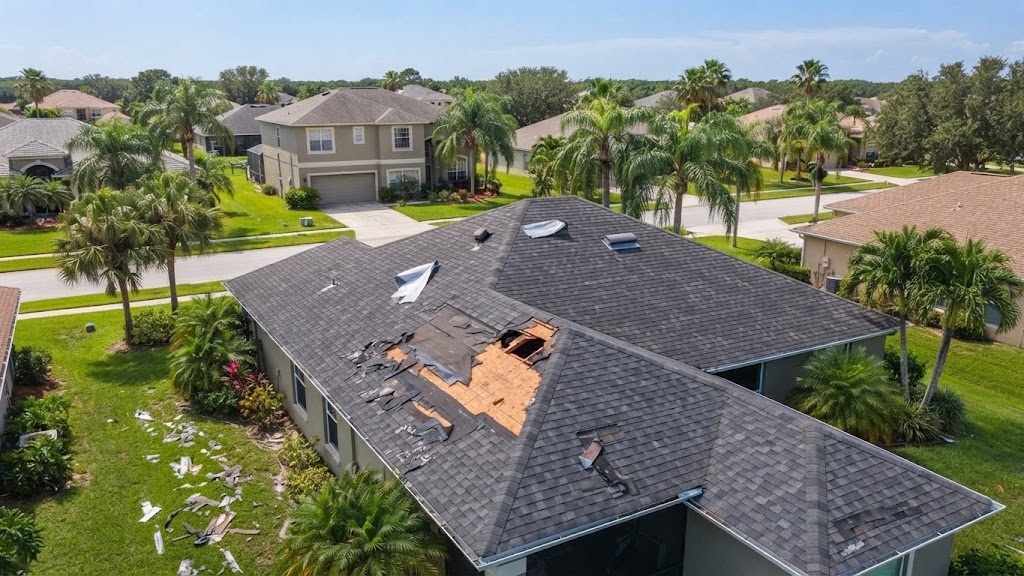
A Florida insurer may deny a roof leak claim by saying the roof failed because of age, deterioration, defective installation, or poor maintenance rather than a covered event such as wind, hail, or a falling object. That explanation may be correct in some cases, but the phrase wear and tear does not decide coverage by itself. The real questions are what caused the opening, when the damage occurred, what the policy covers and excludes, and whether a covered event contributed to the loss. This guide explains the legal and practical options available to Florida homeowners in 2026. It is general information, not legal advice, and every claim requires review of the policy and evidence.
Quick Answer: Can You Challenge a Wear-and-Tear Roof Denial?
Yes. A homeowner can challenge the denial when evidence indicates that a covered peril caused or contributed to the roof damage, the insurer relied on an incomplete inspection, the exclusion does not match the policy language, or covered resulting interior damage was overlooked. Start by obtaining the complete policy and denial letter, protecting the home from further damage, preserving photographs and removed materials, and arranging a qualified independent inspection. Do not assume that an old roof automatically means no coverage, but do not assume that every leak is covered either.
| Question | Short answer |
|---|---|
| Is ordinary roof aging covered? | Usually not by itself; wear, deterioration, and maintenance are commonly excluded. |
| Can storm damage to an older roof be covered? | Potentially. Age does not erase coverage for a covered event, although the policy may affect valuation. |
| Can interior water damage be covered if the worn roof itself is excluded? | Sometimes, depending on the exact exclusion, ensuing-loss language, and facts. |
| How quickly must a new Florida property claim be reported? | Generally within one year after the date of loss under Fla. Stat. § 627.70132. |
| How long is allowed for a supplemental claim? | Generally 18 months after the date of loss under Fla. Stat. § 627.70132. |
| Is mediation available? | Florida offers nonbinding residential property mediation for eligible disputes before appraisal or litigation. |
| Is a lawsuit the only option? | No. Reconsideration, supplemental review, mediation, appraisal, and negotiation may be available first. |
What Wear and Tear Means in a Florida Roof Claim
Wear and tear describes gradual loss of function from ordinary use, age, weather exposure, and deterioration. Roof policies commonly group it with marring, latent defect, faulty workmanship, rot, corrosion, and repeated seepage. These exclusions are designed to keep homeowners insurance from becoming a maintenance warranty. A roof that reaches the end of its useful life without a covered event is normally the owner's responsibility.
A denial becomes disputable when the carrier treats the roof's age as the cause without adequately addressing evidence of a specific event. Examples include creased shingles after a windstorm, broken or displaced tiles after severe weather, an impact opening, or a branch puncture. The relevant distinction is not simply old roof versus new roof. It is excluded deterioration versus direct physical loss caused by a covered peril, considered under the wording of the policy in force on the date of loss.
Florida's Department of Financial Services explains that an HO-3 policy generally covers the dwelling against all perils except those the contract excludes, while basic and broad forms cover only listed perils. That policy-form difference can change which causes qualify. See the Florida Department of Financial Services homeowners insurance overview.
Why an Older Roof Can Still Have a Covered Loss
A roof can have pre-existing deterioration and also sustain new storm damage. Insurance disputes often focus on whether the new event caused direct physical damage, merely exposed an existing failure, or combined with an excluded condition. That is an engineering and policy-language question, not a conclusion that can reliably be drawn from roof age alone.
In Sebo v. American Home Assurance Co., the Florida Supreme Court applied the concurrent-cause doctrine where independent covered and excluded perils combined and the policy did not preclude that result. The decision does not make every mixed-cause roof loss covered. Modern policies may contain anti-concurrent-causation language, and the exact wording matters. Read the Florida Supreme Court decision in Sebo.
A proper causation review may consider weather records for the reported date, the direction and pattern of damage, lifted or creased roofing, fractured tile edges, underlayment condition, fastener withdrawal, impact marks, prior repair records, attic staining, moisture mapping, and whether the interior water path aligns with the claimed roof opening. A report that merely photographs generalized aging without connecting it to the actual leak may leave important questions unanswered.
Covered Roof Damage Versus Excluded Maintenance
| Evidence more consistent with a covered event | Evidence more consistent with gradual deterioration |
|---|---|
| Newly displaced or fractured tiles after a documented wind event | Widespread surface erosion or loss of coating over time |
| Creased, torn, or missing shingles in a directional pattern | Uniform brittleness, cracking, or granular loss across the roof |
| A puncture or impact opening tied to a falling object | Long-standing failed flashing, sealant, or maintenance issue |
| Dry pre-loss records followed by immediate leaking after a storm | Multiple old stain rings, rot, corrosion, or repeated repairs |
| Prompt photographs, weather data, and contractor observations | No identifiable event and evidence of long-term moisture migration |
This comparison is not a diagnostic test. Tile, metal, shingle, and flat roofs fail differently, and South Florida construction varies widely. A licensed roofer may identify repair scope and code issues, while an engineer may address causation. A public adjuster may estimate and present the loss. Only a lawyer can give legal advice about policy interpretation and litigation.
Does the Policy Cover the Interior Water Damage?
Sometimes the carrier denies damage to the worn roof component but coverage remains disputed for water-damaged ceilings, walls, insulation, flooring, or personal property. The answer depends on the policy's water exclusion, repeated-seepage language, exception for a storm-created opening, and any ensuing-loss provision. An ensuing-loss clause can preserve coverage for a distinct resulting loss caused by a covered peril, but it does not automatically restore coverage for the excluded defective or worn component itself.
The time pattern matters. Sudden staining after a verified storm presents a different record from recurring leaks documented over months. Preserve photographs showing the first appearance of damage, invoices for emergency drying, moisture readings, and messages identifying when household members first observed water. Avoid guessing about dates in a recorded statement. If uncertain, say so and locate the documents that can establish the timeline.
Florida Roof Claim Deadlines in 2026
Florida now uses short notice periods for property claims. Under Fla. Stat. § 627.70132, a new or reopened property claim is generally barred unless notice is given within one year after the date of loss, and a supplemental claim is generally barred unless notice is given within 18 months. For a weather event, the statute ties the date of loss to the verified weather event. Policy conditions may require notice sooner, so waiting for the statutory outer limit is risky.
The deadline for a breach-of-property-insurance-contract lawsuit is generally five years from the date of loss under Fla. Stat. § 95.11(2)(e). Other dates may control older claims, policies, insolvency proceedings, or different causes of action. Calendar every potentially applicable date and obtain advice rather than relying on a general article.
What the Insurance Company Must Do After Notice
Under Fla. Stat. § 627.70131, a property insurer generally must review and acknowledge a claim communication within seven calendar days, begin a reasonably necessary investigation within seven days after receiving proof-of-loss statements, and meet additional inspection, recordkeeping, and payment-or-denial requirements subject to statutory exceptions. Ask for communications in writing and keep a dated claim log.
Florida also requires delivery of a Homeowner Claims Bill of Rights within 14 days after the initial claim communication. The document summarizes important claim-process rights but does not create a separate lawsuit by itself. Read Fla. Stat. § 627.7142.
Seven Steps After a Roof Leak Claim Is Denied
- Stop active water intrusion safely. Use reasonable temporary measures such as tarping or drying, keep every receipt, and do not make permanent alterations before the damage is documented unless safety requires it.
- Obtain the complete policy. Request the declarations, policy form, endorsements, exclusions, deductibles, roof-surface schedule, ordinance-or-law coverage, and duties-after-loss conditions.
- Demand a specific written explanation. Compare the denial letter to the cited policy language and the insurer's estimate, photographs, and expert report.
- Preserve evidence. Save pre-loss inspection reports, real-estate photographs, maintenance invoices, permit history, storm alerts, videos, damaged materials, and all claim communications.
- Get a qualified independent inspection. Ask the professional to separate age-related conditions from event-related damage and explain the basis for each conclusion.
- Prepare a documented request for reconsideration or supplemental submission. Address each denial reason directly rather than sending only a contractor total.
- Review dispute options before signing anything. A release, appraisal agreement, managed-repair authorization, proof of loss, or contractor assignment can affect legal rights.
Evidence That Can Rebut a Wear-and-Tear Denial
The strongest file usually combines contemporaneous facts with qualified opinions. Useful evidence can include pre-purchase or four-point inspection photographs showing the roof before the loss, dated photographs immediately after the storm, National Weather Service or NOAA records, drone images, permits and repair invoices, statements from people who observed the event, attic and moisture documentation, the insurer's own inspection media, and a cause-and-origin opinion that distinguishes new damage from aging.
Do not discard removed tile, shingle, membrane, flashing, or underlayment without first offering the insurer a reasonable opportunity to inspect it. When emergency work cannot wait, photograph each stage and ask the contractor to identify and preserve representative samples. Evidence destruction can make causation harder to prove and may create a separate dispute over the policyholder's post-loss duties.
Reconsideration, Mediation, Appraisal, or Lawsuit
Reconsideration or Supplemental Review
A focused submission may resolve a claim without formal proceedings. It should identify the disputed conclusion, attach the supporting photographs and report, provide a room-by-room or trade-by-trade estimate, and request a written response. This is more effective than simply stating that the denial is unfair.
Florida Residential Property Mediation
Florida's Department of Financial Services offers nonbinding mediation for eligible residential claim disputes involving denial, cause of loss, scope, or settlement amount. It is generally a pre-appraisal and pre-suit process. Eligibility exceptions apply, including claims already in litigation or appraisal and some excluded-cause disputes. Review the current Florida residential property mediation information before filing a request.
Appraisal
Appraisal usually decides the amount of a covered loss, not whether an exclusion eliminates coverage. It can be useful when both sides agree that storm damage is covered but disagree about repair scope or price. It may not resolve a complete wear-and-tear denial because causation and coverage remain disputed. The policy controls whether appraisal is available, mandatory, or subject to conditions.
Pre-Suit Notice and Litigation
For claims governed by Fla. Stat. § 627.70152, a claimant generally must submit a notice of intent to initiate litigation through the Department of Financial Services at least 10 business days before filing suit and after the insurer has made a coverage determination. Application to older policies has produced appellate disputes, so counsel should analyze the policy date and controlling district law rather than assuming the rule applies identically to every claim.
A lawsuit may seek contract damages when the insurer failed to pay covered benefits. A statutory bad-faith claim is separate and has additional prerequisites under Fla. Stat. § 624.155. A denial that is ultimately incorrect is not automatically bad faith. The facts, claim handling, notices, cure opportunities, and coverage determination all matter.
Roof Payment, Depreciation, Deductibles, and Building Codes
Even when coverage exists, the payment can be disputed. The policy may provide replacement-cost coverage, actual-cash-value treatment for a roof surface, or a special roof deductible. Fla. Stat. § 627.7011 addresses replacement-cost and law-and-ordinance coverage and permits specified roof-surface reimbursement schedules subject to statutory conditions. Read the declarations and endorsements rather than assuming the settlement method.
Building-code requirements can affect whether a repair is feasible and what must be included. Coverage for ordinance-or-law costs is distinct from basic dwelling coverage and may have a separate limit. Matching rules under Fla. Stat. § 626.9744 can apply when replaced items do not match adjoining areas, but the statute allows consideration of cost, achievable uniformity, remaining useful life, and other factors. It does not guarantee full roof replacement in every claim.
Mistakes That Can Weaken a Florida Roof Claim
- Waiting to report while hoping the leak stops.
- Choosing a loss date that is not supported by weather or property records.
- Allowing permanent repairs before documenting the cause and scope.
- Throwing away failed roof materials.
- Giving confident estimates or technical opinions in a recorded statement when you do not know.
- Submitting only a roofer's price without evidence addressing causation.
- Signing a broad release, assignment, or repair authorization without understanding it.
- Assuming a denied roof covering means all resulting interior damage is also excluded.
- Treating a contractor's coverage opinion as legal advice.
- Missing the one-year claim, 18-month supplemental-claim, or five-year lawsuit deadline.
Florida law also regulates contractor solicitation and deductible practices. A contractor may not pay, waive, or rebate an insurance deductible, and intentionally submitting false, incomplete, or misleading claim information can constitute insurance fraud. See Fla. Stat. § 489.147. A legitimate claim should be documented accurately, without exaggerating damage or changing the date of loss to fit a storm.
South Florida Roof Claims: Miami-Dade, Broward, and Palm Beach
Roof disputes in South Florida often involve concrete or clay tile, aging underlayment, flat-roof membranes, hurricane deductibles, wind-mitigation features, and repeated severe-weather exposure. In Coral Gables and older Miami-Dade neighborhoods, historic materials and earlier repairs can complicate matching and cause analysis. Coastal wind conditions, salt exposure, and intense rain do not establish coverage by themselves, but they make event-specific documentation especially important.
A local investigation should identify the weather event, roof system, applicable building permit history, pre-loss condition, repair feasibility, and path of water entry. The Farber Law Firm evaluates denied and underpaid property claims from its Coral Gables office and serves homeowners across Miami-Dade, Broward, Palm Beach, and elsewhere in Florida where appropriate.
Documents to Bring to a Roof-Claim Review
- The complete insurance policy and declarations page for the date of loss.
- The denial, reservation-of-rights, or partial-payment letter.
- The carrier's estimate and any engineer or inspection report.
- Photographs and videos from before and after the reported event.
- Roofing, remediation, and temporary-repair invoices.
- Prior inspection reports, permits, warranties, and maintenance records.
- A timeline of when the leak was first noticed and every communication with the carrier.
- Independent estimates and expert reports.
- Proof of loss, examination-under-oath requests, mediation papers, or appraisal demands.
- Mortgage-company correspondence about insurance proceeds.
Official and Trusted Sources
- Fla. Stat. § 627.70131, claim acknowledgment and investigation
- Fla. Stat. § 627.70132, property claim notice deadlines
- Fla. Stat. § 627.70152, pre-suit notice
- Fla. Stat. § 627.7011, replacement cost and roof reimbursement schedules
- Fla. Stat. § 627.7142, Homeowner Claims Bill of Rights
- Fla. Stat. § 626.9541, unfair insurance trade practices
- Florida Department of Financial Services, residential property mediation
- Florida Department of Financial Services, insurance consumer help
- Sebo v. American Home Assurance Co., Florida Supreme Court
Related Florida Insurance Guides
- Homeowners insurance claim denied in Florida: 2026 guide
- Water damage insurance claim tips
- Florida hurricane damage claim denial guide
- How to handle an insurance dispute in Florida
- Florida insurance disputes practice
- Coral Gables insurance claim attorney
Book a Florida Roof Claim Review With The Farber Law Firm
If your carrier blamed wear and tear, age, deterioration, defective installation, or long-term leakage, The Farber Law Firm can review the policy, denial letter, inspection record, deadlines, and available dispute options. A consultation is free and confidential. Call (305) 774-0134 or 8888-FARBER, or book a free consultation with The Farber Law Firm. The firm is located at 2199 Ponce de Leon Blvd #301, Coral Gables, FL 33134.
This article reflects Florida law researched through September 29, 2026. It is attorney advertising and general educational information, not legal advice. Reading it or sending information does not create an attorney-client relationship; representation begins only through a signed written engagement. Every policy and loss is different. Prior results do not guarantee a similar outcome, statutes and cases can change, and no recovery is promised.
Frequently Asked Questions
Can a Florida insurer deny a roof leak because the roof is old?
An insurer may rely on wear, deterioration, or maintenance exclusions when the evidence supports them, but roof age alone does not necessarily resolve whether a covered wind, hail, impact, or other event caused new damage. Coverage depends on the policy language and causation evidence.
What should I do first after a wear-and-tear denial?
Obtain the full policy and denial letter, prevent further damage, preserve photographs and removed materials, request the insurer's estimate and expert report, and arrange an independent inspection that separates event-related damage from aging.
How long do I have to report a Florida roof claim in 2026?
Fla. Stat. § 627.70132 generally requires notice of a new or reopened property claim within one year after the date of loss and notice of a supplemental claim within 18 months. Policy conditions may require prompt notice sooner.
Can interior water damage be covered if the roof itself is worn out?
Possibly. Some policies distinguish an excluded worn component from distinct resulting interior damage. The water exclusion, repeated-seepage provision, storm-created-opening requirement, and ensuing-loss language must be reviewed together.
Does Florida require full roof replacement when tiles or shingles cannot be matched?
Not automatically. Fla. Stat. § 626.9744 requires reasonable repairs or replacement in adjoining areas when replacement items do not match, while allowing consideration of cost, achievable uniformity, remaining useful life, and other factors. The policy and repair facts remain important.
Can I mediate a denied Florida roof insurance claim?
Eligible residential property disputes involving denial, cause, scope, or settlement amount may use the Florida Department of Financial Services nonbinding mediation program before appraisal or litigation. Exceptions apply.
Do I need a pre-suit notice before suing a Florida property insurer?
For claims governed by Fla. Stat. § 627.70152, a notice of intent to initiate litigation generally must be submitted at least 10 business days before suit. Application to some older policies has been litigated, so legal review is important.
How much does it cost to ask The Farber Law Firm to review a denied roof claim?
The initial consultation is free and confidential. If the firm accepts the matter, the fee arrangement and responsibility for costs are explained in a written engagement agreement before representation begins.
Have a similar situation?
Free, confidential case review with a South Florida trial attorney. Call 8888-FARBER.
Request a Free ConsultationAbout the Author
The Farber Law Firm, P.A.
The Farber Law Firm is a South Florida trial practice based in Coral Gables, representing injured people, policyholders and businesses across Miami-Dade, Broward and Palm Beach counties since 1995. The firm handles personal injury, wrongful death, insurance coverage disputes and commercial litigation, and its attorneys are members in good standing of The Florida Bar.
Articles on this site are written and reviewed by attorney David Farber and reflect Florida statutes, court rules and Florida Bar regulations current as of the publication date.
- Office
- 2199 Ponce de Leon Blvd #301
Coral Gables, FL 33134 - Phone
- 8888-FARBER
- Consultations
- Free and confidential